

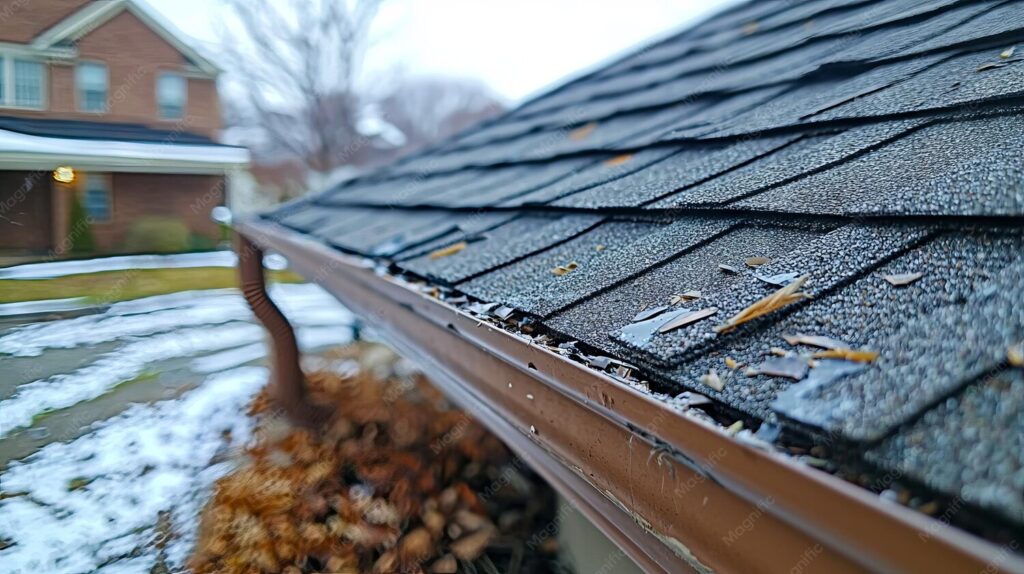
A hailstorm can leave your roof damaged even when everything looks normal from the ground. Small impacts may loosen shingle granules, crack roofing materials, dent metal components, or weaken areas that protect your home from rain. Some problems become noticeable only after the next heavy downpour.
Knowing how to identify hail damage on your roof helps you recognize warning signs early and decide when to arrange a professional inspection. You do not need to climb onto your roof to begin checking for possible damage. Your gutters, downspouts, attic, and ceilings can provide useful clues.
In this guide, we explain seven common signs of roof hail damage, how hail affects different roofing materials, and what to do if you suspect your home has been affected.
How Can You Tell If Your Roof Has Hail Damage?
You may have hail damage if you notice circular impact marks, missing shingle granules, cracked or bruised shingles, dents in metal roof components, damaged gutters, or unexplained water stains after a storm. However, these signs do not automatically confirm hail damage because aging, wind, and other weather conditions can cause similar problems.
A professional roof inspection can help determine the likely cause, assess the extent of the damage, and identify whether repairs are necessary.
7 Signs of Hail Damage on Your Roof
1. Missing or Displaced Shingle Granules
Asphalt shingles have a protective layer of mineral granules that helps shield them from sunlight and weather. When hailstones strike the roof, the impact can loosen or remove these granules.
Look for the following warning signs:
- Bare or dark spots on asphalt shingles.
- Uneven patches where the protective surface appears worn.
- An unusual accumulation of granules in gutters and downspouts.
- Exposed asphalt beneath the granule layer.
2. Dents, Bruises, or Soft Spots on Shingles
Hail can damage shingles without creating an obvious hole. A strong impact may fracture the shingle’s underlying mat or compress the material beneath its surface.
Possible signs include:
- Round or irregular impact marks.
- Small areas where granules have been knocked away.
- Localized bruising or depressions.
- Cracks that appear around impact points.
3. Cracked, Split, or Broken Shingles
Large hailstones can cause asphalt shingles to crack or split, particularly when the roofing material is already aged or brittle.
Inspect visible roof sections from a safe location for:
- Broken shingle corners.
- Irregular cracks or splits.
- Shingle pieces lying in the yard.
- Areas where the roofing surface appears exposed.
Cracked shingles can allow water to reach the underlying roof structure. Even if the damage does not cause an immediate leak, continued exposure to rain can increase the risk of moisture intrusion.
If you see broken or missing shingles after a storm, arrange an assessment promptly. GutterHawk provides roof repair services to help homeowners address roofing problems before they become more extensive.
4. Dented Roof Vents, Flashing, and Other Metal Components
Metal components can provide additional clues when checking for possible hail damage. Depending on the material, hailstones may leave visible dents or impact marks on roof vents, flashing, ridge caps, and metal gutters.
Check accessible exterior areas for:
- Dents in metal vent covers.
- Visible impact marks on flashing.
- Damage to metal trim or roof accessories.
- Dents or deformation in gutter sections and downspouts.
Metal components can sometimes show hail impacts more clearly than asphalt shingles. However, a dent alone does not establish that the roofing system has been compromised. The location, severity, and condition of the affected component all matter.
5. Damaged Gutters and Downspouts
Your gutter system can help you identify possible storm damage without accessing the roof.
After a hailstorm, look for dents, loose sections, bent downspouts, or an unusual amount of shingle granules collecting near gutter outlets.
Pay attention to these changes:
- Fresh dents or impact marks on exposed metal gutters.
- Cracks or damage to gutter joints.
- Sections pulling away from the fascia.
- New drainage problems following the storm.
- Excessive granules accumulating inside gutters.
Remember that hail is not the only possible cause. Wind-driven debris, falling branches, and existing wear can also damage gutters.
Because gutters help direct rainwater away from your home’s foundation, addressing storm-related damage can protect more than just your roof. GutterHawk offers gutter maintenance and related services to help homeowners maintain effective roof drainage.
6. Water Stains on Ceilings or in the Attic
Not all hail damage is immediately visible from outside. If hail damages shingles or compromises another part of the roofing system, moisture may eventually enter the attic or living space.
Look for:
- Brown or yellow ceiling stains.
- Damp attic insulation.
- Water marks on roof decking.
- A musty smell after heavy rain.
- Dripping water or bubbling paint near the ceiling.
7. Damage to Other Exterior Surfaces
The condition of nearby exterior surfaces can help you understand whether hail may have affected your property.
After a storm, check for fresh impact marks on:
- Window screens and frames.
- Exterior air-conditioning equipment.
- Painted trim and fascia.
- Deck railings and other exposed surfaces.
- Outdoor furniture or other objects left in the open.
How Hail Damage Differs by Roofing Material
Hail affects roofing materials differently depending on their composition, age, installation, and the size and speed of the hailstones.
| Roofing material | Possible signs of hail damage |
| Asphalt shingles | Granule loss, bruising, cracks, and localized impact marks |
| Metal roofing | Dents, damaged coatings, or deformed panels |
| Tile roofing | Cracked, chipped, or broken tiles |
| Flat roofing membranes | Punctures, splits, or damaged seams in some systems |
How to Check for Hail Damage Without Climbing on Your Roof
You can perform an initial visual check from the ground while leaving detailed roof inspection to a professional.
Step 1: Review the storm. Note when the hail occurred and whether you observed large hailstones, strong winds, or flying debris.
Step 2: Walk around your property. Look for visible dents, broken roofing pieces, gutter damage, and other changes that may have occurred during the storm.
Step 3: Check the gutters. Look for unusual granule accumulation and visible damage to gutter sections or downspouts.
Step 4: Inspect the interior. Check ceilings and safely accessible attic areas for new water stains, damp insulation, or signs of moisture.
Step 5: Take photographs. Photograph visible damage from a safe position and record the date you noticed it.
Step 6: Schedule a professional inspection. A roofing professional can assess less obvious damage, document the findings, and explain the next steps.
Never climb onto a wet, steep, or storm-damaged roof. Loose shingles, slippery surfaces, and weakened decking can create serious fall hazards.
For ongoing roof care, GutterHawk’s roof maintenance and inspection services can help identify concerns and evaluate the condition of roofing components.
What Should You Do If You Find Hail Damage?
Once you suspect hail damage, taking a few practical steps can help prevent further problems and preserve useful documentation.
1. Document What You Can See
Take clear photographs of visible damage to your gutters, exterior surfaces, and any roofing areas that can be viewed safely from the ground. Record the approximate date of the storm and note when you first noticed the damage.
Do not attempt to remove shingles or create test marks to confirm an impact.
2. Arrange a Professional Roof Inspection
A qualified roofer can examine the roofing surface, flashing, vents, gutters, and other relevant components. The inspection may also include accessible attic areas to look for signs of moisture intrusion.
Ask for photographs and a written assessment explaining what was found, which areas are affected, and what repairs may be appropriate.
3. Prevent Additional Water Damage
If water is entering your home, move valuables away from the affected area when safe. Use containers to collect drips and contact a qualified professional about temporary protection.
Do not attempt emergency repairs on an unsafe roof.
4. Review Your Insurance Policy
If you believe the damage may be covered by your homeowners insurance, review your policy and contact your insurer to understand the applicable reporting requirements, deductibles, exclusions, and deadlines.
Coverage depends on your individual policy and circumstances. An inspection can document the physical condition of your roof, but it cannot guarantee that an insurance claim will be approved.
5. Compare the Recommended Repair Options
Not every hailstorm requires a complete roof replacement. Depending on the findings, the appropriate solution may involve localized repairs, replacement of specific components, or a larger roofing project.
GutterHawk provides roof replacement services for homeowners whose roof condition warrants a replacement rather than limited repairs.
A documented assessment helps you understand the options before committing to work.
Can Hail Damage a Roof Without Causing a Leak?
Yes. Hail can damage shingles, loosen protective granules, crack roofing materials, or affect metal components without immediately allowing water into the home.
A roof may continue to shed rain even after some of its protective materials have been compromised. A leak might develop later as repeated rainfall, sunlight, and temperature changes place additional stress on the damaged area.
That is why an absence of ceiling stains should not be treated as proof that the roof is undamaged. If a hailstorm was severe or you notice visible impact marks, a professional inspection can help determine whether further action is necessary.
How Soon Should You Inspect Your Roof After a Hailstorm?
Arrange an inspection as soon as reasonably possible after you suspect hail damage, particularly when you notice broken shingles, significant granule loss, damaged flashing, or signs of water entering the home.
Prompt attention can help identify vulnerable areas before subsequent rain causes additional damage. It also allows you to document the roof’s condition while the storm is still recent.
If the roof appears intact and there are no visible signs of damage, you may not need emergency repairs. However, a professional assessment can still be worthwhile after a significant storm, especially if the roof is older or has existing problems.
Protect Your Roof After a Hailstorm
Hail damage is not always obvious, and waiting for a leak before taking action can allow a small roofing problem to become more serious. Missing granules, bruised shingles, dents in metal components, damaged gutters, and unexplained ceiling stains are all reasons to investigate further.
Start with a safe visual check, document anything unusual, and arrange a professional inspection if you suspect damage. Understanding the condition of your roof can help you make informed decisions about repairs, maintenance, and replacement.
GutterHawk provides roofing and gutter services in the Tallahassee area, including roof inspections, repairs, and replacement options. Visit GutterHawk to learn more or request an estimate for your roofing concerns.
Frequently Asked Questions
Hail damage may appear as localized bruises, cracks, missing granules, or irregular impact marks. Some damaged shingles have no obvious hole or tear, so a close professional assessment may be needed to confirm the condition.
Yes. Smaller hailstones may damage certain roofing materials depending on their speed, wind conditions, impact angle, and the roof’s age and condition. Hail size alone cannot determine whether a roof has been damaged.
Hail damage may appear as localized impact marks or concentrated areas of granule loss following a storm. Normal wear tends to develop gradually, although the two can overlap. A roofing professional can assess the pattern, material condition, and surrounding components to help distinguish between them.
No. Some hail damage affects the protective surface without immediately creating an opening for water. Leaks may develop later, which is why visible impact damage should be assessed even when the interior appears dry.
Not necessarily. The decision depends on the type and extent of damage, the roof’s overall condition, the roofing material, and the practicality of repairing the affected areas. A professional inspection can help determine whether repairs or replacement are appropriate.