GutterHawk Roofing & Gutter Specialists


- About
- Roofing
- Gutters
- Areas Served
Killearn Estates
Killearn Acres
Bradfordville
Betton Hills
Lafayette Park
Southwood
Killearn Lakes Plantation
OX Bottom Manor
Summerbrooke
Golden Eagle
Foxcroft
Bull Run
Waverly Hills
Buck Lake Mahan
Piney-Z
Apalachee Ridge Estates
Myers Park
Maclay
Bobbin Brook
Live Oak Plantation
Timberlane
Woodgate
Lake Jackson
Meridian Hills
Midtown
Downtown Tallahassee
Havana
- Financing
- Testimonials
- Recent Projects
Half-Round Gutters in Tallahassee, FL
A half-round gutter is an open semicircle hung along the eave, and on the right house it looks as if it was always meant to be there. GutterHawk installs half-round gutters in Tallahassee, FL on request, alongside the K-style systems that go on most homes. This page covers what changes when you choose the round shape: the sizes worth discussing, the brackets that carry it, the round downspouts it pairs with and why it costs more.
Half-round is mostly a question of architecture. Many older and historic homes were built with a round gutter or something close to it, and a flat-faced replacement can look out of period on a brick colonial, a hipped cottage roof or a deep front porch. If you are restoring a house or simply prefer the profile, we can talk through how it will carry water before you commit.
Because half-round is a request item rather than our everyday profile, we settle the size, metal and color with you at the estimate and price it from there.
For the standard K-style profile, see our seamless gutters in Tallahassee page, or compare copper gutters.
Choosing Half-Round: The Short Version
- 6-inch half-round, a common starting size for single-story and simpler two-story roofs
- 8-inch half-round, for wide roof planes, steep pitches and long runs that would fill a 6-inch bowl
- Holds less water than K-style of the same width, so sizing up is normal
- Hung in brackets that cradle the bowl, fixed to the fascia, the rafter tails or under the roof edge
- Pairs with round downspouts for a matching look down the wall
- Costs more than K-style and takes longer to form
- A smooth bowl with no inside corners, so pine straw washes toward the outlet
6-Inch or 8-Inch Half-Round
Half-round is measured across the top of the bowl, so a 6-inch size is six inches from the front lip to the back edge. That width suits many single-story homes and simpler two-story roofs where each run drains a moderate area. The 8-inch size carries noticeably more water and has a heavier presence on the eave, which can suit a large house with deep overhangs and look oversized on a small cottage.
We do not choose the size by copying the old gutter. We measure the roof area draining into each run, note the pitch, and look for valleys that send a concentrated stream into one corner. Those three things tell us whether 6-inch will keep up in a Tallahassee downpour or whether 8-inch is the safer choice. Some houses end up with both: 8-inch on a long rear eave that takes a valley, 6-inch on the porch and the front. Both sizes are options to discuss at the estimate, and we explain which one we recommend for each side of the house and why.
Homes That Suit a Round Gutter
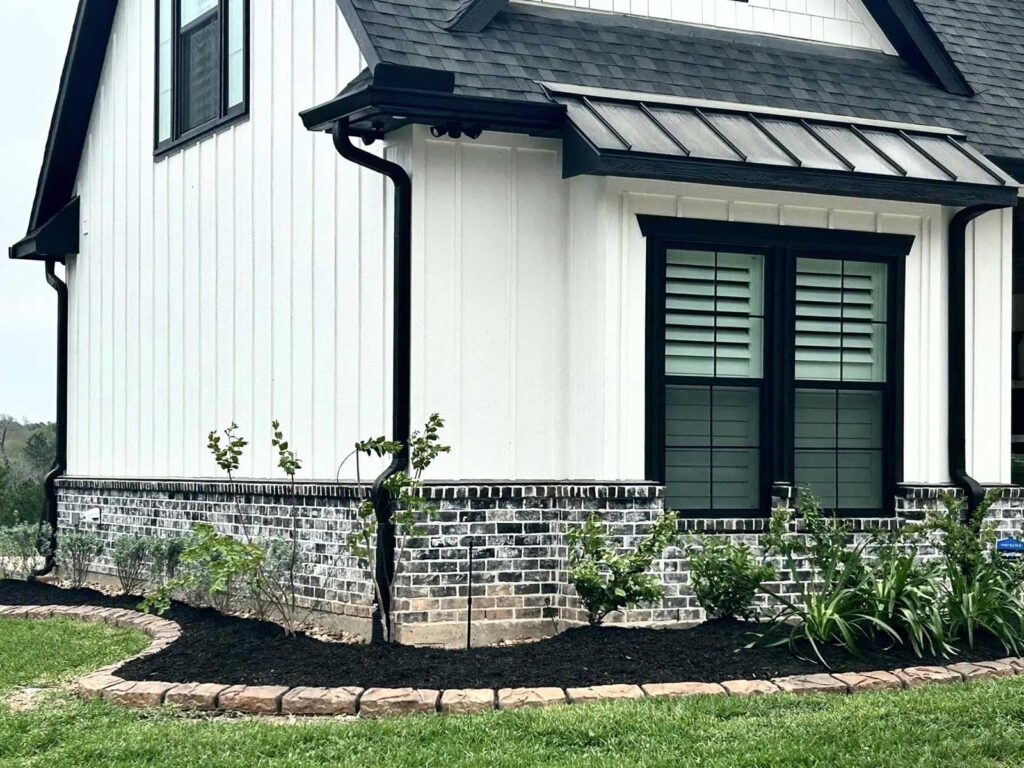
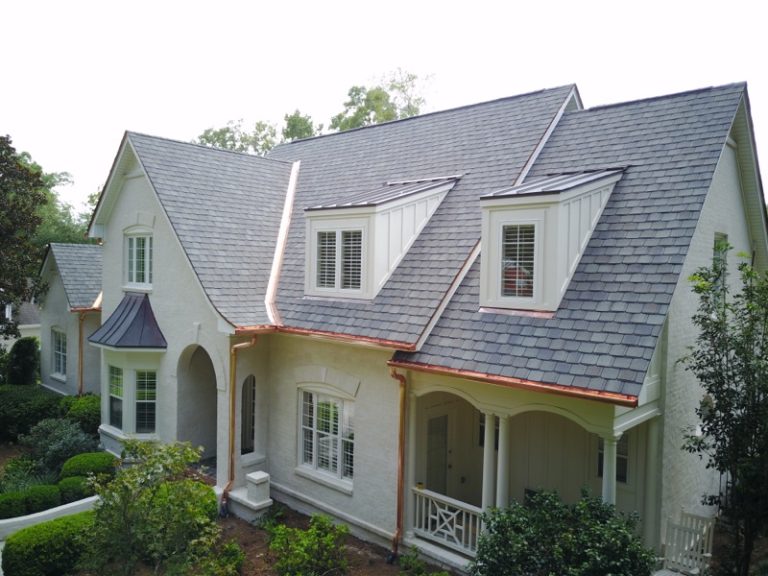
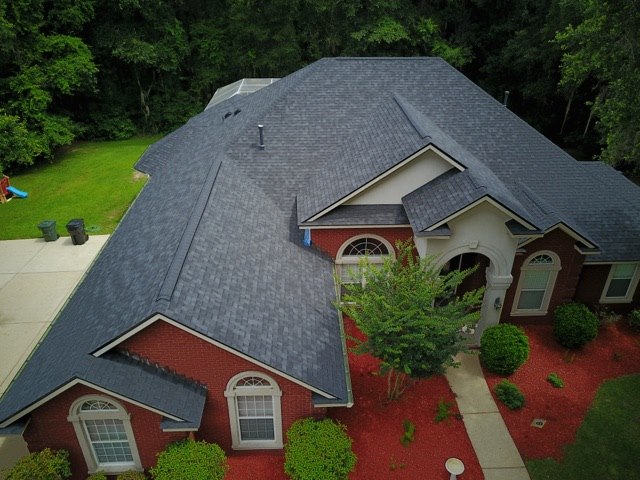
Round gutters belong on houses designed before K-style became the default: bungalows with exposed rafter tails, brick colonials, homes with dormers and steep gables, and the older houses around Betton Hills and Myers Park. Tallahassee’s Park Avenue and Calhoun Street historic districts hold the same kind of housing. On these homes a half-round run reads as part of the trim, where a flat-faced gutter can look like a later addition.
If your property sits in a historic district or under an architectural review, find out what the review expects before choosing a profile and metal; some reviews favor half-round, and we can work to that requirement. Half-round also suits newer homes built with a traditional look, such as farmhouse styles where the eave is meant to be seen. It suits a house less well when the fascia is narrow and the overhang tight, because the round bowl can sit awkwardly there, and we will say so plainly if that describes your roofline. Choosing half-round gutters in Tallahassee, FL is easiest when we stand in front of the house together.
Capacity Compared With K-Style
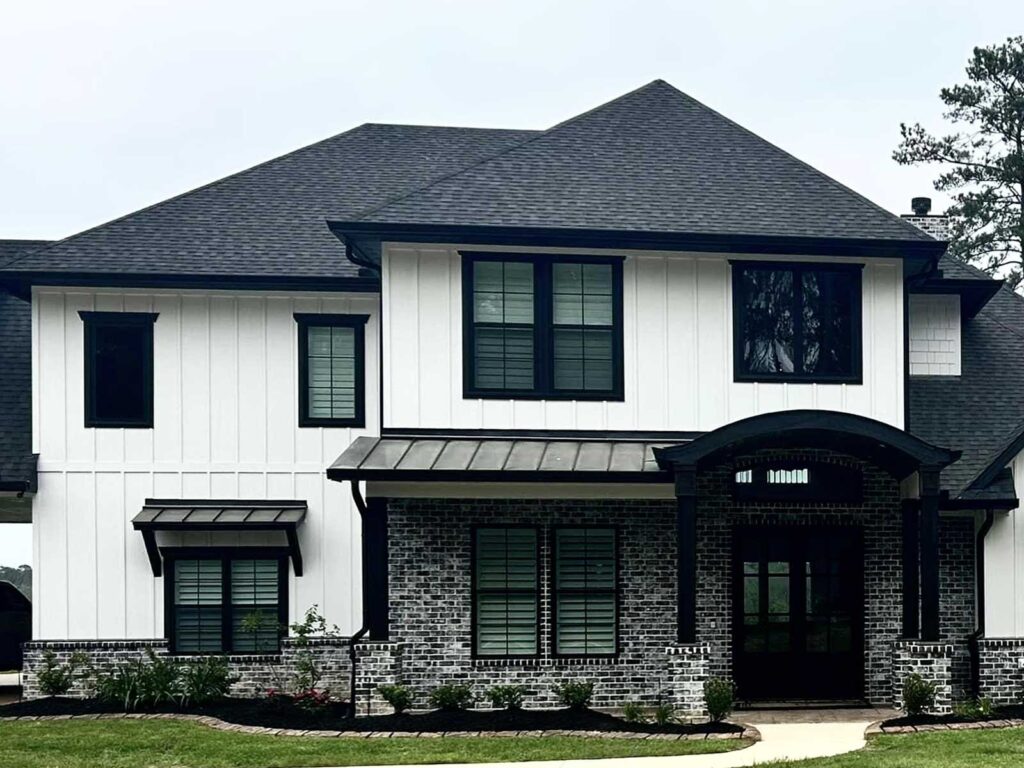
For the same width, a K-style gutter holds more water than a half-round. Its flat bottom and tall back give it more volume in cross-section, while the round bowl is shallow toward its edges. That is why a half-round system is usually one size up from the K-style it replaces, and why we size each run rather than matching widths.
Capacity matters here more than in most of the country. Tallahassee receives more than 55 inches of rain in a typical year, and summer thunderstorms deliver it far faster than a steady shower. A gutter that copes with drizzle can spill over its front lip in that kind of burst, soaking the fascia and splashing the foundation. The round shape gives something back in return: with no inside corners, pine straw and oak leaves slide toward the outlet instead of packing into a crease, so a half-round run tends to stay clearer between cleanings. We weigh both sides for every roof plane before recommending a size.
Hangers and Brackets
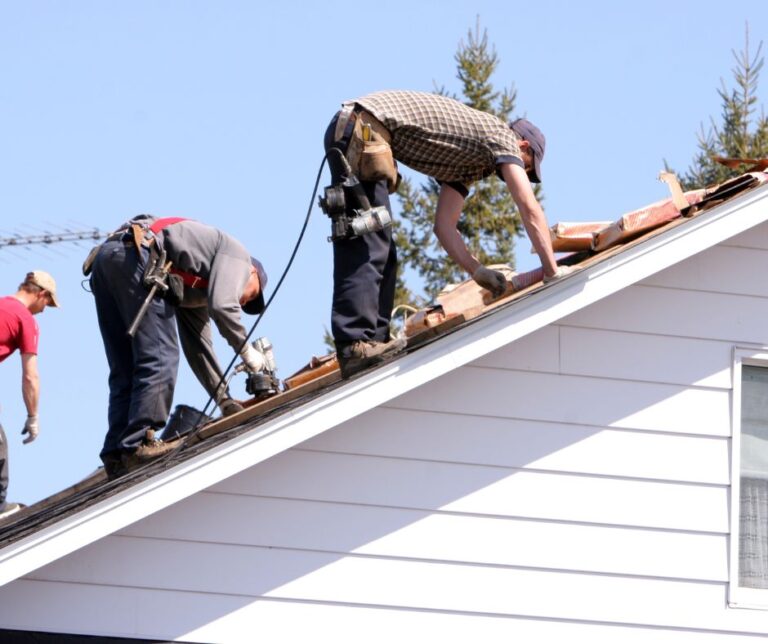
A half-round gutter cannot use the hidden hangers that clip inside a K-style run, because there is no flat back to fasten through. It rests in brackets instead. Fascia brackets screw to the face of the fascia board and cradle the bowl from below. Roof-mounted straps fasten under the roof edge on homes without a usable fascia. On a house with exposed rafter tails, a bracket can be fixed to each rafter end, which suits the look of the building.
Bracket spacing follows the load: closer together on long runs, below valleys and wherever a heavy canopy drops limbs. The brackets are visible on a half-round system, so they are part of the appearance as well as the structure, and their finish should match the gutter. Before any bracket goes up we check the wood it goes into. A round gutter full of storm water is heavy, and soft fascia will not hold it for long, so rotted boards are shown to you and repaired first.
Round Downspouts and Outlets
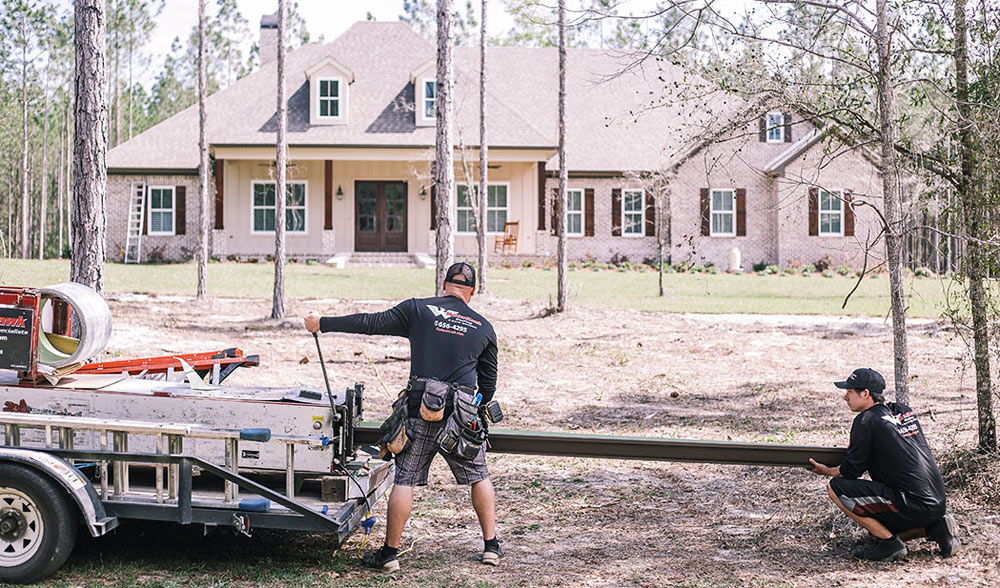
Most half-round systems drain into round downspouts, which carry the traditional look down the wall. Each downspout connects through an outlet set into the bottom of the bowl, and the outlet size controls how fast each run can empty. On a large roof the downspout is often the true limit, so we size outlets and downspouts together with the gutter rather than as an afterthought.
Round downspouts are held to the wall with bands, and on brick or stucco those bands need the right anchors. Where a downspout ends matters as much as its size. Tallahassee sits in the Red Hills, where clay soil is slow to absorb water, so each downspout should empty onto a splash block, an extension or an underground line that carries water clear of the foundation. On a side of the house nobody sees, a rectangular downspout joined with an adapter can save some cost; we point out where that works and where it would show.
What Drives the Price
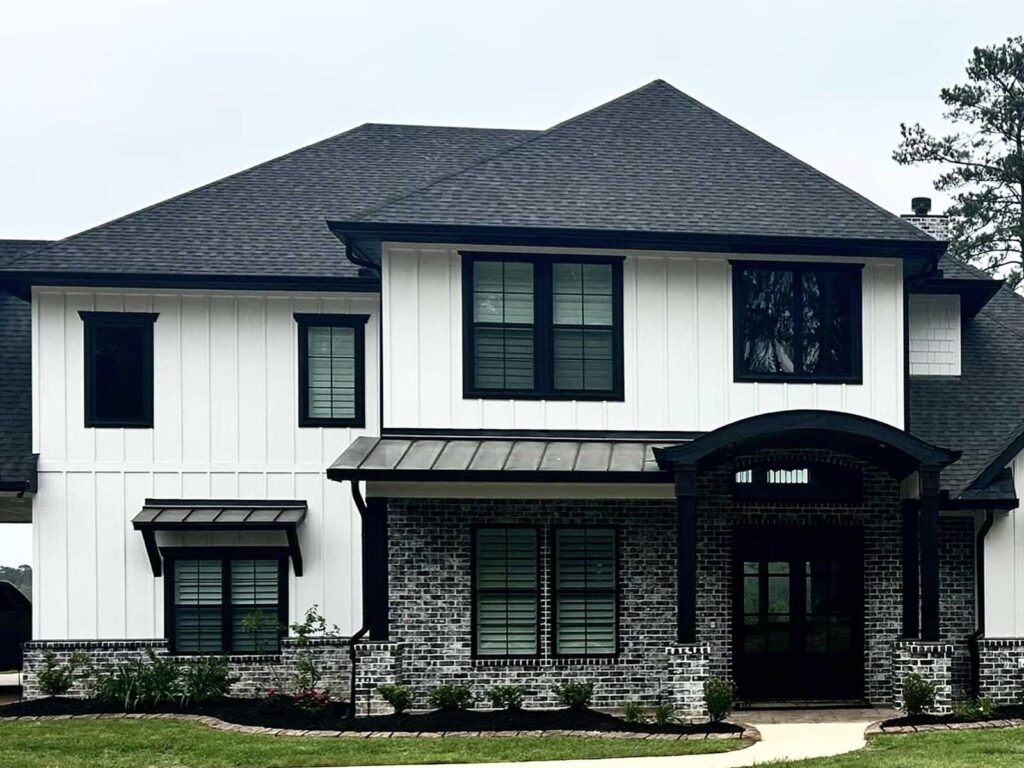
Half-round gutters in Tallahassee, FL cost more than the same length of K-style. The profile takes longer to form, brackets cost more than hidden hangers, round downspouts and fittings cost more than rectangular ones, and fitting takes more time on the ladder. The main things that move the figure are the total length of the runs, the choice of 6-inch or 8-inch, the metal, the number of corners, outlets and downspouts, the height of the eaves, and whether fascia repair is needed before anything is hung.
Metal is the largest single choice. Aluminum half-round in a factory color keeps the cost lower; copper half-round costs several times as much and is chosen for its looks and the decades it lasts. We measure every run and give you a written quote listing the size, metal, bracket type and downspout count, so you can compare options line by line instead of guessing from a single total.
Ask About Half-Round for Your Home
If your house was built for a round gutter, or you simply prefer the shape, we can measure the roof, show you both sizes and price half-round gutters in Tallahassee, FL against K-style so the choice is clear. Call GutterHawk at (850) 779-1081 or ask for a free estimate.
Frequently Asked Questions
Do you install half-round gutters in Tallahassee, FL?
Yes, on request. We confirm the size, metal and color with you at the estimate.
Is 6-inch or 8-inch half-round right for my house?
We decide that from the size and slope of each roof plane. Plenty of houses use 6-inch, with 8-inch on large or steep planes.
Does half-round hold as much water as K-style?
No. For the same width K-style holds more, so half-round is usually sized one step up.
Can half-round be copper?
Yes. Copper half-round is the classic pairing on period homes and costs several times as much as aluminum.
Do half-round gutters clog less?
They shed debris well because the bowl has no inside corners, but under pines they still need cleaning or a guard.
Can I mix half-round with rectangular downspouts?
Yes, with an adapter at the outlet. It saves some cost on sides of the house that are out of view.
Why does half-round cost more?
Slower forming, visible brackets, round downspouts and extra fitting time all add to the price.
Q.2 Aluminum or copper?
Aluminum for nearly everyone. Copper for period homes where appearance justifies several times the cost.
Q.3 K-style or half-round?
K-style carries more water for its size. Half-round suits historic homes and sheds debris better.
Q.4 Do I need 5 inch or 6 inch?
It depends on the roof area and pitch draining into each run. Many homes here need 6 inch.
Q.5 Can you match my existing trim color?
Yes. Aluminum coil comes in a wide range of factory colors.
Q.6 How long does installation take?
Most homes are a single day, including removing the old system.
Q.7 How much do seamless gutters in Tallahassee FL cost?
Priced per linear foot, varying with material, gauge, size, and height. We quote after measuring.
Working With Us Is Easy
01.
Request Your Quote
Getting the process started is easy! Simply fill out our quick form or call us at (850) 779-1081. One of our friendly staff members will get in touch to finalize the details.
02.
We Work On Your Estimate
One of our expert estimators will get to to work analyzing your job and crafting a proposal. Of course, we’re here to answer any questions you may have.
03.
GutterHawk Gets To Work!
Contact Us
Have questions about your roof? Do you need information on gutter maintenance plans? No matter the question, GutterHawk is here to help!