GutterHawk Roofing & Gutter Specialists


- About
- Roofing
- Gutters
- Areas Served
Killearn Estates
Killearn Acres
Bradfordville
Betton Hills
Lafayette Park
Southwood
Killearn Lakes Plantation
OX Bottom Manor
Summerbrooke
Golden Eagle
Foxcroft
Bull Run
Waverly Hills
Buck Lake Mahan
Piney-Z
Apalachee Ridge Estates
Myers Park
Maclay
Bobbin Brook
Live Oak Plantation
Timberlane
Woodgate
Lake Jackson
Meridian Hills
Midtown
Downtown Tallahassee
Havana
- Financing
- Testimonials
- Recent Projects
- About
- Roofing
- Gutters
- Areas Served
Killearn Estates
Killearn Acres
Bradfordville
Betton Hills
Lafayette Park
Southwood
Killearn Lakes Plantation
OX Bottom Manor
Summerbrooke
Golden Eagle
Foxcroft
Bull Run
Waverly Hills
Buck Lake Mahan
Piney-Z
Apalachee Ridge Estates
Myers Park
Maclay
Bobbin Brook
Live Oak Plantation
Timberlane
Woodgate
Lake Jackson
Meridian Hills
Midtown
Downtown Tallahassee
Havana
- Financing
- Testimonials
- Recent Projects
Screen Porches in Midtown, FL
A screened porch off a Midtown bungalow sits close to the street and close to the neighbor’s oak, which means the framing has to handle both foot traffic on a small footprint and a steady drop of leaf litter from above. Homes along this stretch of the Monroe corridor were mostly built for a front porch or a side porch that got enclosed later, not for a purpose-built sunroom, so the tie-in work matters more than the screen itself.
What We Build
- New screen porch construction — built from the ground up, including footings, framing, roof, and screen system, tied properly into the house.
- Patio and deck conversions — enclosing an existing covered slab or deck, which is the most common project and usually the best value.
- Screen room additions — a fully framed room with a finished ceiling, lighting, and fans, sitting somewhere between a porch and a sunroom.
- Rescreening — replacing tired, torn, or pet-damaged screen in an existing enclosure, which transforms the look for a fraction of a rebuild.
- Screen repair — individual panels replaced where damage is limited, rather than doing the whole enclosure.
- Pool enclosure screening — larger spans with their own structural and code considerations.
- Structural and frame repair — rotten posts, beams, and headers on older porches, which we handle rather than screening over.
Screen Types, and Which One You Want
Screen Porches in Midtown
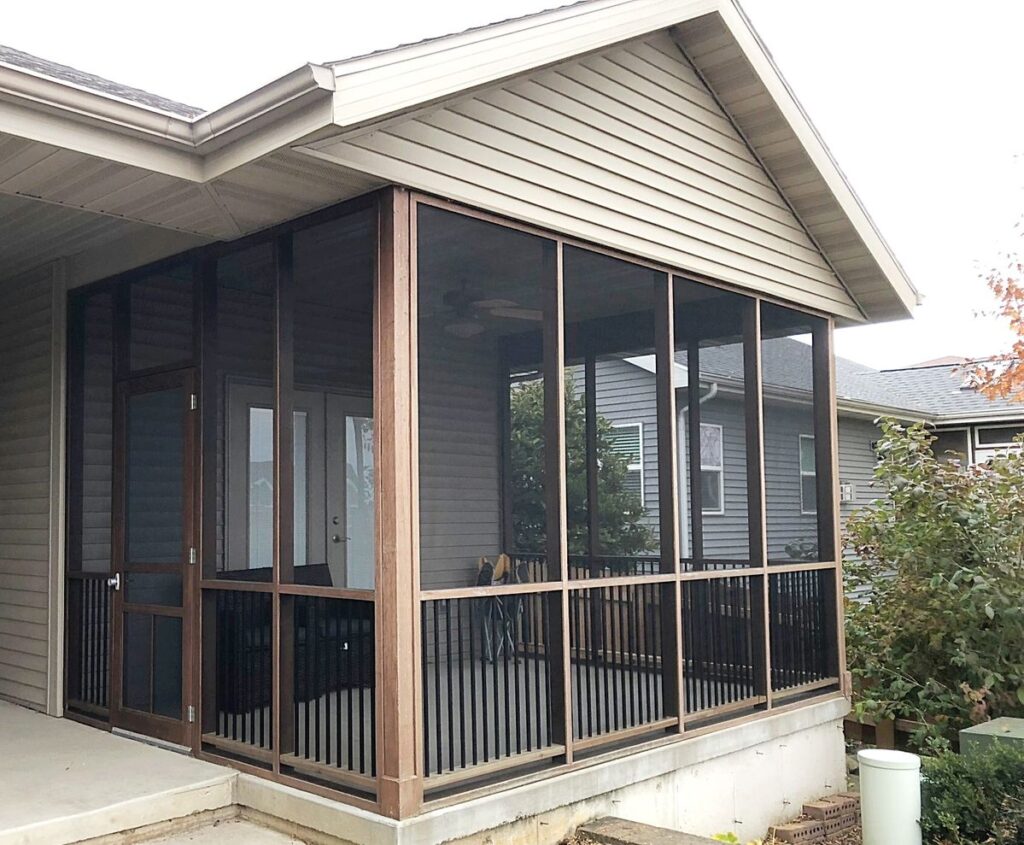
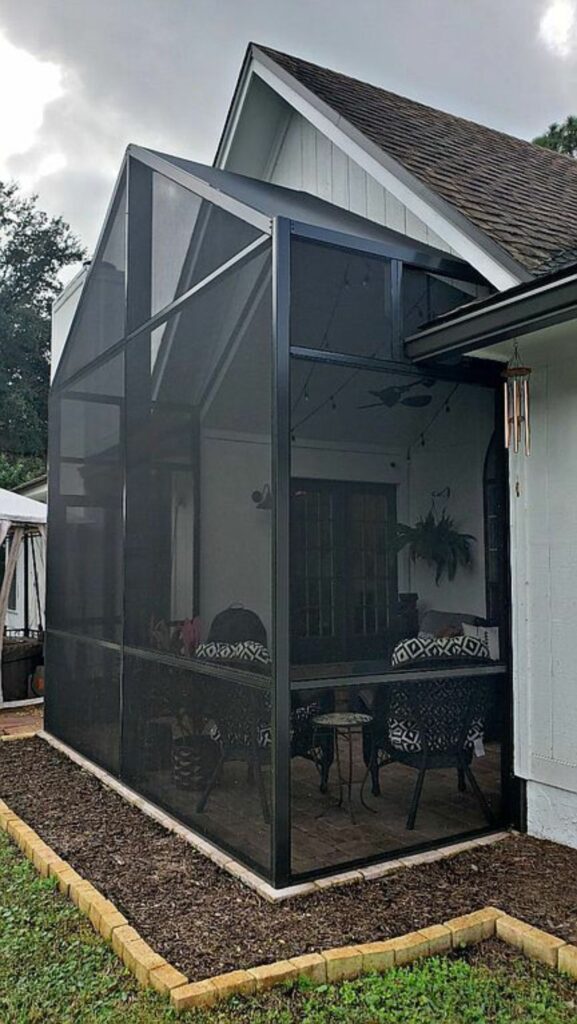
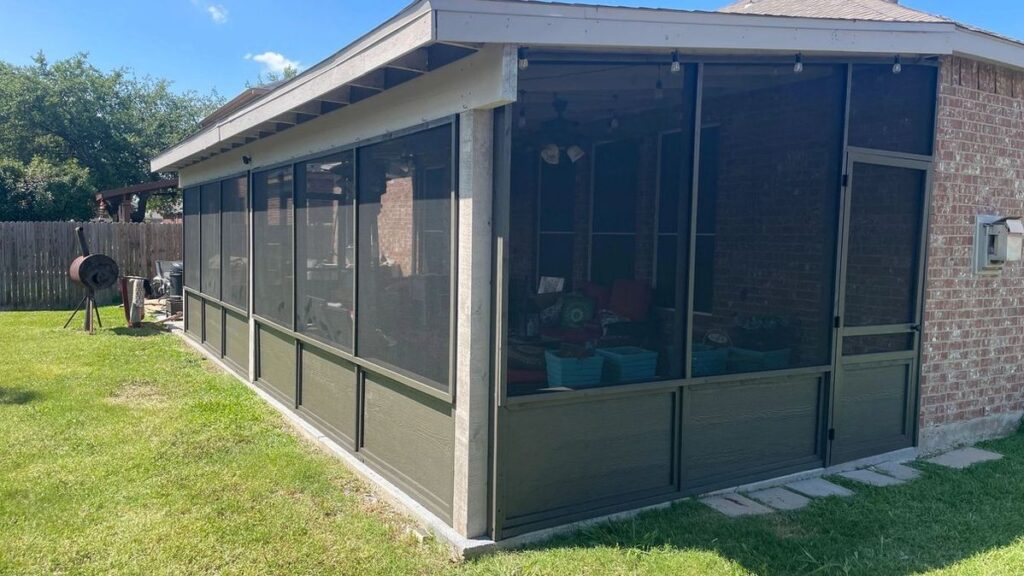
This page covers screen porch construction, rescreening, and frame repair. That means building or rebuilding the wood or aluminum frame that holds the mesh, replacing torn or sun-brittled screen panels, repairing rotted sill plates and door frames, and tying the porch roof structure into the existing roofline so water sheds where it should instead of pooling at the house wall.
It does not cover full sunroom conversions with glass and HVAC, and it does not cover deck construction underneath a porch that has no screen system at all. If your project is a screened enclosure, whether that’s a full rebuild after storm damage or a straightforward rescreen because the mesh has gone brittle and started tearing at the staple line, that’s the work this page is scoped to.
Framing and Roof Options
What Midtown homes are dealing with
A good share of the housing stock near this part of the Monroe corridor dates to the mid-20th century, brick ranch and bungalow construction with low-pitch composition shingle roofs and porches that were often added or enclosed after the original build. That means the porch roof framing frequently doesn’t match the main house framing in pitch or in age, and where the two meet is where you find soft wood, rusted flashing, and screen frames that have racked out of square because the ledger board they’re anchored to has been taking water for years. On these older lots the porch screen frame is also often original aluminum, and the corners are the first thing to fail.
Tree canopy is a real factor here. Midtown has mature shade trees close to the houses, and that canopy drops leaf litter, seed pods, and pine debris onto porch roofs and into the screen mesh itself, which traps moisture against the frame and accelerates rot at the sill. Grade around these lots tends to be flat to gently sloped, so a porch with poor roof drainage can back water up against the house foundation rather than carrying it away. We haven’t confirmed whether the specific block you’re on falls under an HOA with exterior work requirements, so if your property does have an association, check your covenants before finalizing screen color or frame material, since that’s a homeowner-side detail we can’t assume for you.
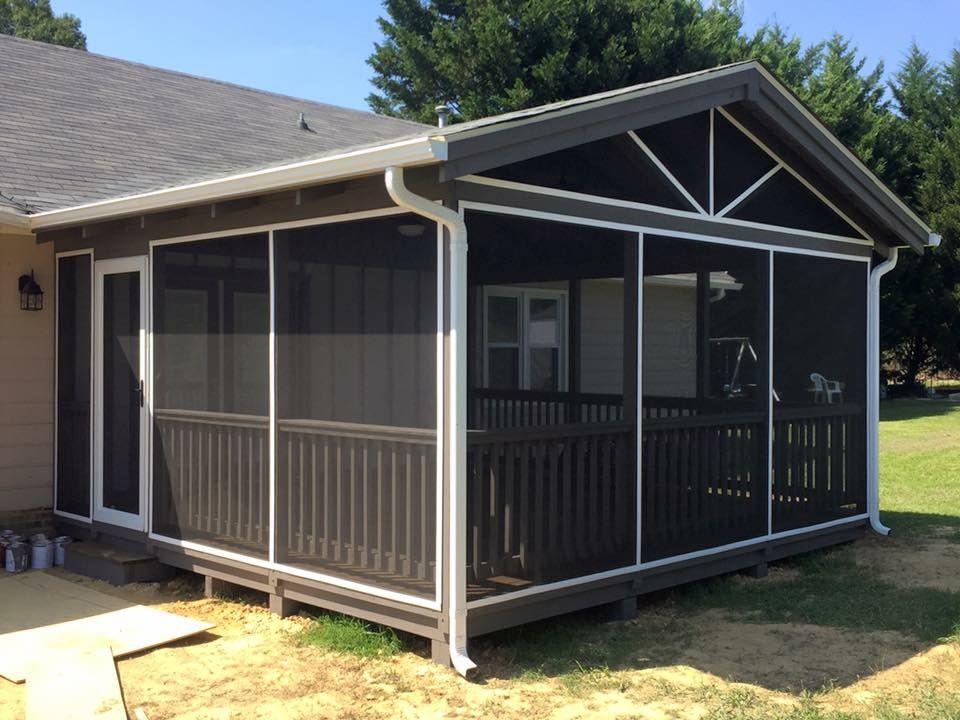
The Screen Porches in Midtown FL Process
How the job runs
Day one starts with a walk of the existing structure. We check the frame for rot at the base plates and corner posts, look at how the porch roof ties into the main roof, and note whether the screen is standard fiberglass mesh or a heavier pet-resistant or no-see-um weight, since that affects the rescreen scope. If it’s a full rebuild, we confirm footing and post condition before anything else happens.
Once the scope is set, the crew removes old screen and any damaged framing, replaces rotted wood or corroded aluminum members, and re-flashes the roof tie-in where the porch meets the house. New screen goes in stretched and stapled or spline-set depending on the frame type, then trim goes back on. Debris and old screen material get hauled off site the same day where possible.
On your end, the porch needs to be clear of furniture and stored items before the crew arrives, and if there’s a locked gate or side access needed to reach the porch, that access needs to be open. Beyond that, there’s nothing else required of you during the work itself.
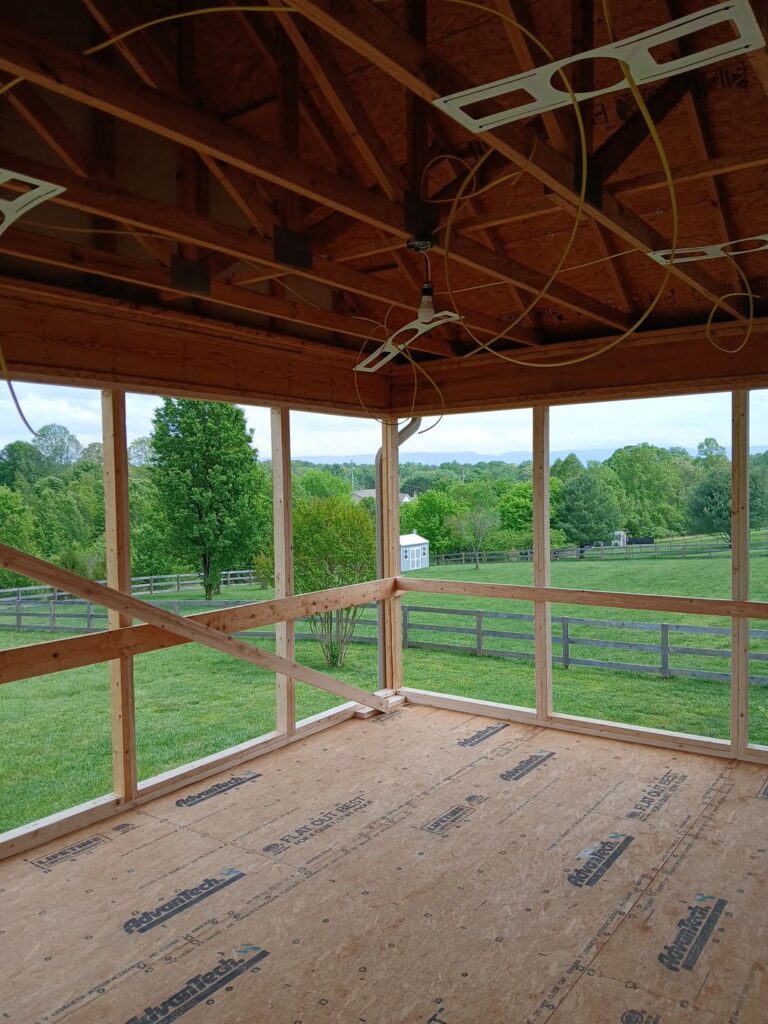
Rescreening an Existing Porch
What it costs
A straightforward rescreen on an existing sound frame runs toward {PRICE_LOW} on the low end. A full frame rebuild with rot repair, new framing members, and roof tie-in flashing runs up toward {PRICE_HIGH}, and can go higher depending on porch size and how much of the structure needs replacing. What moves the number most is the condition of the wood underneath the old screen, not the screen itself. A porch that looks fine from a few feet away can have soft sill plates once the trim comes off, and that’s not something we can price accurately until we’re on site with the old screen removed.
Why Homeowners Choose GutterHawk
Common questions
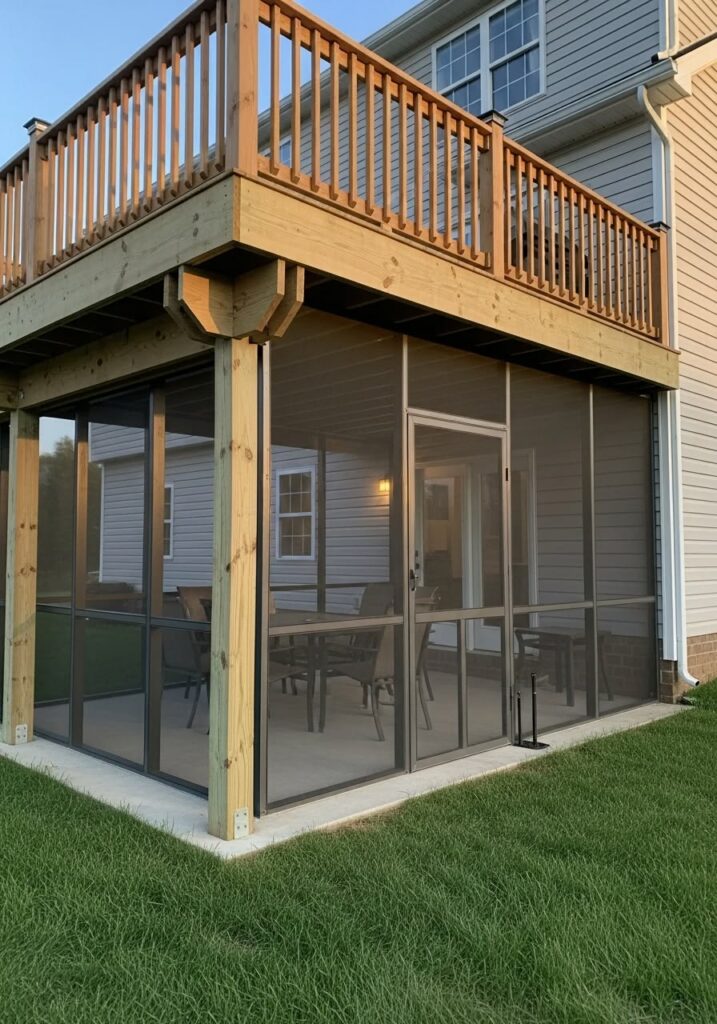
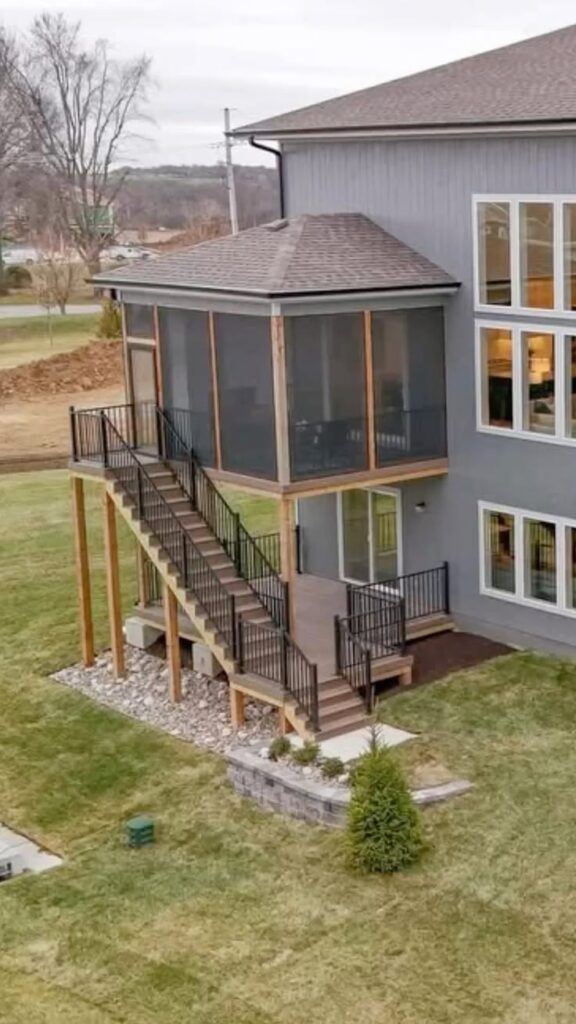
Serving Midtown From Two Locations
GutterHawk works out of two Midtown locations, Shamrock and North Monroe, which keeps scheduling short across the city and out into Leon County. Both teams build screen porches in Midtown FL to the same standard. We cover Killearn, Killearn Lakes, Betton Hills, Midtown, Downtown, Myers Park, Maclay, Bobbin Brook, Live Oak Plantation, Timberlane, Woodgate, Foxcroft, Bull Run, Apalachee Ridge, Ox Bottom, Golden Eagle, Southwood, Buck Lake, and Havana.
Get a Porch Quote
Whether it is a rescreen or a build from scratch, the sooner it is done the more of the season you get out of it. Call GutterHawk at 850-779-1081 for screen porches in Midtown FL.
Frequently Asked Questions
Q.1 How long does the screen last here?
Roughly five to ten years, depending on sun exposure and whether pets use it.
Q.2 What screen keeps out no-see-ums?
No-see-um mesh, which has a much tighter weave than standard fiberglass screen.
Q.3 Can I enclose my existing patio?
Usually yes, and it costs far less than building new since the slab and roof already exist.
Q.4 Do I need a permit?
Generally yes for new structures. We handle Leon County permitting as part of the job.
Q.5 How long does a build take?
A rescreen is a day or two. A full build is typically one to three weeks depending on scope.
Q.6 Can you add power and fans?
Yes, coordinated with a licensed electrician as part of the project.
Q.7 How much do screen porches in Midtown FL cost?
Rescreening is modest. Conversions cost less than new builds. We quote itemised after a site visit.
Working With Us Is Easy
01.
Request Your Quote
Getting the process started is easy! Simply fill out our quick form or call us at 850-656-4295. One of our friendly staff members will get in touch to finalize the details.
02.
We Work On Your Estimate
One of our expert estimators will get to to work analyzing your job and crafting a proposal. Of course, we’re here to answer any questions you may have.
03.
GutterHawk Gets To Work!
Contact Us
Have questions about your roof? Do you need information on gutter maintenance plans? No matter the question, GutterHawk is here to help!