GutterHawk Roofing & Gutter Specialists


- About
- Roofing
- Gutters
- Areas Served
Killearn Estates
Killearn Acres
Bradfordville
Betton Hills
Lafayette Park
Southwood
Killearn Lakes Plantation
OX Bottom Manor
Summerbrooke
Golden Eagle
Foxcroft
Bull Run
Waverly Hills
Buck Lake Mahan
Piney-Z
Apalachee Ridge Estates
Myers Park
Maclay
Bobbin Brook
Live Oak Plantation
Timberlane
Woodgate
Lake Jackson
Meridian Hills
Midtown
Downtown Tallahassee
Havana
- Financing
- Testimonials
- Recent Projects
- About
- Roofing
- Gutters
- Areas Served
Killearn Estates
Killearn Acres
Bradfordville
Betton Hills
Lafayette Park
Southwood
Killearn Lakes Plantation
OX Bottom Manor
Summerbrooke
Golden Eagle
Foxcroft
Bull Run
Waverly Hills
Buck Lake Mahan
Piney-Z
Apalachee Ridge Estates
Myers Park
Maclay
Bobbin Brook
Live Oak Plantation
Timberlane
Woodgate
Lake Jackson
Meridian Hills
Midtown
Downtown Tallahassee
Havana
- Financing
- Testimonials
- Recent Projects
Roof Leak Repair in Buck Lake / Mahan, FL
A stain that shows up on the ceiling over the guest bathroom in Buck Lake / Mahan almost never sits directly under the spot where the water actually got in. Water runs along rafters and decking before it drops, and on a roof with valleys, dormers, or a chimney tie-in it can travel eight or ten feet from entry point to drip point. If you have already had someone quote you a full roof replacement based on one ceiling spot, get the leak traced first. That is the job this page covers.
Where Roof Leaks Actually Start
- Pipe boots — the rubber collar around plumbing vents dries out and splits, usually between year eight and year twelve here. This is the single most common leak we find in Buck Lake / Mahan.
- Flashing — chimneys, skylights, dormers, and any point where the roof meets a wall. Sealant fails, metal lifts, and water walks straight in behind it.
- Valleys — where two roof planes meet, debris collects, and water is moving fastest. Pine straw sitting in a valley will find a way underneath.
- Nail pops — fasteners backing out under heat cycling, each one leaving a small hole directly through the decking.
- Lifted or missing shingles — wind gets under an edge, breaks the seal, and the next rain goes underneath rather than over the top.
- Backed-up gutters — when water cannot leave, it backs up under the drip edge and rots the roof from the outside in.
- Skylights and solar penetrations — anything cut through the roof is a leak waiting to happen if the seal around it is not maintained.


Same-Day and Emergency Response
Roof Leak Repair in Buck Lake / Mahan
This is a diagnostic job, not a re-roof. We come out to find where water is entering the structure, confirm it, and stop that specific point. That might mean resealing a boot around a plumbing vent, replacing cracked pipe flashing, digging out and repointing a chimney counter-flashing, or rebuilding a step flashing detail along a wall intersection that was never installed right the first time. Some leaks trace back to nail pops that worked loose as the deck flexed in heat and cold cycles. Others trace to a valley where debris built up and forced water sideways under the shingle course instead of down the channel.
We do not sell a leak-repair customer a roof replacement on the first visit. If the leak points to a bigger problem, wide-scale granule loss, decking that has gone soft in more than one spot, or shingles past their service life across the whole field, we tell you that plainly and separately from the leak fix itself. Those are two different conversations and two different scopes of work, and we keep them that way.
Insurance carriers want a documented cause and a dated inspection when a leak claim comes in, not a guess. We photograph the entry point, the interior damage path, and the roof condition around it so you have something concrete to hand your adjuster or your attorney if the claim goes that direction. We are not a law firm and we do not negotiate your claim. We give you the roof-side documentation that claim needs to move.

The Roof Leak Repair in Buck Lake / Mahan FL Process
What Buck Lake / Mahan homes are dealing with
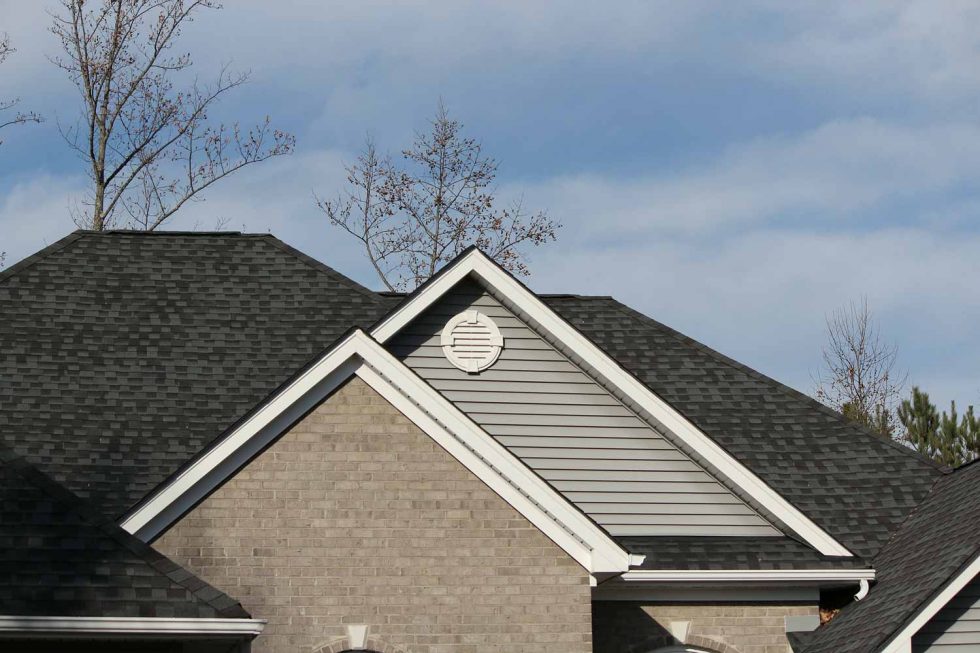
The Buck Lake / Mahan area sits on the east and southeast side of Buck Lake / Mahan, and the roof stock reflects a mix of build eras rather than one dominant type. You have older single-story homes with lower-pitch roofs closer in, and newer construction further out toward the edges of the corridor with steeper pitches and more roof planes, more valleys, more dormers, and more places for a flashing detail to fail. More roof planes means more linear feet of flashing, and flashing is where the overwhelming majority of leaks actually start, not in the field of the shingles themselves.
Tree canopy is a real factor out here. Pine and oak cover drops needles and leaf litter into valleys and around chimney crickets, and that debris holds moisture against the roof deck longer than a clear valley would. In hard summer storms, that same debris can dam a valley just long enough to push water sideways under a shingle edge. Drainage and grade around individual lots vary enough that we do not assume anything about how water moves off a given roof until we look at it in person. Some properties in this area fall under HOA architectural guidelines that affect shingle color and material choices on exterior work, so if your street has an HOA, tell us before we order materials, not after.
Why a Small Leak Is Worth Fixing Now
How the job runs
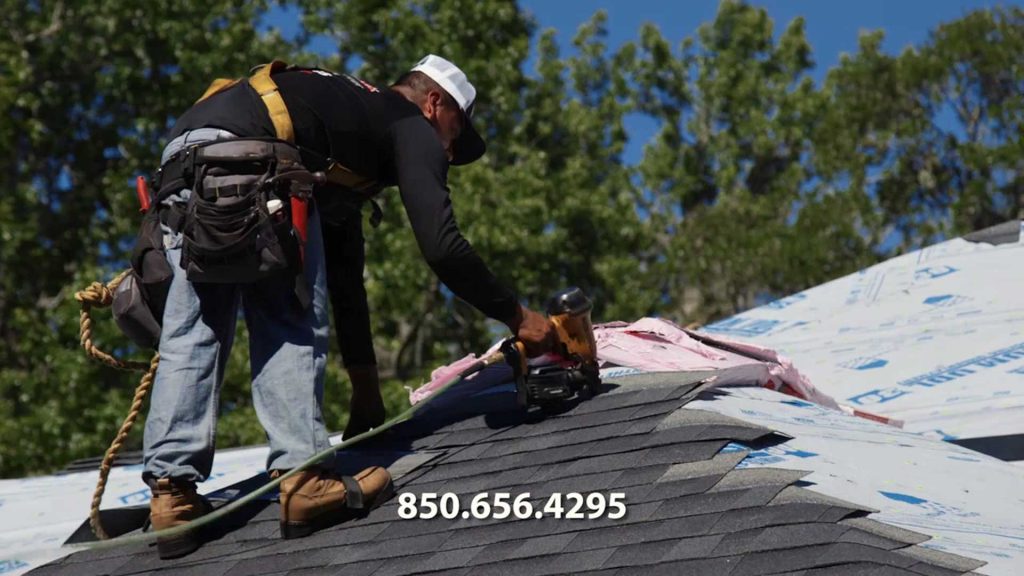
Day one is inspection, not repair. A crew member gets on the roof and traces the suspected entry point from the interior stain outward, checking flashing, boots, valleys, and any penetration near the affected area. We also check the attic side if access allows, since a wet rafter or stained decking tells you more about water travel than the roof surface alone.
Once we find the source, we walk you through what we saw with photos, and we quote the fix on the spot when it is a contained repair. If the cause turns out to be broader than one flashing detail, we tell you that before doing anything else so you are not surprised by scope creep partway through.
What we need from you: clear access to the attic if there is a hatch, and a heads-up on any active leak location so we are not chasing a stain that has already dried and moved on the ceiling by the time we arrive. If storms are stacking up in the forecast, we schedule around them, since a wet roof deck is not a safe place to be working and afternoon storms in this part of the year are not optional to plan around.

Leak Repair, General Repair, or Inspection?
What it costs
Most leak diagnosis and repair jobs in Buck Lake / Mahan run {PRICE_LOW} to {PRICE_HIGH}. Where you land in that range depends on how many penetrations or flashing details need attention, whether the deck underneath has taken on any moisture damage that needs to be addressed before resealing, roof pitch and how many stories the access requires, and whether the leak traces to one clear point or turns out to be two separate issues that happened to show up as one stain. We give you a number after we have actually seen the source, not before.
Why Homeowners Choose GutterHawk
Common questions
Water finds a leak fast. Waiting on it does not make the fix smaller, it usually just adds a wet insulation replacement and a drywall patch to the invoice. If you have a stain, a drip, or a musty smell in a ceiling or attic space anywhere in Buck Lake / Mahan, call GutterHawk’s Shamrock location at {PHONE_A} and we will get someone up there to trace it.

Serving Buck Lake / Mahan From Two Locations
GutterHawk works out of two Buck Lake / Mahan locations, Shamrock and North Monroe, which keeps response times short across the city and out into Leon County. Both teams handle roof leak repair in Buck Lake / Mahan FL the same way, tracing the source before touching anything. We cover Killearn, Killearn Lakes, Betton Hills, Midtown, Downtown, Myers Park, Maclay, Bobbin Brook, Live Oak Plantation, Timberlane, Woodgate, Foxcroft, Bull Run, Apalachee Ridge, Ox Bottom, Golden Eagle, Southwood, Buck Lake, and Havana.
Stop the Leak
Leaks do not fix themselves and they do not stay small. Call GutterHawk at 850-779-1081 for roof leak repair in Buck Lake / Mahan FL, and we will find where the water is getting in, tell you what it costs, and stop it properly.
Frequently Asked Questions
Q.1 How fast can you get to an active leak?
Active leaks go to the front of the schedule. Most get a same-day response, depending on weather and current call volume.
Q.2 Why is the stain on my ceiling nowhere near the damage?
Water travels along rafters and decking seams before it drops. The entry point is often several feet away.
Q.3 Can you repair a leak while it is still raining?
We can tarp it to stop further water getting in. The permanent repair waits until the roof is dry and safe.
Q.4 Will one leak mean I need a whole new roof?
Usually not. A single failed boot or flashing detail is a repair. Widespread failure is a different conversation.
Q.5 Do you fix the ceiling damage as well?
We handle the roof. We will tell you what interior drying or repair work is still needed once the leak is stopped.
Q.6 How much does roof leak repair in Buck Lake / Mahan FL cost?
Most run a few hundred to a couple of thousand dollars. We price it in writing after finding the source.
Q.7 Is leak repair covered by insurance?
Storm damage often is. Wear and age generally are not. We document what we find either way.
Working With Us Is Easy
01.
Request Your Quote
Getting the process started is easy! Simply fill out our quick form or call us at 850-656-4295. One of our friendly staff members will get in touch to finalize the details.
02.
We Work On Your Estimate
One of our expert estimators will get to to work analyzing your job and crafting a proposal. Of course, we’re here to answer any questions you may have.
03.
GutterHawk Gets To Work!
Contact Us
Have questions about your roof? Do you need information on gutter maintenance plans? No matter the question, GutterHawk is here to help!