GutterHawk Roofing & Gutter Specialists


- About
- Roofing
- Gutters
- Areas Served
Killearn Estates
Killearn Acres
Bradfordville
Betton Hills
Lafayette Park
Southwood
Killearn Lakes Plantation
OX Bottom Manor
Summerbrooke
Golden Eagle
Foxcroft
Bull Run
Waverly Hills
Buck Lake Mahan
Piney-Z
Apalachee Ridge Estates
Myers Park
Maclay
Bobbin Brook
Live Oak Plantation
Timberlane
Woodgate
Lake Jackson
Meridian Hills
Midtown
Downtown Tallahassee
Havana
- Financing
- Testimonials
- Recent Projects
- About
- Roofing
- Gutters
- Areas Served
Killearn Estates
Killearn Acres
Bradfordville
Betton Hills
Lafayette Park
Southwood
Killearn Lakes Plantation
OX Bottom Manor
Summerbrooke
Golden Eagle
Foxcroft
Bull Run
Waverly Hills
Buck Lake Mahan
Piney-Z
Apalachee Ridge Estates
Myers Park
Maclay
Bobbin Brook
Live Oak Plantation
Timberlane
Woodgate
Lake Jackson
Meridian Hills
Midtown
Downtown Tallahassee
Havana
- Financing
- Testimonials
- Recent Projects
Gutter Cleaning in Timberlane, FL
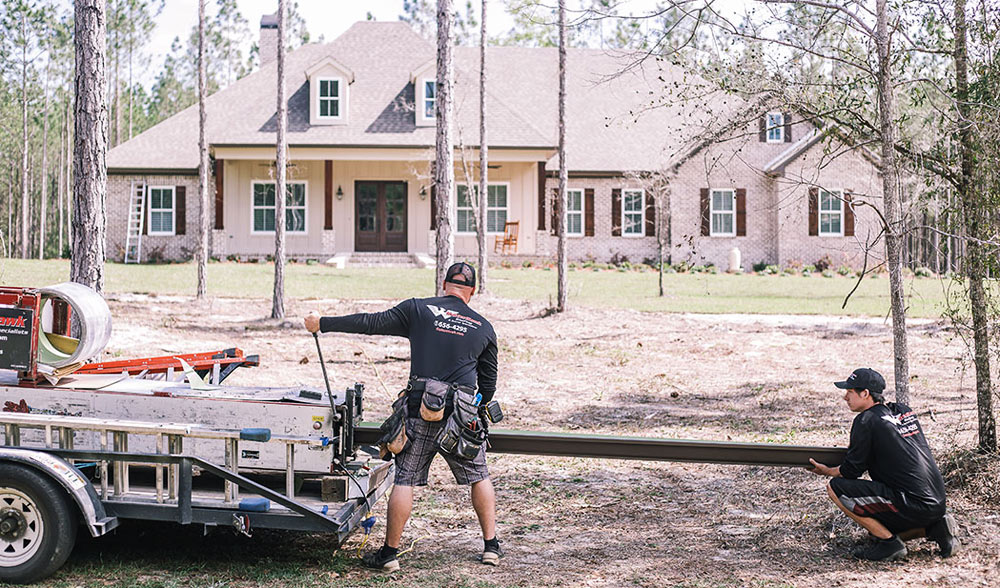
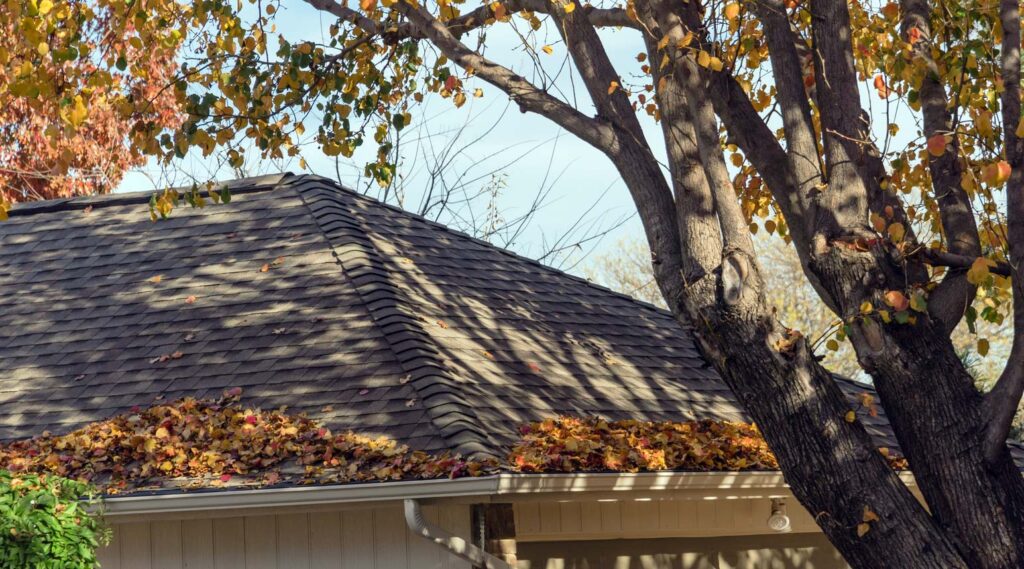
Timberlane Road runs under a heavy pine and oak canopy, and that canopy does not stop dropping material just because hurricane season is over. Long-needle pine straw packs into a gutter trough tighter than leaves do, and once it mats down with a little rain it stops water from moving at all, even on a system that was pitched correctly.
What a Cleaning Visit Includes
- Full debris removal — pine straw, leaves, twigs, shingle granules, and the compacted layer at the bottom that most people underestimate.
- Downspout clearing — the blockage is usually at the elbow or the outlet rather than in the gutter itself, and clearing the gutter alone fixes nothing.
- Flushing and flow check — water run through every run and every downspout to confirm it drains rather than assuming it does.
- Roof edge clearing — debris pulled off the first few feet of roof and out of the valleys, where it holds moisture against the shingles.
- Debris removed from site — bagged and taken away, not left in a pile on your lawn.
- Condition check — loose hangers, leaking joints, soft fascia, or a downspout that has come apart, reported with photos.
- Cleanup — the ground beneath the gutters left as we found it.

How Often, in This City
Gutter Cleaning in Timberlane
This page covers the one-off clear-out: a crew comes to a Timberlane property, pulls the accumulated pine straw, leaf litter, seed pods and grit out of the gutter run, checks that the downspouts are actually passing water, and leaves the system flowing before they leave. It is not a repair visit and it is not a gutter guard installation, though the crew will flag either if they see a problem while they are up there.
Some homeowners on Timberlane Road call after a spring pollen and seed drop, some call before the first named storm of the season, and some call because they haven’t had the gutters touched since the last time a contractor was on the roof. All three are the same job. The crew works the trough by hand with a scoop and a hose flush, not a blower, because a blower moves loose debris around without confirming the downspout is clear underneath it.
What Clogged Gutters Actually Do
What Timberlane homes are dealing with
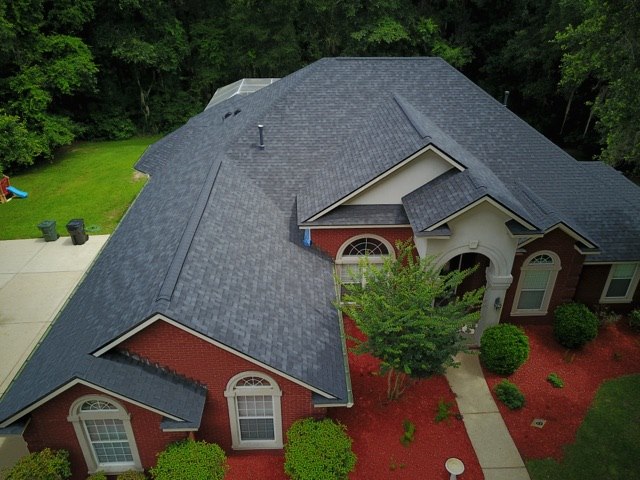
Timberlane sits in the north-central part of the county, and the housing stock reflects a build period that runs from the brick ranches of the 1960s and 70s through to newer infill closer to Thomasville Road. The older ranch homes typically carry a low-to-moderate roof pitch with asphalt shingle and painted wood fascia, which means the gutter hangers were often fastened into wood that has had fifty-plus years of Timberlane humidity to work on it. Newer construction in and around Timberlane tends toward steeper rooflines and fascia board that holds up better, but it collects the same pine straw load because the tree canopy doesn’t care what decade the house was framed.
Drainage grade varies block to block. Some Timberlane lots slope well away from the foundation and a clogged gutter just means an overflow that runs off the roof edge. Others sit flatter, and an overflow there pools closer to the slab, which is the kind of thing that turns a gutter problem into a foundation moisture problem if it goes a season or two unaddressed. If the property is inside an HOA-governed section of the neighborhood, exterior maintenance schedules or contractor requirements may apply. The homeowner would know that better than we would going in, and we work within whatever rules are in place.

The Gutter Cleaning in Timberlane FL Process
How the job runs
The crew arrives with ladders, hand tools and a water source, either the homeowner’s hose bib or a tank on the truck. First pass is a walk of the roofline from the ground to look at gutter attachment, sag, and any spots where straw or debris is visibly overflowing the trough. Then it’s ladder work: hand-clearing each section, feeding it toward the nearest downspout, and flushing that downspout with water to confirm it discharges freely at the bottom.
If a downspout is packed solid, the crew clears it from the top or, if needed, disconnects the lower elbow to clear it from below. Once the run is clean, they do a final water test down the whole gutter to check the pitch is actually carrying water to the outlet instead of sitting in a low spot. Debris comes off the property, not left bagged in the yard. The homeowner doesn’t need to do anything to prep for the visit beyond making sure gates are unlocked and pets are inside; the crew handles ladder placement and cleanup.
Why Not to Do It Yourself
What it costs
A single-story Timberlane ranch with a straightforward gutter run typically runs {PRICE_LOW} to {PRICE_HIGH} for a standard clean-out. What moves the number: total linear footage of gutter, how many stories the ladder has to reach, how packed the system is (a first-time clean after years of neglect takes longer than a maintenance visit), and whether any downspouts need to be pulled apart to clear a hard blockage. A two-story section or a heavily wooded lot with two canopy layers over the roof will land toward the higher end. We give a firm number after a look at the property, not before.
Why Homeowners Choose GutterHawk
Common questions

Serving Timberlane From Two Locations
GutterHawk works out of two Timberlane locations, Shamrock and North Monroe, which keeps scheduling short across the city and out into Leon County. Both teams handle gutter cleaning in Timberlane FL the same way. We cover Killearn, Killearn Lakes, Betton Hills, Midtown, Downtown, Myers Park, Maclay, Bobbin Brook, Live Oak Plantation, Timberlane, Woodgate, Foxcroft, Bull Run, Apalachee Ridge, Ox Bottom, Golden Eagle, Southwood, Buck Lake, and Havana.
Book a Gutter Cleaning
If water is coming over the front edge in ordinary rain, they are already full. Call GutterHawk at 850-779-1081 for gutter cleaning in Timberlane FL and we will clear them, flush them, and tell you what shape they are in.
Frequently Asked Questions
Q.1 How often do gutters need cleaning here?
Three or four times a year under pines, twice under oaks, once on an open lot.
Q.2 Do you clear the downspouts as well?
Yes, always. The blockage is usually in the downspout rather than the gutter.
Q.3 Do you take the debris away?
Yes. It is bagged and removed, not left on the lawn.
Q.4 Do I need to be home?
No. We only need exterior access, and you get the photo report either way.
Q.5 Will guards mean I never need this again?
No. Guards reduce the frequency a lot but do not eliminate it, especially under pines.
Q.6 Do you clean two-storey gutters?
Yes.
Q.7 How much does gutter cleaning in Timberlane FL cost?
It depends on property size, height, and how much is overhead. We quote before booking.
Working With Us Is Easy
01.
Request Your Quote
Getting the process started is easy! Simply fill out our quick form or call us at 850-656-4295. One of our friendly staff members will get in touch to finalize the details.
02.
We Work On Your Estimate
One of our expert estimators will get to to work analyzing your job and crafting a proposal. Of course, we’re here to answer any questions you may have.
03.
GutterHawk Gets To Work!
Contact Us
Have questions about your roof? Do you need information on gutter maintenance plans? No matter the question, GutterHawk is here to help!