GutterHawk Roofing & Gutter Specialists


- About
- Roofing
- Gutters
- Areas Served
Killearn Estates
Killearn Acres
Bradfordville
Betton Hills
Lafayette Park
Southwood
Killearn Lakes Plantation
OX Bottom Manor
Summerbrooke
Golden Eagle
Foxcroft
Bull Run
Waverly Hills
Buck Lake Mahan
Piney-Z
Apalachee Ridge Estates
Myers Park
Maclay
Bobbin Brook
Live Oak Plantation
Timberlane
Woodgate
Lake Jackson
Meridian Hills
Midtown
Downtown Tallahassee
Havana
- Financing
- Testimonials
- Recent Projects
- About
- Roofing
- Gutters
- Areas Served
Killearn Estates
Killearn Acres
Bradfordville
Betton Hills
Lafayette Park
Southwood
Killearn Lakes Plantation
OX Bottom Manor
Summerbrooke
Golden Eagle
Foxcroft
Bull Run
Waverly Hills
Buck Lake Mahan
Piney-Z
Apalachee Ridge Estates
Myers Park
Maclay
Bobbin Brook
Live Oak Plantation
Timberlane
Woodgate
Lake Jackson
Meridian Hills
Midtown
Downtown Tallahassee
Havana
- Financing
- Testimonials
- Recent Projects
Shingle Roofing in Southwood, FL
Southwood sits at the south end of the corridor, far enough from downtown that afternoon storms tend to build over it before they roll north, and the roofs down here take that weather straight on. A shingle roof installed on a slab-built house at the bottom of that corridor is going to see different wind loading and runoff patterns than one three miles north, and the material choice should reflect that instead of a generic spec sheet.
Shingle Types We Install
- Architectural shingles — the standard choice now. Laminated, thicker, dimensional, with better wind ratings and a longer life than three-tab. This is what goes on most homes we do.
- Architectural shingles — the standard choice now. Laminated, thicker, dimensional, with better wind ratings and a longer life than three-tab. This is what goes on most homes we do.
- Impact-resistant shingles — rated for hail and debris impact, and worth asking your insurer about, since some carriers discount for them.
- Three-tab shingles — the flat, economical option. Shorter life and lower wind ratings, still used on rentals, outbuildings, and tight budgets.
- Designer and premium shingles — heavier profiles that mimic slate or shake, for homes where the roof line is a big part of how the house reads from the street.
How Long a Shingle Roof Lasts in This Climate
Shingle Roofing in Southwood
This page is about the shingle itself, not the roof system as a whole. Two categories cover almost every job GutterHawk does in this part of Leon County: 3-tab shingles and architectural (laminate) shingles. 3-tab is a flat, single-layer product with a uniform tab pattern. It’s lighter, less expensive per square, and has a lower wind rating than architectural shingle by design, because it’s a single layer of asphalt mat rather than two laminated together.
Architectural shingles are built from two fused layers, which gives them a dimensional look and a heavier profile. That extra layer is also why they carry a higher wind rating than 3-tab under the same manufacturer testing. We install lines from major manufacturers including GAF, Owens Corning, and CertainTeed, and the rating differences between a builder-grade 3-tab and a laminated architectural product from any of those lines are meaningful enough that we walk homeowners through the spec sheet before ordering material, not after.
We don’t quote a wind rating number on this page because the actual rating depends on the specific product line, the fastening pattern used, and the deck condition underneath it, all of which get documented on the manufacturer’s own literature and confirmed at time of install. What we will say plainly: architectural shingle outperforms 3-tab in wind resistance, and for a house in a storm corridor, that’s the deciding factor for most homeowners once they see both products side by side.
What Goes Under the Shingles
What Southwood homes are dealing with
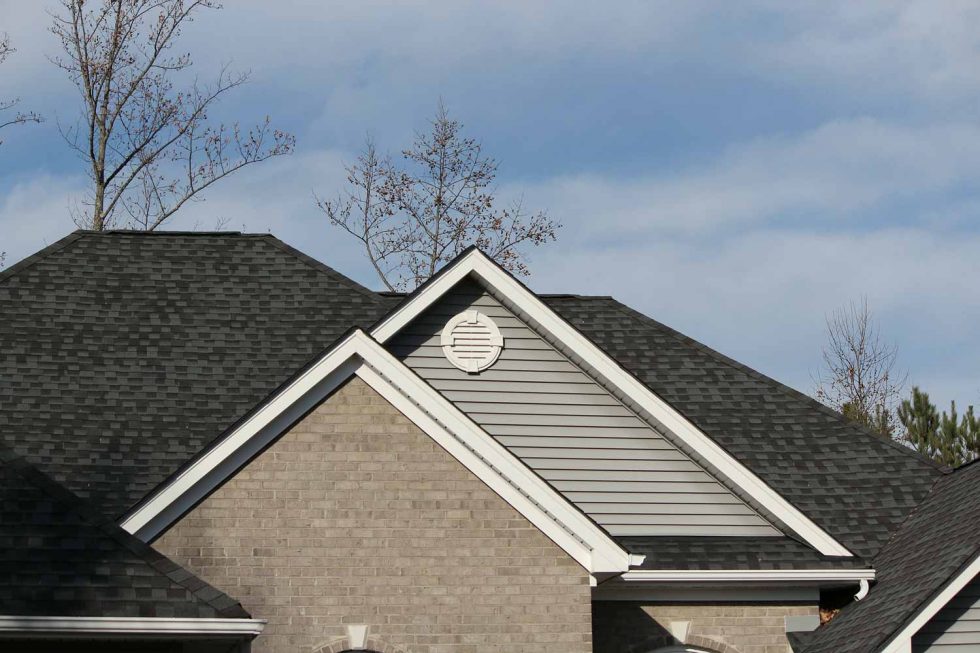
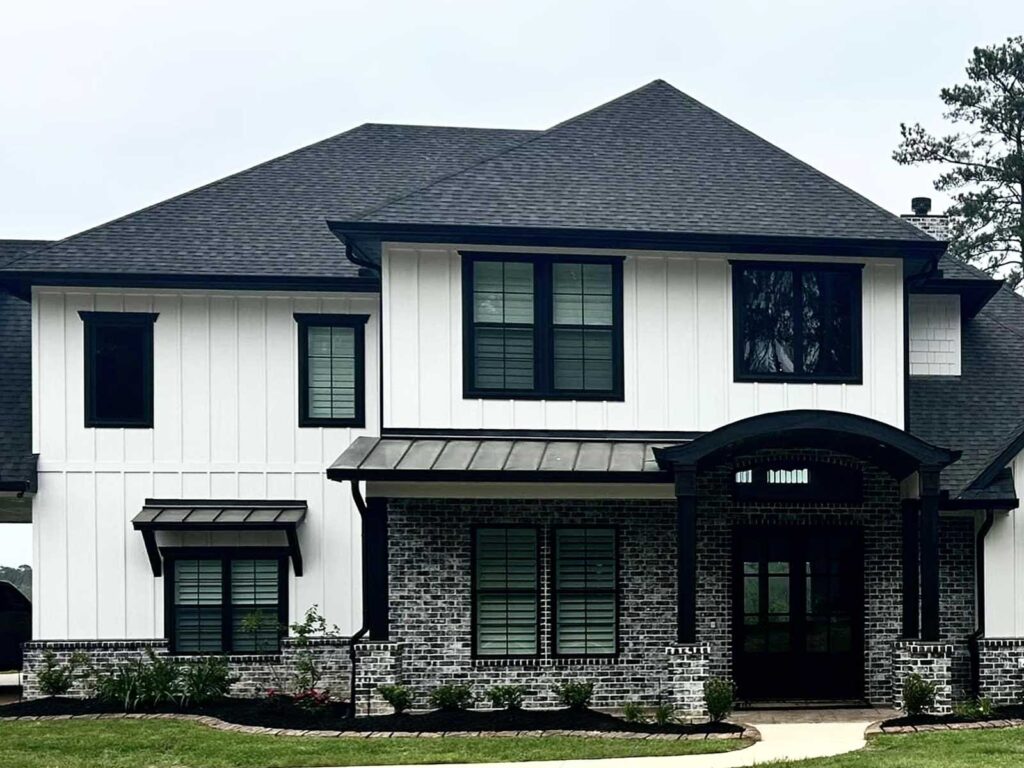
Southwood is newer construction, mostly built from the late 1990s through the 2000s, and it shows in the roof geometry. You see more complex rooflines here than in the older brick ranch stock closer to town: multiple hips, dormers, and steeper pitches that were popular in that build era’s plan books. Steeper pitch sheds water faster, which is good for the shingle’s lifespan, but it also means more valleys and flashing transitions where wind-driven rain during a summer storm can find a weak seam if the underlayment or flashing wasn’t detailed correctly the first time.
The tree canopy at this end of the corridor is a mix of planted ornamentals and remaining pine stands from before the subdivision went in, and pine needle drop is steady through the fall and after any wind event. Needles collect in valleys and behind chimney crickets faster than they collect on a flat gable roof, and if they’re not cleared they hold moisture against the shingle surface, which accelerates granule loss and gives algae a foothold on the north-facing slopes. Grading in this part of Southwood generally moves water away from the slab toward the street, which is standard for the era, but roof drainage still has to clear the fascia line cleanly or it backs up under the drip edge. Most sections of Southwood fall under an HOA with architectural review requirements, so shingle color and, in some cases, product line need approval before a reroof goes in. We factor that into scheduling on every job here.
The Shingle Roofing in Southwood FL Process
How the job runs
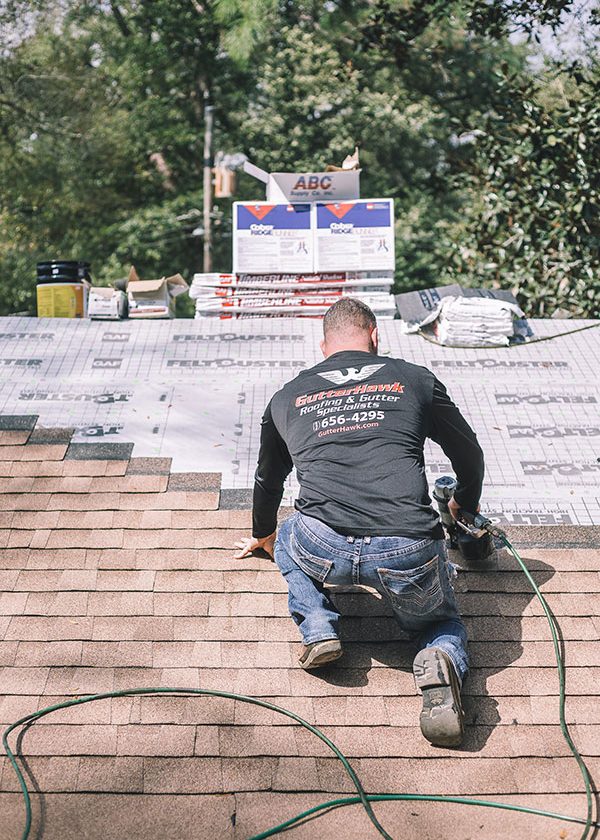
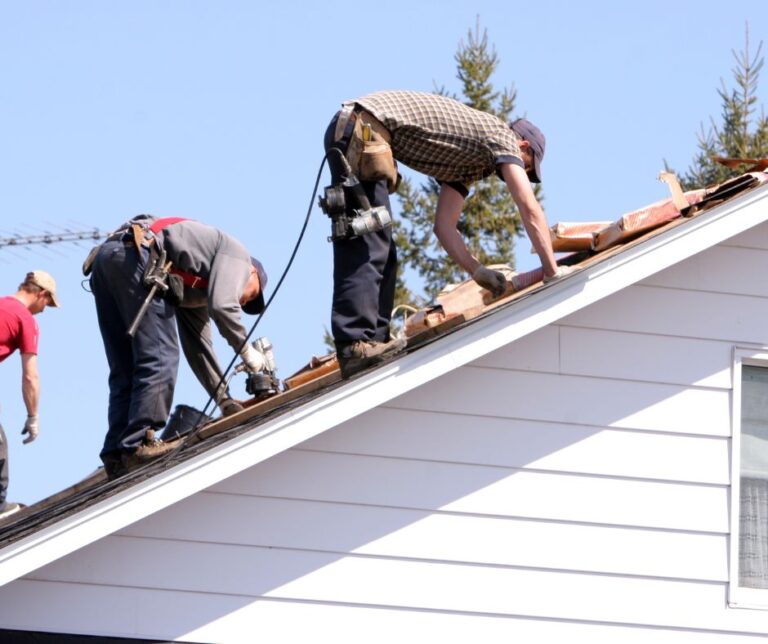
Day one starts with a full material delivery and a walk of the roof to confirm deck condition before a single shingle comes off. We tear off the existing roof in sections rather than stripping the whole thing at once, which keeps the house dry if weather moves in mid-day, and that matters in a corridor where afternoon storms build with little warning most of the summer.
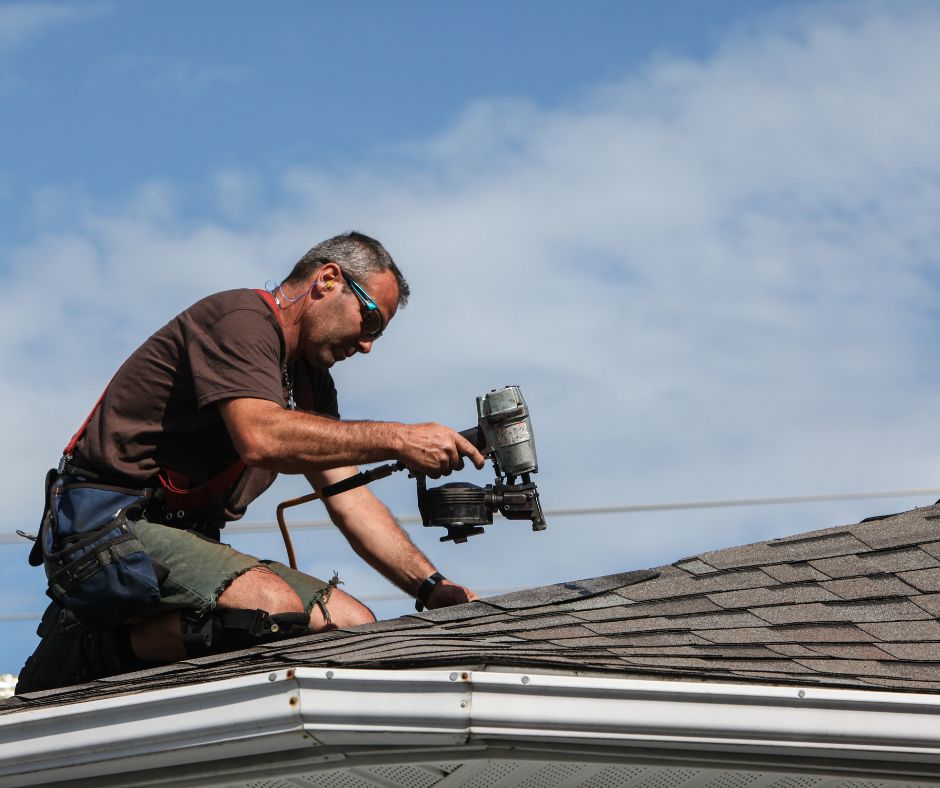
Once the deck is exposed, we check for soft spots, delamination, and any rot around penetrations, and we replace bad decking before dry-in. Underlayment and flashing go down next, ice-and-water shield or equivalent at valleys and eaves per the manufacturer spec, then the shingle field, then ridge and hip caps. Debris comes off the property the same day it’s generated, not left in a pile for the end of the job. On the homeowner’s side, you need to move vehicles out of the driveway for the delivery and dumpster, confirm any HOA color approval is already on file, and give us access to attic space if we need to check ventilation from the inside.
Signs Your Shingle Roof Is Near the End
- Curling and cupping — shingle edges lifting or the centres dishing. Once it is happening across whole slopes rather than a few pieces, the mat is finished.
- Bald patches — areas where the granules have gone and the asphalt underneath is exposed to direct sun.
- Granules by the handful — a few in the gutter is normal at any age. Enough to scoop out means the surface is breaking down.
- Leaks in more than one place — a single leak is a repair. Three leaks in three unrelated spots is a roof telling you something.
- Sagging along the ridge or between rafters — a structural signal, not a surface one, and worth looking at quickly.
- Age past twenty years — even a roof that looks acceptable is on borrowed time at that point in this climate.
What it costs
A shingle reroof in Southwood typically runs {PRICE_LOW} to {PRICE_HIGH}, and the spread comes down to a few specific factors: whether you’re going with 3-tab or architectural shingle, the total roof area and pitch complexity, how much decking needs replacement once we’re into the tear-off, and whether the HOA-approved color requires a specific product line that carries a different cost than standard stock. Steeper, multi-hip rooflines common in this part of Southwood take more labor hours per square than a simple gable roof, which also affects where a given job lands in that range. We give a firm number after the roof walk, not before.
Shingle Roof Repair
Common questions
Shingle, Metal, or a Repair?
Shingle roofing is the sensible default: lower cost, fast installation, and plenty of life for most owners. Metal roofing costs two to three times as much and lasts twice as long, which suits people staying put long term. If your roof is under fifteen years old with a problem in one area, a repair is almost certainly the answer rather than either. We do all of it, so the recommendation is not tied to the job we would rather sell.
Get a Shingle Roof Quote
Whether you need one section fixed or the whole roof replaced, get a look at it before the next storm season rather than after. Call GutterHawk at 850-779-1081 for shingle roofing in Southwood FL and we will tell you what shape it is in and what it needs.
Frequently Asked Questions
Q.1 How long do shingle roofs last in Southwood?
Fifteen to twenty-five years for architectural shingles. Heavy shade and poor ventilation pull that down.
Q.2 Are algae-resistant shingles worth the extra?
In this climate, yes. They hold off the black streaking for years and cost only slightly more.
Q.3 Can new shingles go over the old ones?
Code sometimes allows it, but we advise against it. You cannot inspect decking you never uncovered.
Q.4 How long does a shingle roof replacement take?
Most homes are one to two days, weather permitting. Complex or large roofs take longer.
Q.5 Do I need to replace the whole roof for a leak?
Usually not. Isolated leaks are repairs. Widespread curling and granule loss are a different conversation.
Q.6 What wind rating should I look for?
Ask for the rating in writing on your quote. Architectural shingles rate considerably higher than three-tab.
Q.7 How much does shingle roofing in Southwood FL cost?
It varies with size, pitch, and decking condition. We give a written price after measuring the roof.
Working With Us Is Easy
01.
Request Your Quote
Getting the process started is easy! Simply fill out our quick form or call us at 850-656-4295. One of our friendly staff members will get in touch to finalize the details.
02.
We Work On Your Estimate
One of our expert estimators will get to to work analyzing your job and crafting a proposal. Of course, we’re here to answer any questions you may have.
03.
GutterHawk Gets To Work!
Contact Us
Have questions about your roof? Do you need information on gutter maintenance plans? No matter the question, GutterHawk is here to help!