GutterHawk Roofing & Gutter Specialists


- About
- Roofing
- Gutters
- Areas Served
Killearn Estates
Killearn Acres
Bradfordville
Betton Hills
Lafayette Park
Southwood
Killearn Lakes Plantation
OX Bottom Manor
Summerbrooke
Golden Eagle
Foxcroft
Bull Run
Waverly Hills
Buck Lake Mahan
Piney-Z
Apalachee Ridge Estates
Myers Park
Maclay
Bobbin Brook
Live Oak Plantation
Timberlane
Woodgate
Lake Jackson
Meridian Hills
Midtown
Downtown Tallahassee
Havana
- Financing
- Testimonials
- Recent Projects
- About
- Roofing
- Gutters
- Areas Served
Killearn Estates
Killearn Acres
Bradfordville
Betton Hills
Lafayette Park
Southwood
Killearn Lakes Plantation
OX Bottom Manor
Summerbrooke
Golden Eagle
Foxcroft
Bull Run
Waverly Hills
Buck Lake Mahan
Piney-Z
Apalachee Ridge Estates
Myers Park
Maclay
Bobbin Brook
Live Oak Plantation
Timberlane
Woodgate
Lake Jackson
Meridian Hills
Midtown
Downtown Tallahassee
Havana
- Financing
- Testimonials
- Recent Projects
New Construction Roofing in Lafayette Park, FL
Lafayette Park sits in the central-east corridor where infill lots and small-scale builds are going up between older housing stock, not out in a greenfield subdivision with a single builder controlling every roof. That mix means a crew showing up for new construction work here has to plan around occupied streets, tighter staging, and a permitting review that treats each lot on its own timeline rather than as one of two hundred identical plans. GutterHawk builds our new construction scheduling around that reality instead of a subdivision template.
What We Cover on a Build
- Dry-in — underlayment and temporary weather protection as soon as the deck is on, so interior trades can start without weather risk.
- Full roof installation — shingle, metal, or tile, installed to the plans and the manufacturer specification.
- Flashing and penetration detailing — chimneys, valleys, sidewalls, vents, and anything the mechanical or plumbing trades put through the deck.
- Ventilation — ridge and soffit systems sized to the attic volume rather than whatever fits.
- Gutters, fascia, and soffit — the whole roofline from one subcontractor, which removes a coordination problem from your schedule.
- Additions and remodels — tying new roof structure into existing, where the transition detail is the part that leaks if it is rushed.
- Multi-unit and spec builds — repeat work across a development, priced and scheduled as a programme rather than one house at a time.
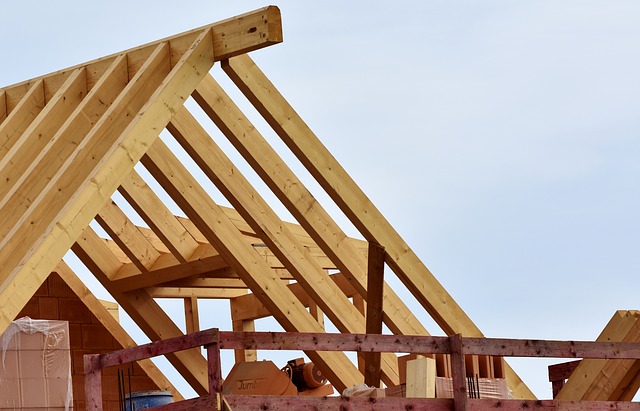

Working to a Construction Schedule
New Construction Roofing in Lafayette Park
This is builder and general contractor work. We install roofing systems to the plans and specs a GC hands us, not a homeowner replacement job, and we price and schedule it that way. That means confirming underlayment type, fastener pattern, flashing details, and ventilation calculations against the approved plan set before a single bundle goes up, and it means working inside a draw schedule instead of a single invoice at completion.
We install to Florida Building Code 7th Edition requirements as they apply to the specific system on the plan set. We don’t quote code language back to a GC or an inspector, and we don’t state a wind uplift number or a nailing pattern as a blanket fact independent of the manufacturer spec sheet and the approved drawings for that job. What we do is install to whatever the plans and the applicable code section call for on that address, document it, and be ready for the inspection that follows.
For multi-unit or multi-lot work in and around Lafayette Park, we coordinate material staging and crew sequencing so one roof isn’t waiting on another’s inspection to close out. If you’re running more than one lot at a time in this corridor, that sequencing is usually the difference between a draw that clears on time and one that sits.
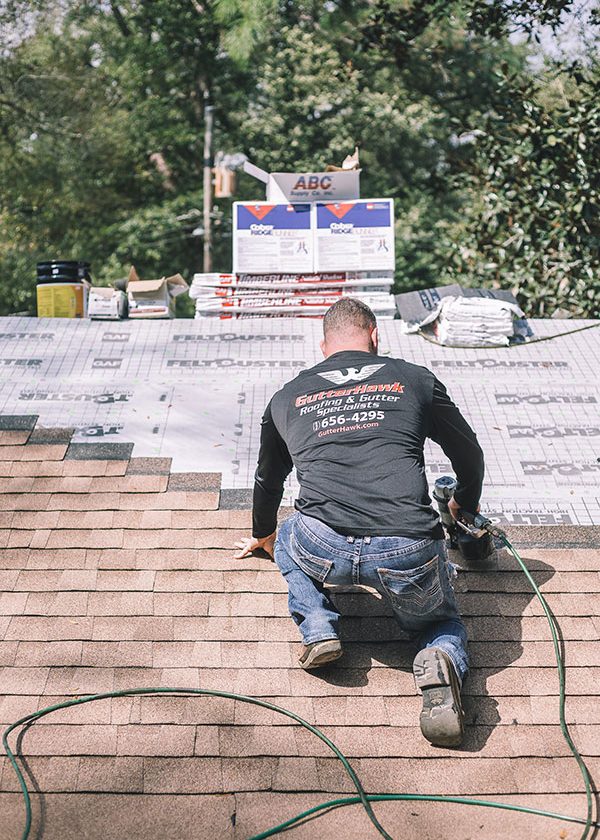
Building to Florida Code
What Lafayette Park homes are dealing with
The lots in this part of the corridor sit under a heavy pine and oak canopy that most subdivision plans out along Thomasville Road simply don’t have to deal with. New construction roofs here go up under trees that are already forty or fifty years old, which means debris and needle load starts accumulating in valleys and behind chimneys before the crew has even left the site. That has real consequences for roof design: valley flashing detail, gutter placement, and slope-to-drain planning need to account for a tree canopy that isn’t going anywhere, not a cleared lot that stays clean for a season.
Grading and drainage on infill lots in this corridor also tends to be tighter than a fresh subdivision cut, since the surrounding lots and street grades were often set decades before the new build went in. That affects where downspouts discharge and how much slope a roof plane actually has to work with once it ties into existing site drainage. We haven’t seen a formal HOA architectural review process govern this specific corridor the way some newer platted subdivisions do, so exterior material approval here runs through the standard Leon County plan review and permitting process rather than a separate design committee. If your project does fall under a specific HOA or deed restriction, that’s a detail for your civil set and your GC to confirm before roofing starts, not something we assume either way.
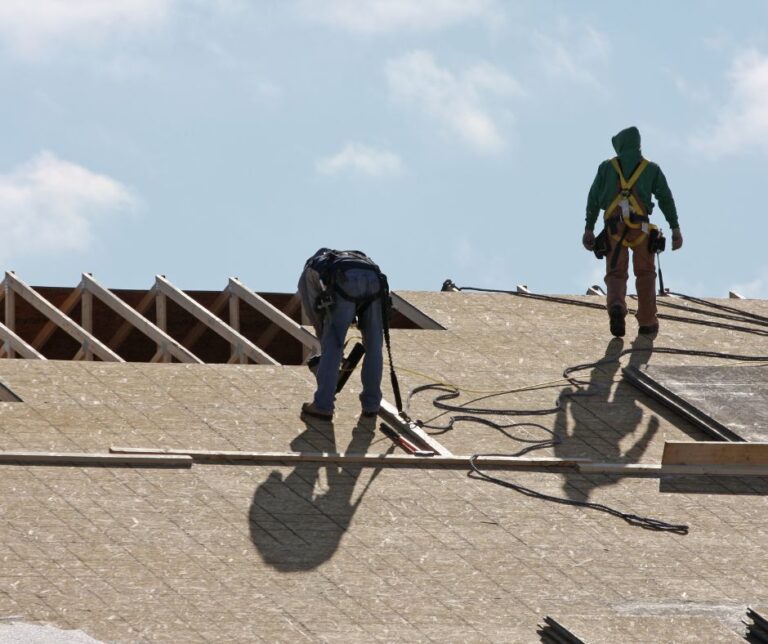
The New Construction Roofing in Lafayette Park FL Process
How the job runs
Day one starts with a plan review meeting, not a delivery truck. We walk the roof plan against the elevation drawings, confirm material takeoff, and flag anything that looks like it will conflict with the tree canopy or drainage conditions on that specific lot. Once that’s settled, we schedule material delivery to land on-site within the window the GC has open for dry-in, since staging roofing material on an active infill lot with limited laydown space is its own logistics problem.
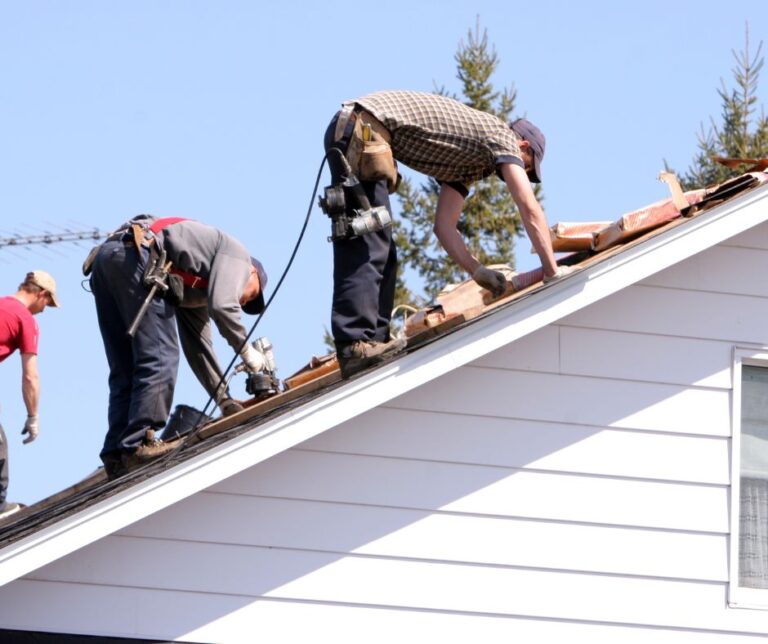
Installation follows the sequence in the approved plan set: underlayment, flashing at every penetration and valley, then the finished roofing material, with photo documentation at each stage that draw inspections typically require. We coordinate directly with the GC’s inspection schedule rather than working around it, since a roof that’s ready three days before the inspector can get out doesn’t help a draw clear any faster. What we need from the GC or homeowner side is site access, a clear staging area, and confirmation of any change orders before we install rather than after.
Why the Roof Detail Matters More on New Builds
What it costs
New construction roofing in this corridor runs roughly {PRICE_LOW} to {PRICE_HIGH}, and the spread comes down to roof complexity, material selection called for in the spec, and how many penetrations, valleys, and dormers the plan set includes. A simple gable roof on a single infill lot prices differently than a roof with multiple roof planes tying into an addition or a second structure on the same parcel. Draw structure and payment terms also factor into scheduling, since a project with a tight draw schedule may need material ordered further in advance to avoid a gap between delivery and installation.
What New Construction Roofing Costs
Common questions
Serving Lafayette Park From Two Locations
GutterHawk works out of two Lafayette Park locations, Shamrock and North Monroe, covering new construction across the city and out into Leon County. Both teams handle new construction roofing in Lafayette Park FL to the same standard, including Southwood, Killearn Lakes, Ox Bottom, Golden Eagle, Buck Lake, and the developments out toward Havana.
Get Priced From Your Plans
Send us the drawings and we will give you a number and a date. Call GutterHawk at 850-779-1081 for new construction roofing in Lafayette Park FL, or ask us to quote a full development rather than one lot.
Frequently Asked Questions
Q.1 Can you price from plans before the frame is up?
Yes. Send the drawings and we will do a takeoff and give you a fixed price.
Q.2 How quickly can you dry in after the deck is on?
Usually within days, weather permitting. We schedule it against your programme in advance.
Q.3 Do you handle gutters and soffit as well?
Yes. The whole roofline from one subcontractor, which is one less trade to coordinate.
Q.4 Do you do multi-lot developments?
Yes, and repeat work across a development is priced better than one-off jobs.
Q.5 Who handles permitting and inspections?
We pull our own permits and attend the roof inspection.
Q.6 Does the warranty transfer to the homeowner?
Yes. Our written workmanship warranty transfers, alongside the manufacturer coverage.
Q.7 How much does new construction roofing in Lafayette Park FL cost?
We price from drawings, so you get a fixed number rather than an allowance that moves later.
Working With Us Is Easy
01.
Request Your Quote
Getting the process started is easy! Simply fill out our quick form or call us at 850-656-4295. One of our friendly staff members will get in touch to finalize the details.
02.
We Work On Your Estimate
One of our expert estimators will get to to work analyzing your job and crafting a proposal. Of course, we’re here to answer any questions you may have.
03.
GutterHawk Gets To Work!
Contact Us
Have questions about your roof? Do you need information on gutter maintenance plans? No matter the question, GutterHawk is here to help!