

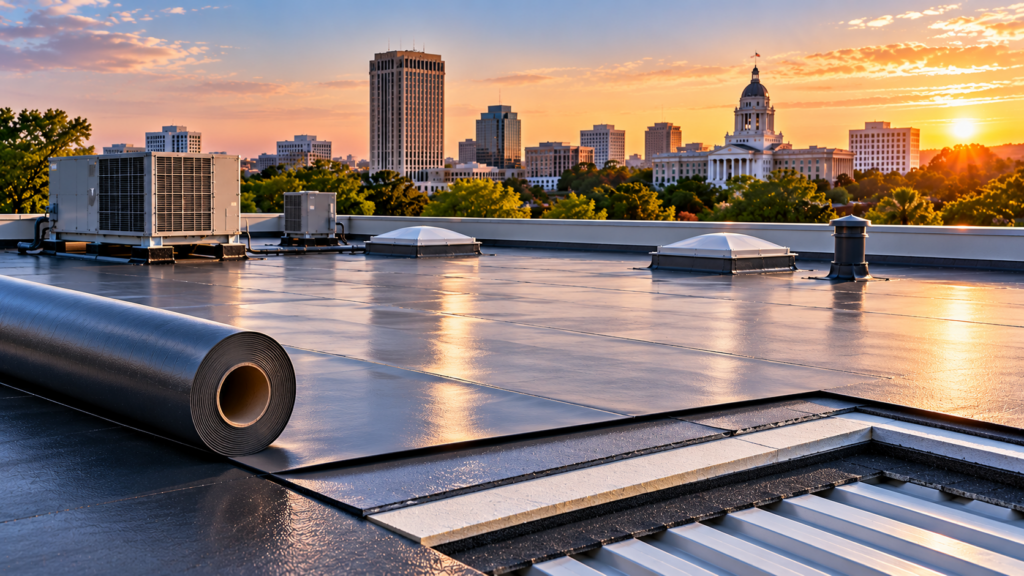
If you own a commercial building, a home with a flat section, or a low-slope addition, you’ve probably heard the term “membrane roofing.” Shingles and metal panels get most of the attention, but membrane systems protect a huge number of buildings. Here is what they are, how they work, and whether one makes sense for your property.
What Is Membrane Roofing?
Membrane roofing is a roofing system built from large, flexible sheets of synthetic material. Instead of overlapping small pieces like shingles, installers roll out wide sheets across the roof deck and join them into one continuous waterproof layer. Because there are far fewer seams than on a shingle roof, there are fewer places for water to get in.
These systems are used mainly on flat and low-slope roofs, where water drains slowly and needs a seamless barrier. That is why you see them on retail centers, offices, warehouses, and apartment buildings, and increasingly on residential porches, additions, and modern home designs.
Common Types of Membrane Roofing
Most membrane roofs fall into three categories:
- TPO (thermoplastic polyolefin): A popular single-ply option, usually white or light-colored. Seams are heat-welded, and the reflective surface helps keep buildings cooler.
- PVC (polyvinyl chloride): Similar to TPO, with welded seams and strong resistance to chemicals, grease, and standing water. It is common on restaurants and other commercial properties.
- EPDM (ethylene propylene diene monomer): A durable synthetic rubber, typically black, known for flexibility and weather resistance.
The sheets can be attached in three ways. A fully adhered system glues the membrane to the substrate. A mechanically fastened system secures it with screws and plates. A ballasted system holds it in place with smooth stone or pavers. The right choice depends on your roof structure, budget, and wind exposure.
Benefits of a Membrane Roof
Fewer leak points. Welded or sealed seams create a continuous barrier, which matters during Florida’s heavy summer downpours.
Energy efficiency. Light-colored membranes reflect sunlight rather than absorb it, which can reduce cooling demand in a hot, humid climate.
Lightweight design. Membranes weigh far less than tile or built-up systems, so they place less stress on the structure.
Long service life. With good installation and regular care, many membrane systems last 20 to 30 years or more, depending on the material.
Repair-friendly. Punctures and seam issues can usually be patched without replacing the whole roof.
Why Membrane Roofing Works for Tallahassee
Tallahassee roofs deal with intense sun, frequent thunderstorms, tropical weather, and falling debris from mature trees. A membrane system handles several of these well, but only if the details are right. Proper drainage is critical, because ponding water shortens a membrane’s life. Flashing around vents, HVAC units, and parapet walls has to be done carefully. Sheets must also be fastened or adhered to resist wind uplift during storm season.
That is why installer experience matters as much as the material. Even a high-quality membrane will fail early if the seams or edges are poorly done.
When to Consider a Membrane Roof
A membrane system may be a good fit if your building has a flat or low-slope roof, if your current roof leaks repeatedly at seams, or if you want to lower cooling costs. If you aren’t sure what your roof needs, a professional can tell you whether repair, restoration, or a new system is the smarter investment.
Work With Local Roofing Specialists
GutterHawk has served Tallahassee property owners for over 20 years and handles both roofing and gutters, so your whole water-management system is covered. Whether you manage a business or own a home, our team can inspect your roof and recommend the right solution.
Explore our commercial roofing services, learn about roof replacement, or schedule a roof inspection to find out where your roof stands. Call 850-779-1081 or email [email protected] for a free estimate.
Frequently Asked Questions
It is made from synthetic sheets such as TPO, PVC, or EPDM rubber. Each material has its own strengths in flexibility, chemical resistance, and heat reflection.
Most last between 20 and 30 years, depending on the material, installation quality, and maintenance. Regular inspections help you reach the high end of that range.
Yes, when properly installed. Reflective membranes help manage heat, and welded seams resist heavy rain. Good drainage and secure attachment are essential in storm-prone areas.
TPO and PVC are plastic-based, heat-welded systems, with PVC offering better chemical resistance. EPDM is a rubber membrane that is typically seamed with adhesives or tape and is known for durability.
Usually, yes. Punctures, torn seams, and flashing problems can often be patched without replacing the roof, which is why timely inspections save money.