

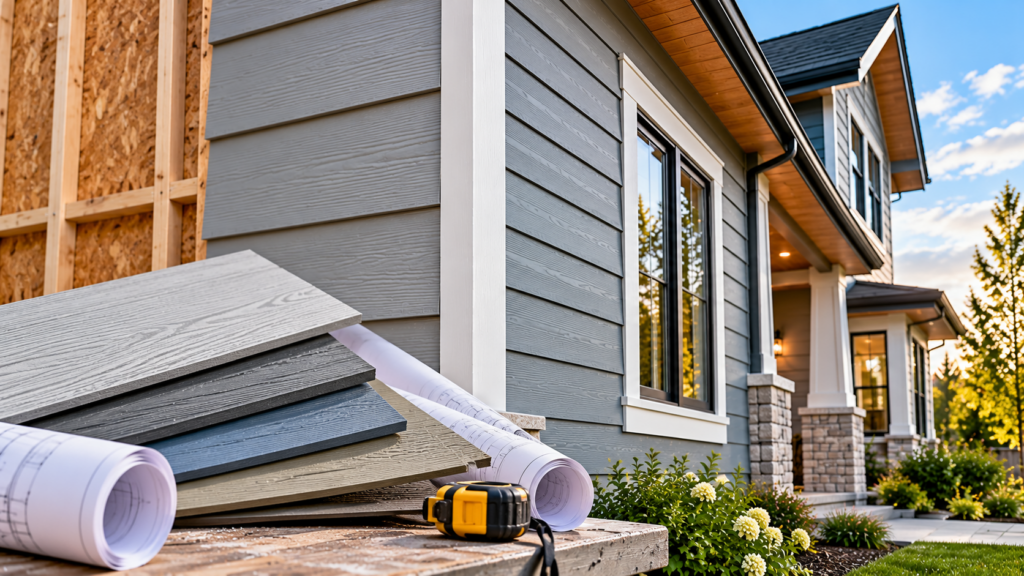
What is James Hardie siding? It is fiber cement siding, made from cement, sand and cellulose fibers pressed into planks, panels and shingles. It looks like painted wood but acts more like masonry. In humid, storm-prone Tallahassee, that is why you see it on so many homes.
James Hardie is the brand, and fiber cement is the material. Other makers sell it too, but Hardie is the name most homeowners hear first. Siding also depends on the roof above it, so book a roof inspection before you sign for new siding. A leak at the roof line can soak the wall below.
What is James Hardie siding made of?
Hardie boards blend cement, sand and cellulose fibers, then cure and finish at the factory. The line has a few main pieces. For example, HardiePlank is the classic lap siding that mimics wood clapboard. Large vertical sections use HardiePanel, often for board-and-batten looks. HardieShingle copies cedar shake, and HardieTrim finishes corners and windows.
Because the base is mineral, termites do not eat it and rot has nothing to feed on. It also resists fire far better than wood and will not melt like vinyl. Still, termites can reach the wood framing behind any siding, so keep up your termite inspections.
Styles and colors that fit Florida homes
Hardie offers lap siding in several widths, plus shingle and vertical panel looks. For color, ColorPlus is the factory-applied finish, cured in a controlled setting instead of on your wall in July humidity. Ask for a sample board and hold it against your roof in daylight, because screens and showrooms mislead.
Our advice: pick ColorPlus over field painting when you can. The finish goes on evenly, and you avoid waiting for a dry week to paint. Lighter shades reflect heat and hide pollen well, which helps when spring pine pollen turns every surface yellow.
What is James Hardie siding like in Tallahassee weather?
Our summers bring heat, thick humidity and daily thunderstorms. Wood siding can swell and rot in that. Vinyl can warp in direct heat and crack when hit by debris. So fiber cement holds its shape better through all of it.
It is not maintenance-free, though. Check caulk at joints and trim every few years. Shaded walls under oak trees grow mildew, so rinse them with a hose and soft brush. Keep gutters flowing too, because overflow stains and soaks the wall below. Good gutter maintenance protects siding as much as it protects the roof edge.
James Hardie vs vinyl: cost and trade-offs
James Hardie siding usually costs more than vinyl, for both materials and labor, because the planks are heavy and need careful cutting. Vinyl costs less and needs no paint, but it dents, fades and cannot match the look of wood. We would pick fiber cement for a home you will keep ten years or more. Pick vinyl when budget or timing comes first. Ask each bidder for a line-by-line price so you can compare materials, labor and trim.
Installation mistakes to avoid
The crew matters as much as the product. Good installers leave a small gap between siding and the ground, and between siding and the roof line. Also, they seal cut edges, flash windows and doors, and cut boards outdoors with dust control because fiber cement makes fine dust.
Skip any bidder who cannot explain flashing and edge sealing. Ask to see the manufacturer’s installation instructions, and get warranty terms in writing, since coverage often depends on correct installation. Our crews keep structural repairs in house, so hidden rot found behind old siding can be fixed on the same job.
Conclusion
So, what is James Hardie siding in plain terms? It is cement-based board that handles Tallahassee humidity, storms and termites better than wood or vinyl, as long as it is installed and caulked well. Start with a sound roof and clear gutters, then pick a color you will like for years and a crew you trust. If cost is the hurdle, our financing options go up to $15,000, with 0% APR for qualifying customers. Call GutterHawk at 850-779-1081 for a free estimate.
Frequently Asked Questions
For most homeowners who plan to stay put, yes. It costs more than vinyl, but it resists rot and fire, and termites do not eat it. The answer depends on your timeline, your budget and how well the crew installs it, so compare bids line by line.
Fiber cement siding often lasts for decades when it is installed correctly and maintained. The boards themselves rarely fail first. Caulk joints and paint finishes wear out sooner, so plan to check them every few years. In Florida humidity, mildew cleaning and sealed cut edges help the boards last.
It comes either primed for painting or with ColorPlus, a factory-applied color finish. Primed boards need paint after installation, usually soon after. ColorPlus boards do not need paint at first, though you may touch up cut edges and repaint years later. Either way, caulk joints need regular checks.
It is tougher and looks more like real wood, so it usually wins on durability and style. Vinyl wins on price and low upkeep. In Tallahassee heat and humidity, fiber cement holds its shape better. If your budget is tight or you may sell soon, vinyl can still be the smarter choice.
Fiber cement is heavy and rigid, so it holds up well to wind-blown rain and flying debris compared with vinyl. No siding is storm-proof, though. Proper fastening, flashing and sealed edges matter most. After a big storm, check for cracked boards and failed caulk, and fix gaps before water reaches the framing.