

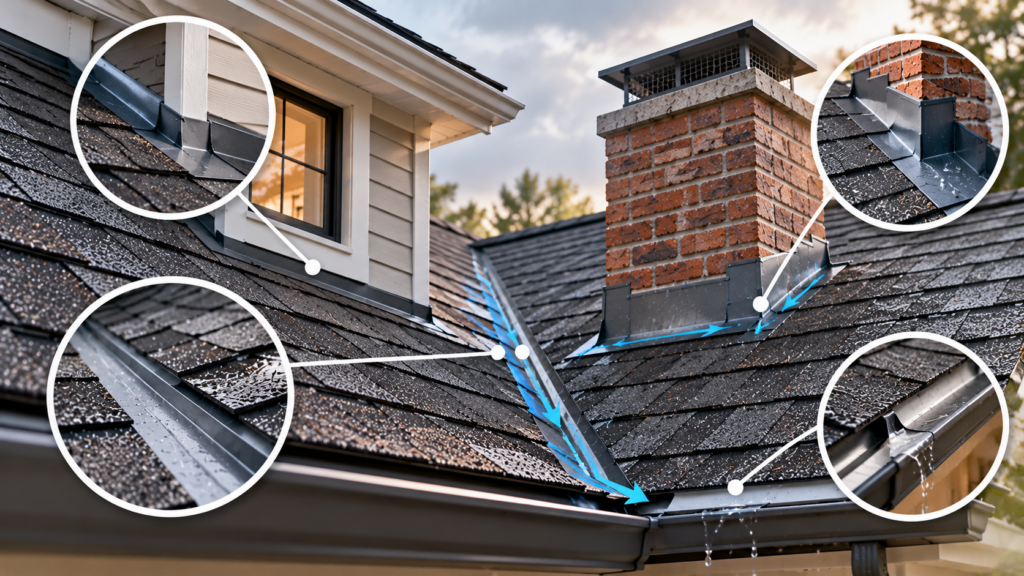
Ask most homeowners what keeps their roof watertight and they’ll say shingles. Shingles do a lot of the work, but they aren’t the only line of defense. The thin strips of metal tucked into the most vulnerable spots on your roof are often what stand between a dry home and a costly leak. That metal is called flashing.
What Is Flashing in Roofing?
Roof flashing is thin, durable material, usually galvanized steel, aluminum, or copper. It is installed wherever the roof surface is interrupted or where two planes meet. Shingles are designed to shed water down a smooth slope. Chimneys, skylights, vents, walls, and valleys break that slope, and each one creates a seam where water can sneak in. Flashing bridges those seams and directs water back onto the roof surface and toward the gutters.
Common Types of Roof Flashing
Different parts of your roof need different flashing:
- Step flashing: Small, overlapping pieces woven in with each shingle course where a roof meets a vertical wall.
- Valley flashing: Long metal channels where two roof slopes meet. They carry large volumes of water.
- Chimney flashing: A multi-piece system, often with a cap or counter-flashing, that seals the base of a chimney.
- Vent pipe flashing: Rubber or metal collars (often called boots) that seal around plumbing and exhaust pipes.
- Drip edge: Metal along the eaves and rakes that guides water into the gutters and protects the fascia and decking.
- Skylight flashing: Custom kits that seal the frame of a skylight.
How Flashing Protects Your Home
It blocks water at weak points. Most roof leaks start at penetrations and transitions, not in the middle of an intact shingle field. Properly installed flashing keeps water from reaching the decking and attic.
It protects the structure. Moisture that gets under the roof can soak insulation, rot wood framing, stain ceilings, and encourage mold. Flashing helps keep that damage from starting.
It handles Florida weather. Tallahassee homes face heavy summer downpours, humidity, and the occasional tropical storm. Water hits roof joints hard and often, so flashing has to be sealed and fastened correctly to hold up.
It extends the life of the whole roof. A roof is a system. Quality shingles with failing flashing will still leak, and fixing a small flashing issue early is far cheaper than repairing water damage later.
Signs Your Flashing Needs Attention
Flashing is easy to forget because it’s small and mostly out of sight. Watch for:
- Water stains on ceilings or walls near chimneys, skylights, or roof-to-wall intersections
- Rusted, bent, cracked, or lifted metal
- Gaps or dried, cracked sealant around penetrations
- Missing or loose pieces after a storm
- Damp spots or musty smells in the attic
Flashing is a common source of leaks, and not all of these signs are visible from the ground. If you suspect a problem, a professional roof inspection can pinpoint it before it grows.
Why Flashing Fails
Even sturdy flashing can fail. Common causes include poor installation, such as flashing that isn’t layered correctly with shingles and underlayment, plus age, corrosion, thermal expansion, storm damage, and sealant that has dried out. Relying on caulk or roofing cement alone is a frequent shortcut. It tends to crack with sun and weather, and it’s no substitute for properly installed metal flashing.
Repair or Replace?
If the damage is isolated, such as one lifted piece, a failed vent boot, or a section of worn sealant, targeted roof repairs are often enough. If flashing is widely corroded or the roof is near the end of its life, it usually makes sense to replace the flashing as part of a full roof replacement. Reusing old flashing under new shingles is a gamble, and new flashing costs very little compared with the rest of the job.
Let Local Experts Take a Look
Flashing work demands precision, and it often means working at heights around delicate roof features. A small mistake can cause a leak that takes months to appear. GutterHawk has served Tallahassee homeowners for over 20 years as both roofing and gutter specialists. Our team can inspect your flashing, explain what we find, and fix it correctly the first time.
Call 850-779-1081 or email [email protected] to schedule your free estimate.
Frequently Asked Questions
Most flashing is galvanized steel or aluminum. Copper is used on higher-end or historic homes. The right choice depends on your roof type, climate, and budget.
It varies with material, installation quality, and weather exposure. Many installations last 20 years or more, but flashing can fail sooner after storms or when sealant breaks down. Regular inspections help catch problems early.
Minor sealant touch-ups may seem simple, but flashing must be layered correctly with shingles and underlayment, and roof work carries real fall risks. Improper DIY fixes often hide the problem temporarily and make it worse. A professional repair is the safer choice.
It depends on your policy and the cause. Sudden storm damage may be covered, while wear and tear usually isn’t. Review your policy or ask your insurer, and document any damage with photos.
Leaks near chimneys, skylights, vents, or where the roof meets a wall are strong candidates, especially when stains appear after heavy rain. Because leaking water can travel along framing before it shows, a professional inspection is the most reliable way to find the true source.