

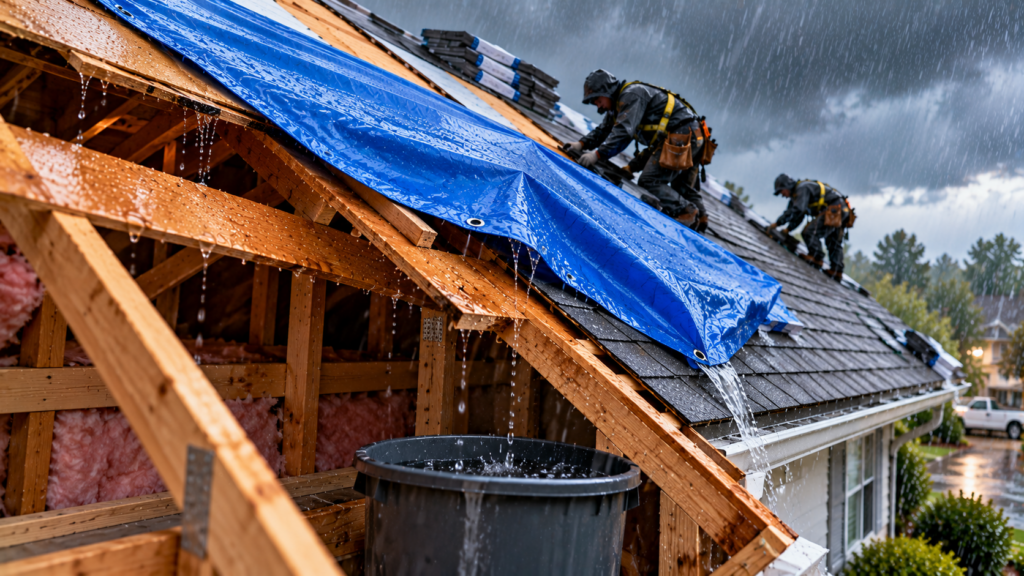
You’ve booked your roof replacement, the crew is scheduled, and then the forecast shows rain. In Tallahassee, where afternoon thunderstorms can pop up quickly, this worry is common. The good news is that a professional roofing crew plans for weather, and a sudden shower rarely means disaster. Here is what actually happens, and what separates a well-managed job from a risky one.
Why Roofers Don’t Panic at the First Raindrop
A roof replacement isn’t done all at once. Crews work in sections, removing old shingles from one area, inspecting the decking, and installing new materials before moving on. Experienced contractors never strip the whole roof and hope for good weather. They only open up as much as they can safely cover in a day.
Once the old shingles come off, the exposed roof deck is protected by a layer of underlayment. This water-resistant barrier is designed to shed rain temporarily until the final shingles go on. It isn’t meant to be a permanent solution, but it is a reliable short-term shield when installed correctly.
What Your Roofing Crew Does When Rain Rolls In
If a storm approaches mid-project, a responsible crew will:
- Stop tear-off immediately. No new sections get opened once rain is on the way.
- Dry-in exposed areas. Underlayment is secured, and tarps are fastened over any sections that aren’t fully covered.
- Seal vulnerable spots. Chimneys, vents, skylights, and roof valleys get extra attention, since these are the most common entry points for water.
- Protect the interior. If there’s any risk of leaks, crews may move or cover items in the attic or upper rooms.
When the weather clears, the team inspects the deck for moisture and resumes work. Wet decking should be allowed to dry before shingles are installed over it, because trapped moisture can lead to mold, rot, and shortened roof life.
The Real Risks of Rain During a Roof Replacement
Rain is only a problem when the crew isn’t prepared. The most serious risks include:
- Water intrusion into the attic. Unprotected decking or poorly secured tarps can let water seep into insulation, drywall, and ceilings.
- Wet or damaged decking. Plywood or boards that stay saturated can warp or begin to rot.
- Poor shingle adhesion. Shingles install best on a dry, clean surface. Moisture and debris can prevent the sealant strips from bonding properly.
- Safety hazards. Wet roofs are slippery, which is why reputable crews pause work during active rain and lightning.
Most of these problems come from rushed or careless work, not from rain itself. That’s why the contractor you choose matters more than the forecast.
How to Prepare Before Your Roof Replacement
You can help your project go smoothly by taking a few simple steps:
- Ask about the weather plan. A good contractor will tell you how they handle rain delays and temporary protection.
- Watch the forecast together. Rescheduling by a day or two is normal and far better than working in unsafe conditions.
- Clear your attic and upper rooms. Moving valuables out of the way adds an extra layer of protection.
- Confirm the scope in writing. Your estimate should cover underlayment, flashing, and decking repairs so there are no surprises.
If you’re still weighing your options, our roof replacement services page explains what a full project involves. If your roof has an active leak or damage that can’t wait, our team can also help with roof repairs before the larger job begins.
What to Do After a Rainy Day on the Job
Once the storm passes, take a quick look inside your home. Check ceilings and attic spaces for dark spots, drips, or damp insulation. If you notice anything unusual, tell your contractor right away so it can be addressed before the roof is finished.
After the replacement is complete, schedule a roof inspection to confirm everything is sealed and installed correctly. It’s a simple way to catch small issues before they become costly leaks.
Choose a Roofer Who Plans for Florida Weather
Tallahassee homeowners know weather doesn’t always follow a schedule. GutterHawk has served the area for over 20 years, using quality materials like CertainTeed shingles and backing projects with a 10-year warranty. We plan every job around Florida’s unpredictable skies so your home stays protected from the first nail to the last shingle.
Ready to plan your roof replacement? Call us at 850-779-1081 or email [email protected] for a free estimate.
Frequently Asked Questions
Not if the crew is prepared. Underlayment and tarps protect exposed areas temporarily, and shingles are installed once the surface is dry. Light rain after proper installation won’t harm a new roof.
No. Rain makes roofs slippery and unsafe, and wet surfaces can prevent shingles from sealing properly. Reputable crews pause work during active rain and resume when conditions improve.
It’s possible only if sections are left unprotected or tarps fail. A professional team limits the exposed area each day and dries it in before leaving, which keeps leak risk very low.
Contact your roofing contractor immediately. Place a bucket under the drip, move belongings away from the area, and take photos. Your crew can then locate the source and fix it quickly.
Most homes take one to three days in good weather. Rain may add a day or two, since crews wait for the deck to dry before continuing. A short delay is far better than rushing and risking water damage.