

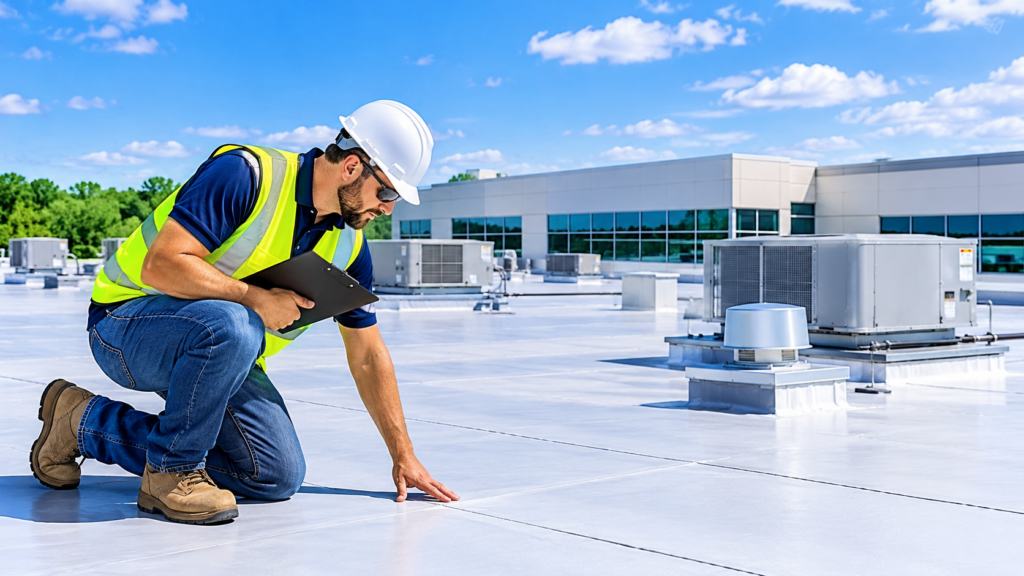
Your building is probably the largest asset your business owns, and the roof is the part that protects everything underneath it: inventory, equipment, employees and customers. Yet most owners think about the roof only after a leak shows up on a ceiling tile. If you manage a warehouse, office, retail plaza or multi-unit property, understanding commercial roofing can save you tens of thousands of dollars in avoidable repairs and downtime.
This guide explains what business owners should know about commercial roofing Midtown FL projects, including system types, warning signs, costs, maintenance and how to choose the right contractor.
What Is Commercial Roofing?
Commercial roofing covers the design, installation, repair and maintenance of roofs on non-residential buildings. These roofs are usually large, low-slope or flat, and carry rooftop equipment such as HVAC units, vents and drainage systems. Because of that, commercial roofing differs from a home roof in materials, installation methods and maintenance needs.
A well-built commercial roof manages heat, heavy rain, wind and foot traffic from service technicians, all while keeping water out and energy bills under control.
Why Climate Matters for Commercial Roofing Midtown FL
Florida roofs work harder than roofs in most of the country. Intense summer sun, high humidity, sudden downpours and hurricane-season winds all stress roofing membranes and seams. For anyone investing in commercial roofing Midtown FL, the roof must resist UV damage, shed water quickly and hold up against uplift from strong wind.
Roofs that are not designed for these conditions tend to blister, crack, pond water and fail early. Choosing materials rated for heat, moisture and wind is one of the most important decisions you will make.
Common Commercial Roofing Systems
Each system has strengths and trade-offs. The best choice depends on your building, budget and long-term plans.
- TPO (thermoplastic polyolefin): A reflective single-ply membrane that helps reduce cooling costs. Popular for flat roofs because of its heat-welded seams and lighter weight.
- PVC: Highly resistant to chemicals, grease and moisture, which makes it a good fit for restaurants and industrial buildings.
- EPDM (rubber membrane): Flexible and durable, with a long record of performance on large flat roofs.
- Modified bitumen: A multi-layer system known for toughness and puncture resistance on roofs with frequent foot traffic.
- Metal roofing: Long-lasting, wind-resistant and low maintenance, suitable for many warehouses and retail buildings.
- Spray polyurethane foam and coatings: Seamless protection that can extend the life of an aging roof when the structure is still sound.
Warning Signs Your Roof Needs Attention
Catching problems early keeps small repairs from becoming full replacements. Schedule an inspection if you notice:
- Water stains or damp spots on ceilings and walls.
- Standing water that remains 48 hours after rain.
- Blistering, cracking, peeling or shrinking membrane.
- Loose or separated seams and flashing.
- Rising energy bills that cannot be explained by usage.
- Debris buildup around drains, vents and equipment curbs.
- Visible sagging or soft spots when walked on.
If you see two or more of these signs, a professional evaluation is worth scheduling soon.
Repair, Restore or Replace?
Not every aging roof needs full replacement. A trained inspector will look at the age of the system, moisture in the insulation, the number of previous repairs and the condition of the deck.
- Repair makes sense for isolated damage on an otherwise healthy roof.
- Restoration or recoating can add years of service when the membrane is intact and the insulation is dry.
- Replacement is the better investment when moisture has spread, repairs keep recurring or the roof has reached the end of its service life.
Ask your contractor to explain the reasoning in writing, along with the cost comparison over the next five to ten years.
What Affects Commercial Roofing Costs?
Pricing varies widely, so be wary of any quote offered without a roof inspection. The main factors include:
- Total roof size and complexity.
- Chosen material and warranty level.
- Tear-off versus overlay.
- Insulation, drainage and code requirements.
- Access, crane or equipment needs.
- Scheduling around business hours to limit disruption.
The lowest bid is not always the best value. A roof that lasts twice as long at a moderately higher price usually costs less over time.
The Value of Preventive Maintenance
A maintenance plan is the most affordable way to protect your investment. Twice-yearly inspections, ideally before and after storm season, help catch issues early. A solid plan typically includes:
- Clearing drains, gutters and scuppers.
- Checking seams, flashing and sealants.
- Inspecting rooftop equipment penetrations.
- Documenting condition with photos.
- Making small repairs immediately.
Many manufacturer warranties require documented maintenance, so a regular schedule can also protect your coverage.
How to Choose a Contractor for Commercial Roofing Midtown FL
Choosing the right partner matters as much as choosing the right material. When comparing companies offering commercial roofing Midtown FL services, look for:
- Proper licensing and insurance, including workers’ compensation.
- Experience with your type of building and roofing system.
- Clear, itemized written proposals.
- Warranty details covering both materials and workmanship.
- Local references and project photos.
- Responsive communication and a defined project timeline.
Do not hesitate to ask how the crew handles safety, weather delays and cleanup. A professional contractor will welcome those questions.
Planning Your Next Step
Whether you need a quick repair, a restoration plan or a complete new system, starting with an inspection gives you facts instead of guesses. If you are planning commercial roofing Midtown FL work for the coming year, contact the Gutter Hawk team to discuss your property and request an inspection.
FAQs
1. How long does a commercial roof last? Lifespan depends on the material and maintenance. Single-ply membranes commonly last 15 to 30 years, while well-maintained metal systems can last longer.
2. How often should a commercial roof be inspected? At least twice a year, plus after any major storm. Regular inspections catch small problems before they cause interior damage.
3. Can a commercial roof be repaired instead of replaced? Yes, if damage is localized and the insulation is dry. A professional inspection will confirm whether repair or replacement is more cost-effective.
4. Will roof work disrupt my business operations? Most projects can be scheduled in phases and during off-hours. Ask your contractor for a plan that limits noise, access issues and downtime.
5. What is the best roofing material for hot, humid climates? Reflective membranes such as TPO and PVC, as well as metal systems, are popular choices because they handle heat, UV exposure and moisture well.