

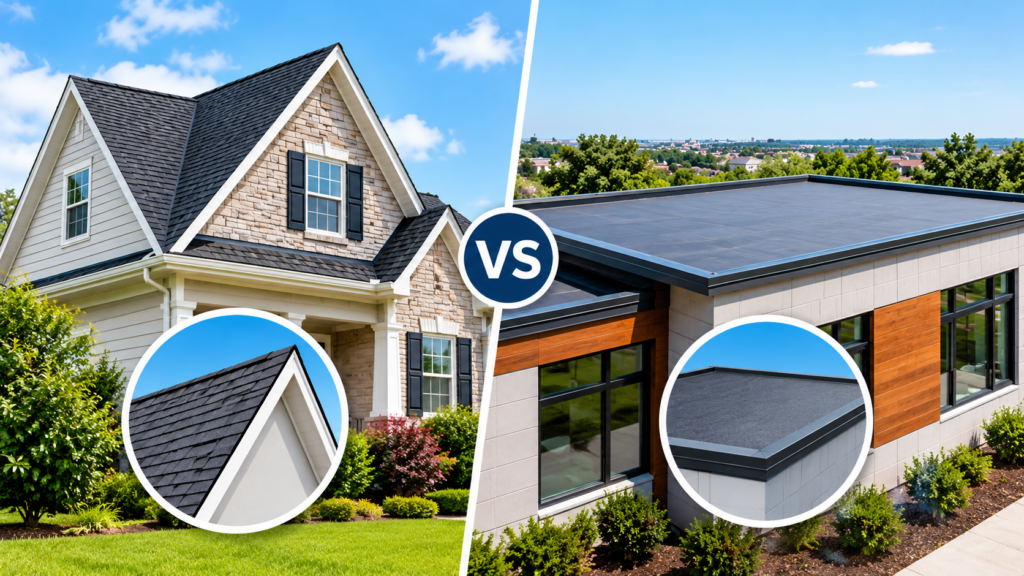
If you’ve ever compared roofs around Tallahassee, you’ve probably noticed that some rise sharply to a peak while others look almost flat. That difference comes down to roof pitch, and it affects which materials work, how water drains, how long the roof lasts, and what it costs to maintain. Here is how steep-slope and low-slope roofing compare, so you can make a confident decision for your property.
What Is Steep-Slope Roofing?
Roof pitch is measured as the vertical rise for every 12 inches of horizontal run. A steep-slope roof generally has a pitch of 4:12 or greater, meaning it rises at least 4 inches for every 12 inches across. Most homes in Tallahassee neighborhoods have this style.
Gravity does most of the work on a steep roof. Rain runs off quickly, and debris such as pine needles and oak leaves is less likely to settle. These roofs also suit a wider range of materials, including shingle roofing and standing-seam or panel systems. Steep roofs also add attic space and give a home more visual character.
What Is Low-Slope Roofing?
Low-slope roofs have a pitch below 4:12. Many are nearly flat, with just enough tilt to guide water toward drains or scuppers. You’ll see them most often on shopping centers, office buildings, warehouses, and some modern or mid-century homes.
Because water drains slowly, low-slope roofs need materials that form a continuous, watertight surface. Common options include TPO, PVC, EPDM rubber, modified bitumen, and built-up roofing. Traditional overlapping shingles aren’t designed for this job, since water can back up under them. For larger buildings, a specialist in commercial roofing will know which membrane suits your structure and budget.
Drainage. Steep roofs shed water on their own. Low-slope roofs depend on drains, gutters, and proper design, and standing water (ponding) is the main risk.
Key Differences at a Glance
Materials. Steep roofs use shingles, metal, or tile. Low-slope roofs use membranes and sealed, seamed systems.
Maintenance. Steep roofs need periodic checks for loose or missing shingles and flashing problems. Low-slope roofs need more frequent inspections of seams, drains, and membranes, because small defects can turn into leaks quickly.
Accessibility. Low-slope roofs are easier to walk on, which makes inspections and equipment installation simpler. Steep roofs are harder to access and take more safety precautions to work on.
Lifespan and cost. Both can last for decades when well installed. Upfront costs vary by material, roof size, and complexity, so a professional estimate is the only reliable way to compare.
Florida Considerations
Tallahassee’s heavy summer rain, humidity, and storm season put every roof to the test. On a low-slope roof, clogged drains or sagging areas can lead to ponding, which stresses the membrane and invites leaks. On a steep roof, high winds can lift shingles and damage flashing. In both cases, quality installation and proper drainage make the biggest difference.
Many homeowners also choose metal roofing for steep-slope homes. It sheds water well, handles wind, and holds up to Florida’s heat and humidity.
Which One Is Right for You?
In most cases, your building’s design decides this for you. Changing a roof’s pitch means major structural work, so the better question is usually which material suits the slope you already have. Consider:
- Your roof’s current pitch, which limits what can be installed
- Your budget, both now and for long-term maintenance
- Your property type, since homes and commercial buildings have different needs
- Local weather exposure, including storms, sun, and heavy rain
A professional inspection takes the guesswork out of this. A qualified roofer can measure the pitch, check drainage, and recommend a system that fits your property.
Talk to Tallahassee’s Roofing and Gutter Specialists
Whether you have a classic pitched roof or a flat commercial building, GutterHawk has served Tallahassee for over 20 years, installing and repairing both roofing and gutters. Call us at 850-779-1081 or email [email protected] to schedule a free estimate. You can also visit us at 5928 North Monroe Street or 3034 Shamrock St N in Tallahassee.
Frequently Asked Questions
A roof with a pitch below 4:12 is generally considered low-slope. Roofs with very little pitch, often called flat roofs, fall into this category too.
Standard shingles are made for steeper pitches and can leak on very low slopes because water doesn’t run off fast enough. Membrane systems like TPO, EPDM, or modified bitumen are usually the better choice, though some shingles are rated down to a minimum pitch with proper underlayment.
Lifespan depends more on material, installation quality, and maintenance than on pitch alone. A well-maintained system of either type can last for decades.
Many use internal drains or scuppers instead of traditional gutters, but the right drainage solution depends on the building’s design. Poor drainage is a leading cause of low-slope roof problems, so it’s worth having a professional evaluate it.
An annual inspection is a good rule of thumb, plus an extra check after major storms. Low-slope roofs especially benefit from regular checks, since small seam or drainage issues can quickly become leaks.