

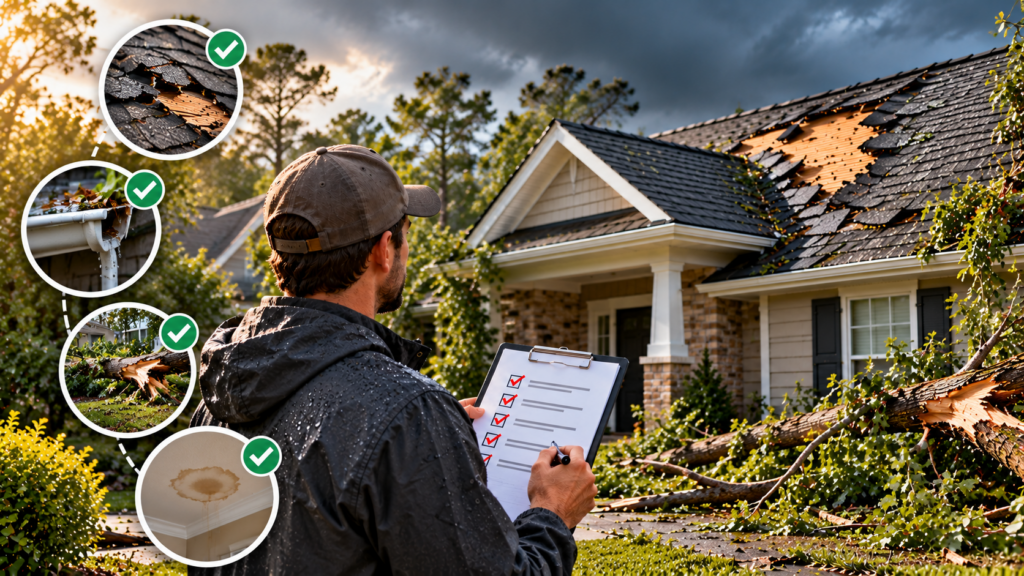
Tallahassee gets its share of severe weather, from hurricane-season winds to summer thunderstorms with hail and falling limbs. Even when your home looks fine from the driveway, a storm can loosen shingles, bend flashing, and open small gaps that turn into leaks weeks later. This roof storm damage checklist walks you through what to check, what to document, and when to call a professional.
Step 1: Put Safety First
Before you look at your roof, look around it. Stay clear of downed power lines and treat every wire as live. Watch for broken limbs hanging in trees and for standing water near electrical outlets. If you smell gas or see sagging ceilings inside, leave the house and call emergency services.
Never climb onto a storm-damaged roof. Wet surfaces, loose materials, and weakened decking make it dangerous. Use binoculars or a phone camera with zoom from the ground instead.
Step 2: Inspect the Roof From the Ground
Walk the full perimeter of your home and look for these warning signs:
- Missing, cracked, or curled shingles. Bare patches or shingle pieces in your yard are a clear giveaway.
- Granules in the gutters or at downspouts. Heavy granule loss often points to hail damage.
- Dented vents, chimney caps, or metal flashing. Soft metal shows impact marks quickly.
- Sagging areas or uneven rooflines. These can signal structural damage beneath the surface.
- Debris on the roof. Branches and limbs can puncture roofing even if they don’t leave a visible hole.
Step 3: Check Your Gutters and Fascia
Gutters take a beating in storms, and damaged gutters can send water straight into your fascia, soffits, and foundation. Look for sections pulling away from the house, dents, cracks, or clogs packed with leaves and debris. If your gutters are loose or leaking, professional gutter repairs can stop water from causing rot and costly secondary damage.
Step 4: Look Inside Your Home
Some of the most important evidence is indoors. Check your attic and ceilings for:
- Water stains, discoloration, or damp insulation
- Daylight showing through the roof deck
- Dripping sounds or a musty smell
- Bubbling or peeling paint on ceilings and upper walls
Even a small stain deserves attention. Moisture trapped in an attic can lead to mold and rotted decking before you ever see a drip.
Step 5: Document Everything
Good documentation makes insurance claims smoother. Take clear, dated photos and video of every area of damage, inside and out. Write down the date and time of the storm and keep receipts for any emergency repairs. Check your policy for filing deadlines, since Florida insurers can have strict time limits for storm claims.
Step 6: Prevent Further Damage
Your policy generally expects you to take reasonable steps to protect the property. Cover exposed areas with tarps, move belongings away from leaks, and place buckets under drips. Keep these measures temporary and simple, and leave the permanent work to a licensed roofer.
Step 7: Schedule a Professional Inspection
Storm damage isn’t always visible, and a trained eye can catch what you can’t. A professional roof inspection checks shingles, flashing, decking, and penetrations, and gives you a written assessment you can share with your insurance company. If problems turn up, prompt roof repairs can seal vulnerable spots before the next rain makes them worse.
Common Mistakes to Avoid
- Waiting to see if it gets worse. Small leaks grow quickly in Florida’s humidity.
- Hiring door-to-door storm chasers. Choose a local, licensed, insured contractor with a real address and strong reviews.
- Skipping the attic check. Many leaks start there long before ceilings show stains.
- Signing anything under pressure. Take time to compare estimates and read every document.
Protect Your Home With Local Experts
GutterHawk has served Tallahassee for over 20 years as a certified roofing and building contractor, so we can handle both the roof and any structural issues in one visit. If you suspect storm damage, call us at 850-779-1081 or email [email protected] for a free estimate.
Frequently Asked Questions
As soon as it’s safe, do a visual check from the ground. Then schedule a professional inspection within a few days, especially after high winds or hail, so hidden damage doesn’t turn into leaks.
Yes. Lifted shingles, damaged flashing, and cracked seals can exist for weeks before water finds its way inside. A professional inspection can find these problems early.
Many policies cover sudden storm damage, but coverage depends on your policy, deductible, and the roof’s condition. Review your policy and contact your insurer promptly.
No. Wet or damaged roofs are slippery and unstable. Use binoculars or a zoom lens from the ground and leave close inspection to a trained roofer.
It depends on the extent of the damage, your roof’s age, and the condition of the decking underneath. A licensed contractor can assess these factors and recommend the more cost-effective option.