

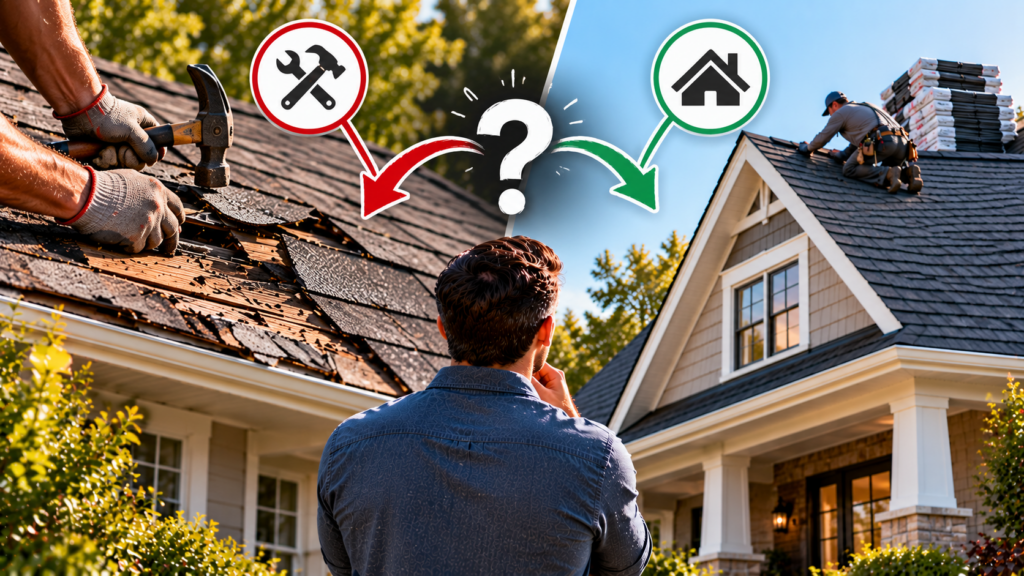
A stain on the ceiling or a few missing shingles after a storm forces a decision: patch the roof or replace it? Repair costs less today, but replacement can save money over time. The right choice depends on your roof’s age, how much damage it has, and how long you plan to stay in the house. Here is how to decide.
When Roof Repair Makes Sense
Repair is usually the smarter move when the damage is limited and the rest of the roof is sound. Consider it if:
- The roof is fairly young. Asphalt shingle roofs in Tallahassee’s heat and humidity typically last around 15 to 25 years. A roof under about 10 to 12 years old with a localized problem is a good repair candidate.
- Damage is isolated. A handful of cracked, curled, or missing shingles, or a small leak around a vent, is often a quick fix.
- The problem is in the flashing or sealant. Worn flashing around chimneys, skylights, and vent pipes is one of the most common leak sources, and fixing it is relatively inexpensive.
- The decking is dry and solid. If the wood beneath the shingles hasn’t been soaked or rotted, a targeted repair can restore protection.
Our roof repair services cover these jobs, from replacing damaged shingles to sealing penetrations before a small leak turns into a structural problem.
When Replacement Is the Better Investment
Repairs stop being worthwhile when you are fixing the same roof again and again. Replacement is usually the better call if:
- The roof is near the end of its life. Past 20 years, shingles lose their protective granules and become brittle, so a repair in one spot often just exposes weakness next to it.
- Leaks keep coming back. Repeated repairs add up. Several service calls can approach the cost of a new roof without solving the underlying problem.
- Damage is widespread. Storm damage across multiple slopes, large areas of granule loss, or shingles curling across the roof point to systemic wear.
- There is sagging or rotted decking. A sagging roofline or soft spots signal moisture damage to the structure. This needs prompt attention and is rarely a patch-and-go situation.
- You see daylight or water stains in the attic. Light coming through the roof boards or widespread staining means the roof is no longer doing its job.
A full roof replacement gives you a fresh start with new materials, updated underlayment, and a stronger defense against Florida’s storms. It can also help your home’s curb appeal and resale value.
Cost: Look at the Long Game
Repairs have the lower upfront price, which is why they’re tempting. But a useful rule of thumb is to compare the repair estimate to the cost of a new roof and weigh it against the remaining lifespan. If you’re spending a large share of a replacement’s cost to buy a few more years, replacement is likely the better value. If a modest repair can realistically add many years, repair wins. Financing can also make replacement more manageable. GutterHawk offers flexible monthly plans through Wisetack.
Other Factors to Weigh
Your timeline. If you plan to sell soon, a clean inspection report and a newer roof can make your home more attractive to buyers. If you’re staying long term, replacing an aging roof protects your investment.
Insurance. Some insurers raise premiums or limit coverage on older roofs, so ask your provider before deciding.
Energy efficiency. Modern roofing materials and proper ventilation can help keep cooling costs down during Florida summers.
Get a Professional Opinion First
The most reliable way to settle the question is a thorough roof inspection. A trained eye can spot problems you can’t see from the ground, like deteriorating underlayment or hidden moisture, and give you an honest recommendation. GutterHawk has served Tallahassee for over 20 years and offers free estimates, so you get a clear answer without pressure.
Call us at 850-779-1081 or email [email protected] to schedule your inspection.
Frequently Asked Questions
Check its age, the extent of the damage, and how often it leaks. Isolated damage on a younger roof is usually repairable, while widespread wear or an aging roof points to replacement. A professional inspection gives a definitive answer.
There’s no single number, but if damage affects a large portion of the roof, or repair costs approach the price of a new roof, replacement is typically more cost-effective.
Yes, in some cases. Partial replacement of a damaged section can work if the rest of the roof is in good condition and new materials can be matched properly.
Many residential replacements finish in one to a few days, depending on roof size, complexity, and weather.
It can, depending on who does the work and which materials are used. Professional repairs that follow manufacturer guidelines help protect your warranty. Ask your contractor about both workmanship and material coverage.