

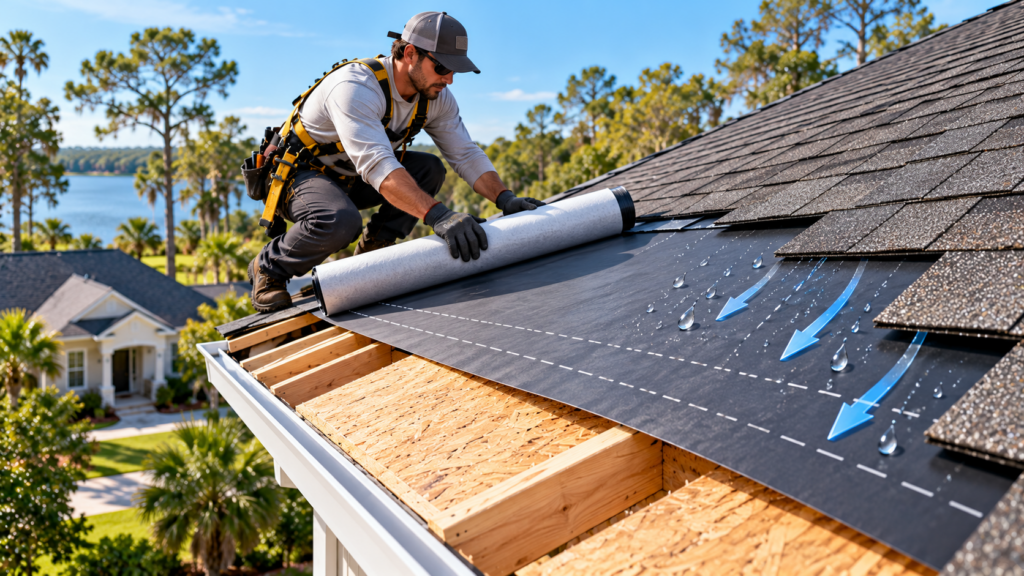
Roofing underlayment is the layer between your roof deck and your shingles. It acts as a backup water barrier. If wind pushes rain under a shingle, the underlayment keeps that water off the wood.
Most homeowners never see it, so it rarely gets a second thought. That changes when a stain shows up on the ceiling. Many leaks that lead to roof repairs begin when water slips past the shingles and meets an underlayment that is worn out, torn or badly installed. Here is what it does and which type to choose.
What roofing underlayment actually does
Shingles are your first line of defense, but they are not watertight on their own. They shed most water. Wind-driven rain, a lifted tab or a nail hole can let some through. Underlayment catches it and sends it down toward the eaves instead of into the deck.
It does two other jobs too. During installation, it covers the bare deck, so a surprise Florida shower does not soak the wood before the shingles go on. It also gives the shingles a smooth, even surface, which helps them lie flat.
Felt, synthetic and self-adhered: the three types
Felt is the old standard. It is asphalt-soaked paper or fiberglass, it costs less, and it can absorb water and wrinkle if it sits exposed. Synthetic underlayment is made of polypropylene or similar polymers. It is lighter, tougher to tear and handles sun exposure better, so a rain delay hurts it less. Self-adhered underlayment is a sticky rubberized membrane that seals around nails and bonds to the deck. It usually costs the most. For a manufacturer’s overview, see this GAF guide to roof underlayment.
Which roofing underlayment to choose in Tallahassee
Our view: use synthetic underlayment on most shingle roofs. It costs a bit more than felt. It holds up better when weather delays a job, and it lies flatter under the shingles. Add self-adhered membrane in the spots where leaks start: valleys, around chimneys and skylights, and at the roof edges. Tallahassee gets heavy summer storms and hurricane season, so those extra layers pay off.
The best time to upgrade is during a roof replacement, because the old shingles are already off and the deck is open for inspection. Underlayment cannot be added later without tearing the roof back up. If you are choosing materials now, ask your roofer to name the exact underlayment product on the quote, not just “underlayment.”
Why installation matters as much as the product
Even the best underlayment fails if the crew installs it badly. Laps must run the right way, so water flows over each seam instead of into it. Installers should use only the fasteners the product calls for. They should smooth out wrinkles and replace torn sections before the shingles go on. Check the drip edge too. It guides water off the roof edge and into the gutter instead of behind it. Ask whether the crew checks the deck for soft spots first.
Signs your underlayment is failing
You cannot see underlayment from the ground, so look for the symptoms. Water stains on ceilings or in the attic are the big one. Damp or dark spots on the underside of the roof deck, musty smells and shingles that buckle or lift are warning signs too. Often the shingles look fine while the layer beneath is the real problem. Clogged gutters make it worse, because water that backs up at the roof edge can soak the underlayment there.
Conclusion
Roofing underlayment is cheap compared with the damage it prevents. It backs up your shingles, protects the deck during installation and gives wind-driven rain one more thing to beat. Choose synthetic for most roofs, add self-adhered membrane at the weak spots, and make sure the crew installs it right. Not sure what is under your shingles? A roof inspection can show whether water is already getting in. Call GutterHawk at 850-779-1081 for a free estimate, and we will walk you through the options.
Frequently Asked Questions
Roofing underlayment is a water-resistant layer installed over the roof deck and under the shingles. It is usually felt, synthetic or self-adhered membrane. Its job is to act as a backup barrier, catching any water that gets past the shingles and keeping it away from the wood.
Yes. Shingles alone are not a watertight seal, and building codes call for underlayment under asphalt shingles in most places. Without it, wind-driven rain can reach the deck, which leads to rot and leaks. It is a small part of the cost and one of the most useful layers on the roof.
For most roofs, yes. Synthetic underlayment is lighter, tears less easily and handles sun exposure better if rain delays the job. Felt costs less and still works, but it can absorb water and wrinkle. If your budget allows, synthetic is the safer choice for Florida weather.
It depends on the type and the roof. Felt generally wears out sooner than synthetic, and any underlayment lasts longer under a well-kept roof. Because it sits beneath the shingles, it is usually replaced when the roof is. A roof replacement is the practical time to upgrade it.
Spot repairs are possible for a small leak. A roofer lifts the shingles, patches or replaces the damaged underlayment, and reseals the area. If the underlayment is old or failing across the roof, repeated patches can cost more than a full replacement. An inspection will show which path makes sense.