

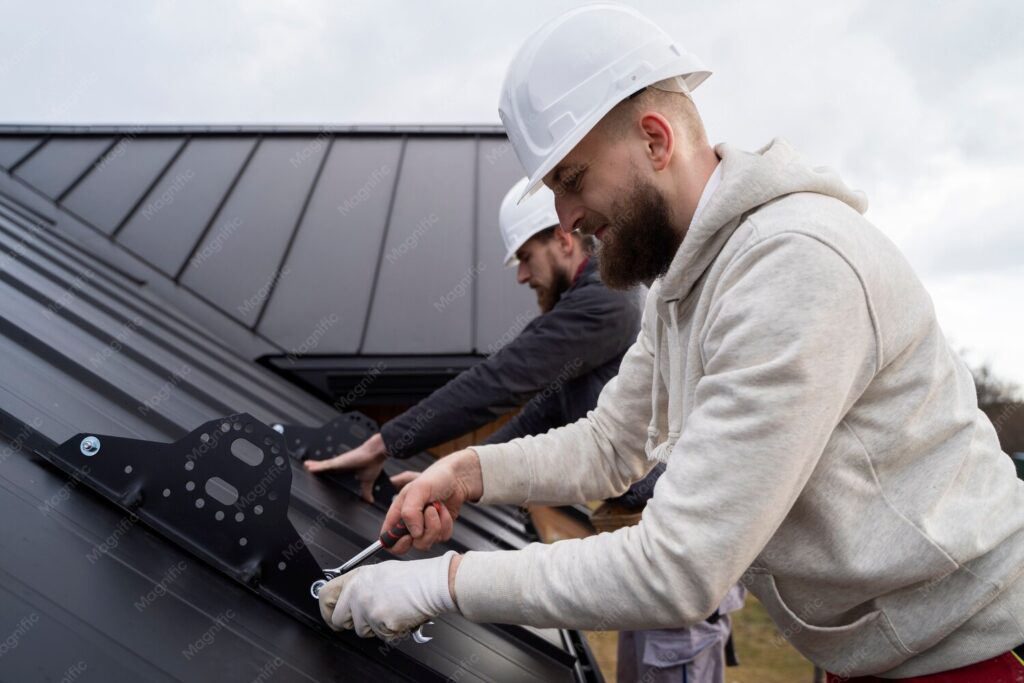
Repair a flat roof when the damage is local and the rest of the system is dry and sound. Replace it when the problem is the system itself: wet insulation, spreading leaks or a membrane at the end of its life. That is the whole flat roof replacement vs repair decision in two sentences. The rest of this guide shows how to tell which side your roof is on.
This question comes up constantly with commercial roofing, but homeowners with flat sections face it too.
Signs a flat roof repair will be enough
Small, contained problems are repair territory. Think of a single puncture from a fallen branch, a split seam, or worn flashing around a vent. If the roof is fairly young and the rest of the membrane is tight, repair is usually the better buy. Fix the spot, reseal the details and keep the roof working. That is what roof repairs are for.
Signs it is time for a full replacement
Wet insulation is the big one. Once water gets under the membrane, it spreads sideways and hides, so a leak in the kitchen can start ten feet away. If a moisture scan or a test cut finds soaked insulation across a large area, patching the surface only hides the problem.
Ponding is the second. Water that sits more than a day or two after rain points to a slope or drainage problem. Standing water also wears out any membrane faster. Add blistering, wide cracking, or seams that keep opening, and you are looking at a roof near the end of its life. Storm damage counts too. After a bad storm, a roof with many punctures and lifted seams can cost less to replace than to patch leak by leak.
Age matters as well. Many flat roof systems last somewhere between 15 and 30 years, depending on the material and the care they get. A roof in its last few years that needs a repair every season is costing you more than it saves. At that point, roof replacement is the cheaper path over time.
Flat roof replacement vs repair: the cost rule of thumb
Here is the rule we use. If repairs would cost more than about a third of a new roof, lean toward replacement. The same goes if you have repaired the same roof more than twice in a couple of years. Below that line, repair. Above it, you are paying for a new roof in installments.
Also weigh what is underneath. A flat roof over equipment, inventory or finished space has more to lose from a surprise leak. That tips the math toward replacing sooner. Cost worries are fair, so ask about financing options before you rule replacement out.
Why a flat roof needs a proper inspection first
Do not guess from the ground, and be wary of any quote written without a roof visit. A flat roof hides its damage. A good roof inspection checks seams, flashing, drains, ponding spots and the membrane itself, then ends with a clear answer: repair, replace, or monitor. GutterHawk offers free inspections to settle exactly that question, so you are not paying to find out.
Keep the roof healthy after the work
Whichever way you go, upkeep stretches the result. Clear drains and scuppers after storms, remove debris, and have the roof checked once or twice a year. Regular roof maintenance catches small splits before they let water in. Drainage matters even more on a flat roof, because there is little slope to carry water away.
Conclusion
Flat roof replacement vs repair comes down to one question: is the problem a spot or the system? A spot gets repaired. A wet, ponding, aging system gets replaced. Do not decide from the ground, and do not patch the same roof for years while the insulation soaks. If you are not sure which side your roof falls on, call GutterHawk at 850-779-1081 for a free inspection. We will go up, find the cause and tell you straight whether it needs a repair or a new roof.
Frequently Asked Questions
Many flat roofs last somewhere between 15 and 30 years. The range is wide because it depends on the membrane material, drainage, foot traffic and maintenance. A roof that is regularly inspected and kept clear of debris usually reaches the upper end, while a neglected one can fail much sooner.
Often yes, if the leak comes from a contained spot like a seam, puncture or flashing detail and the insulation underneath is dry. If the insulation is wet or leaks keep returning in new places, a repair is only a temporary fix and replacement is usually the smarter move.
Look for soft or spongy spots underfoot, stained ceilings, musty smells and ponding that never fully dries. Only a roof inspection can confirm it, since moisture scans or test cuts show what the surface hides. Widespread wet insulation usually means replacement, because it stops insulating and keeps damaging the deck.
Yes, upfront. A repair costs a fraction of a new roof. But repeated repairs add up, and a failing roof can damage insulation, ceilings and contents. Compare the repair quote against the remaining life of the roof. If repairs keep coming, replacement often costs less over time, and financing can spread the price out.
At least once a year, and after any major storm. Flat roofs drain slowly, so small problems like clogged drains, lifted seams and debris buildup can turn into leaks quickly. A yearly check is cheap compared with a repair that starts with wet insulation.
We take great pride in being your Tallahassee Roofing and Gutter Specialists, and we are one of the few companies that are experts in both, offering you a one-stop-shop service to complete all of your roofing and gutter needs.