GutterHawk Roofing & Gutter Specialists


- About
- Roofing
- Gutters
- Areas Served
Killearn Estates
Killearn Acres
Bradfordville
Betton Hills
Lafayette Park
Southwood
Killearn Lakes Plantation
OX Bottom Manor
Summerbrooke
Golden Eagle
Foxcroft
Bull Run
Waverly Hills
Buck Lake Mahan
Piney-Z
Apalachee Ridge Estates
Myers Park
Maclay
Bobbin Brook
Live Oak Plantation
Timberlane
Woodgate
Lake Jackson
Meridian Hills
Midtown
Downtown Tallahassee
Havana
- Financing
- Testimonials
- Recent Projects
Box Gutter (Commercial and 7 inch) in Tallahassee, FL
A box gutter is not a bigger version of a standard residential gutter. It is a different shape and, in a lot of cases, a different install method entirely. Box gutters run flat and wide instead of curved, and they are built to move a lot more water per linear foot than a 5 inch K-style ever will. In Tallahassee that matters more than in most cities, because between the summer thunderstorm cells that dump an inch of rain in twenty minutes and the pine canopy that fills every gutter with needles between storms, undersized drainage fails fast. This page covers box gutters sized at 7 inch and commercial capacity, on homes and buildings where a standard gutter is not enough.
When Box Gutter Is the Right Answer
- Large roof planes — where a single slope drains a lot of area into one run and five or six inch gutter overflows regardless of how clean it is.
- Commercial and industrial buildings — warehouses, retail, churches, and schools where roof areas are large and overflow interrupts a business.
- Metal roofs — water leaves a metal panel fast and hits the gutter with force. Conventional gutter is regularly overshot on steep metal.
- Steep pitches — the steeper the roof, the faster the runoff arrives and the more capacity you need at the edge.
- Historic and architectural buildings — many older buildings were designed with built-in box gutter, and replacement has to match the original detail.
- Homes with persistent overflow — where a 7 inch box system solves what upsizing to 6 inch K-style did not.
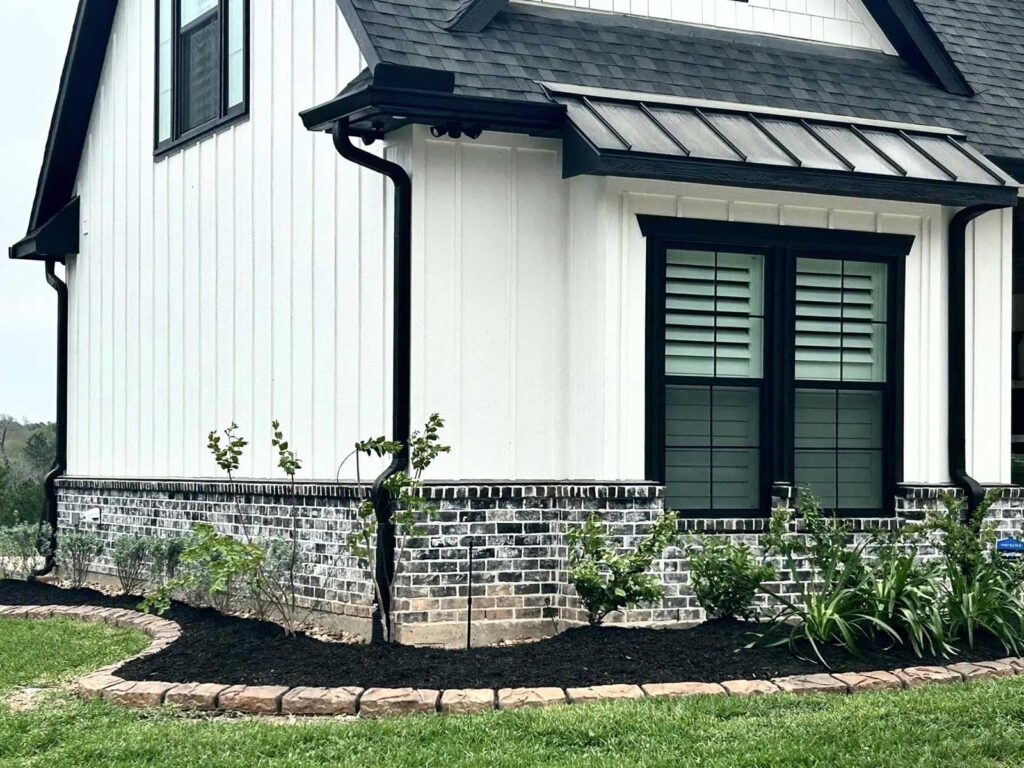
Seven-Inch Box Gutter for Homes
What Box Gutter (Commercial and 7 inch) covers
This service is for gutters that need to carry more water than a standard residential system, or that are built into the roof structure rather than hung off the fascia. That includes 7 inch K-style and half-round profiles installed on larger residential rooflines, and true box gutters on commercial buildings, church roofs, and larger multi-family properties around Tallahassee and Leon County.
A 7 inch gutter is still a hung, exterior gutter, just with a bigger trough and a matching downspout size to move the extra volume. A commercial box gutter is usually a different animal: it is often built into the roof deck itself, sitting behind a parapet wall or under a roof edge, lined with a membrane or metal pan, and drained through internal or through-wall scuppers rather than a simple downspout at the corner of the house. We work on both, and we size the system to the roof it is protecting, not to a generic chart.
What this page does not cover: standard 5 inch or 6 inch K-style gutters on a typical single-family roof, gutter guards and leaf screens as a standalone product, and fascia or soffit repair that is not tied to a box gutter install. Those live on their own pages, linked below.

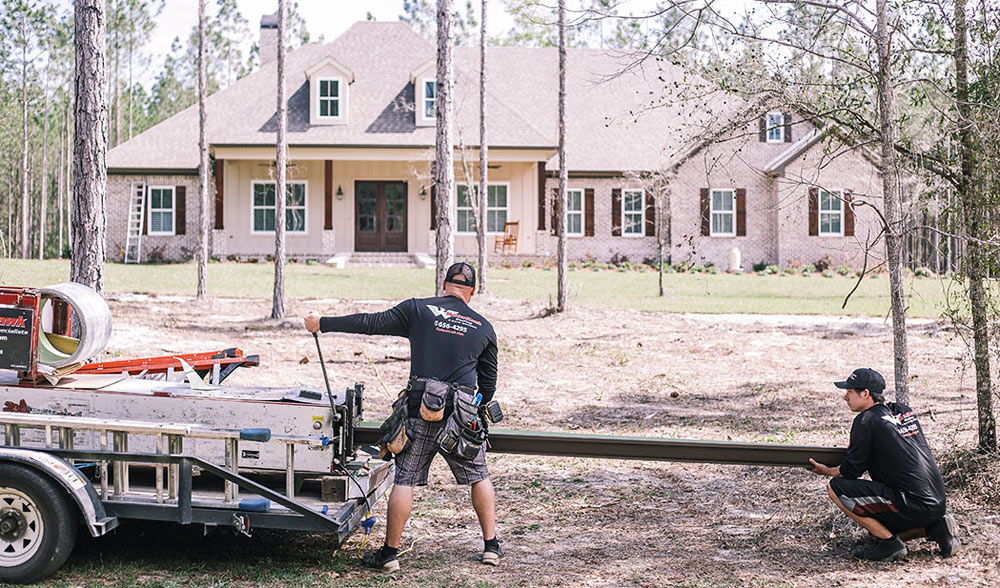
Commercial Box Gutter Systems
When it is the right call and when it is not
Box gutter or 7 inch capacity is the right call when the roof area feeding a single gutter run is large, when the roof pitch is steep enough to accelerate water rather than let it sheet gently into the trough, or when the building is commercial and the roof edge was designed around a built-in gutter system from the start. If you have a long, unbroken roof section behind a parapet, or a home with a big, steep-pitched section dumping into one corner, a standard gutter will overflow at the exact moments you need it most, which around here means during a July afternoon storm.
It is not the right call in a few common situations, and we would rather tell you that up front than sell you a system you do not need:
- If your existing 5 inch or 6 inch gutters are functioning fine and the actual problem is clogging from pine needles and oak debris, the fix is gutter guards, not a bigger trough.
- If the gutters themselves are fine but water is backing up because the fascia board behind them has rotted and pulled the hangers loose, that is a fascia and soffit repair job first.
- If you are dealing with a single problem area rather than a whole run, sometimes a properly placed downspout or a regrade of the existing gutter’s slope solves it without upsizing anything.
- If the goal is just a cleaner, more finished look on a standard-size roof with no overflow history, standard Seamless Gutters in 5 inch or 6 inch is the more practical and less expensive choice.
The honest signal that you need a box gutter or 7 inch system is water overtopping the front lip of the gutter during heavy rain, staining or erosion below specific sections of roofline, or a commercial building where the original built-in gutter has failed and is leaking into the wall assembly behind the parapet.
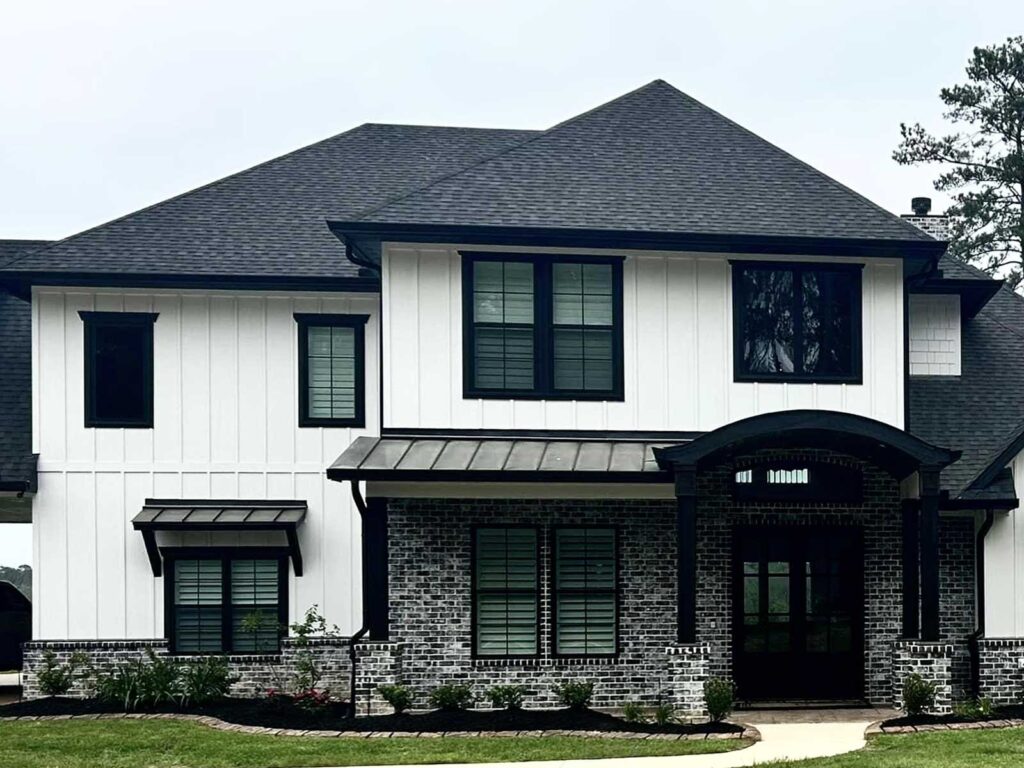
The Box Gutter in Tallahassee FL Process
How we do it
On residential 7 inch upgrades, we pull the existing gutter and hangers, check the fascia board condition since it now has to support a heavier, water-filled trough, and form the new gutter on site to match the roofline length in as few seams as possible. Downspouts get upsized to match, since a 7 inch trough feeding into a 3×4 downspout just moves the bottleneck instead of fixing it. Hanger spacing gets tightened compared to a standard install because the trough holds more weight when it is full.
On commercial and built-in box gutter work, the process depends on what is already there. If we are repairing an existing built-in system, we assess the liner or metal pan for splits, corrosion, and standing water damage, and check the scupper or internal drain connections for blockage or failure. If we are replacing one, that usually means removing the old liner down to the deck, checking the substrate underneath for rot or deterioration from years of slow leaks, and installing a new liner or formed metal pan sloped correctly to the drain points. Materials vary by building: membrane liners, formed aluminum, and coated metal pans are all in use around Tallahassee depending on the roof’s age and original design.
Sequence on any box gutter job is the same logic every time: fix what the water sits on before you fix what carries the water. A new gutter over a rotted deck or a failing fascia board is a short-term patch, not a repair. We flag substrate problems before install, not after.

Sizing Box Gutters in Tallahassee FL
What it costs
Residential 7 inch gutter installs run higher than standard 5 or 6 inch systems because of the material volume and the reinforced hanger spacing, generally in the range of {PRICE_RANGE_7IN} depending on linear footage and how many corners and downspout tie-ins the roofline requires.
Commercial box gutter work has a wider range, generally {PRICE_RANGE_COMMERCIAL}, because the scope varies so much. A liner repair on a section of an existing system costs a fraction of a full tear-off and reline of a built-in gutter running the length of a commercial roof. What moves the number: total linear footage, whether the fascia or deck substrate needs repair before the gutter goes in, how many downspouts or scuppers the run requires, roof access and height, and material choice on commercial jobs.
We give a firm number after we look at the roof in person. Anything quoted without seeing the substrate condition is a guess, and on box gutter work the substrate is usually where the real cost lives.
Why Clients Choose GutterHawk
Where we work
We install and repair box gutters and 7 inch systems across Tallahassee and Leon County, from the older brick ranch stock closer to the city center to the newer subdivision construction out along the Thomasville Road corridor, where rooflines tend to be larger and more likely to need the extra capacity. We also handle commercial box gutter work on buildings throughout the county, including properties with the built-in parapet-style systems common on older commercial construction.
Neighborhood-specific pages cover the pine canopy and roofline patterns typical to each area, since a heavily wooded lot near Killearn drains differently than an open subdivision lot near Bradfordville, and the right box gutter spec accounts for that.
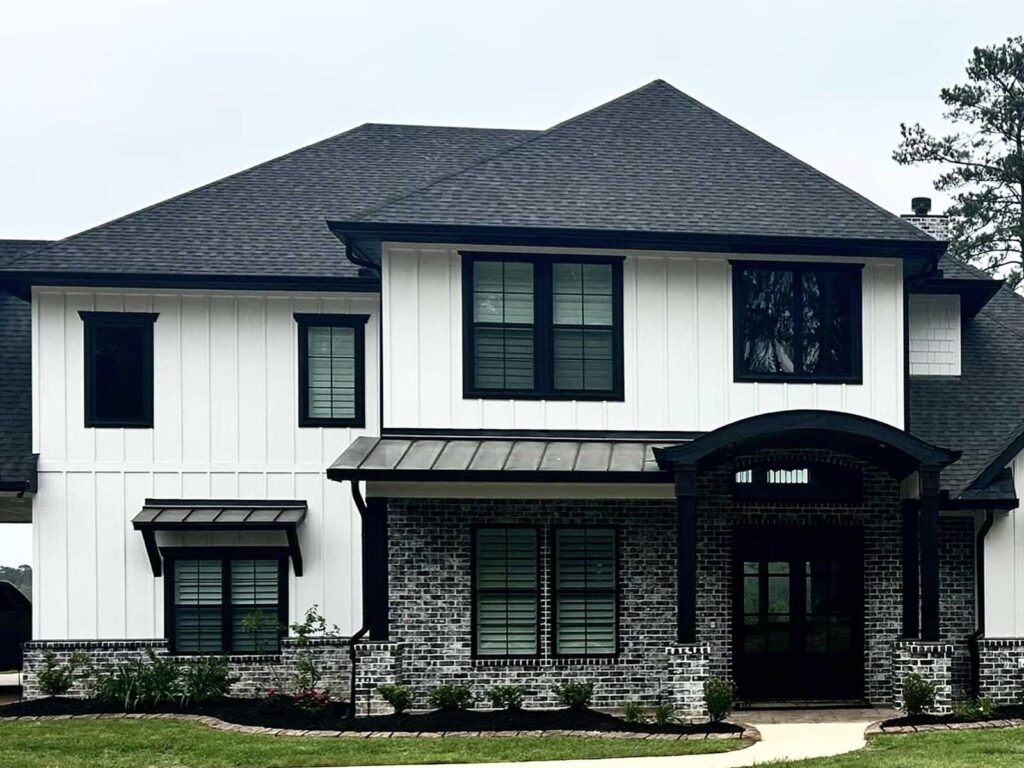
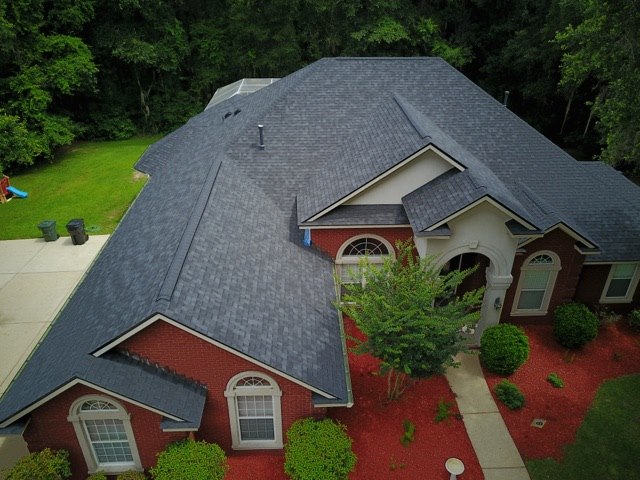
Serving Tallahassee From Two Locations
Common questions
Get a Box Gutter Quote
If your gutters overflow every storm no matter how clean they are, the problem is capacity. Call GutterHawk at 850-779-1081 for box gutters in Tallahassee FL and we will calculate what your roof actually needs.
Frequently Asked Questions
Q.1 What is a box gutter?
An oversized rectangular gutter built for high water volume, used on large roofs and commercial buildings.
Q.2 Do I need 7 inch box gutter or 6 inch K-style?
It depends on roof area and pitch. A flow calculation settles it, and 6 inch is often enough.
Q.3 Can box gutter go on a house?
Yes. Seven-inch box is a genuine residential option where conventional gutter keeps overflowing.
Q.4 Why does my existing box gutter leak inside the building?
Built-in box gutter has no outside edge to overflow from, so failures show up as interior leaks.
Q.5 Can you repair box gutter rather than replace it?
Usually yes, where the metal is sound. Most failures are at seams and outlets.
Q.6 Do box gutters need guards?
They can take them, but capacity is the main issue. Debris still needs clearing either way.
Q.7 How much do box gutters in Tallahassee FL cost?
More than conventional gutter, and it varies with gauge, material, and length. We quote after surveying.
Working With Us Is Easy
01.
Request Your Quote
Getting the process started is easy! Simply fill out our quick form or call us at 850-656-4295. One of our friendly staff members will get in touch to finalize the details.
02.
We Work On Your Estimate
One of our expert estimators will get to to work analyzing your job and crafting a proposal. Of course, we’re here to answer any questions you may have.
03.
GutterHawk Gets To Work!
Contact Us
Have questions about your roof? Do you need information on gutter maintenance plans? No matter the question, GutterHawk is here to help!