

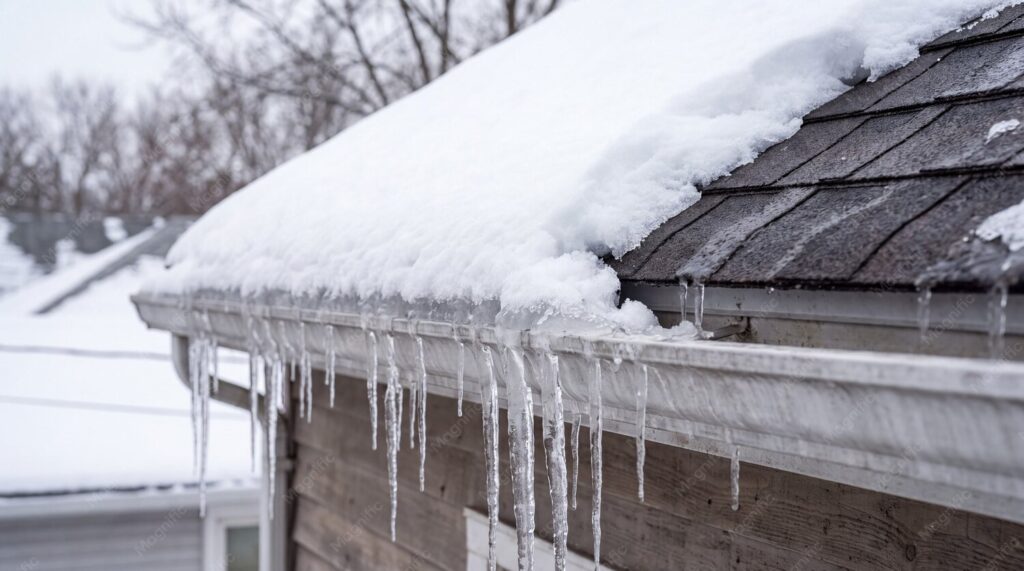
Winter weather can create serious challenges for homeowners, especially when snow and ice build up along the edges of a roof. One common problem is an ice dam, a thick ridge of ice that prevents melting snow from draining properly. When water becomes trapped behind this ridge, it can seep beneath shingles and cause leaks, ceiling stains, damaged insulation, and other costly problems.
Knowing how to remove ice dams from your roof during winter can help you respond before the damage becomes worse. However, removing ice incorrectly can damage roofing materials or put you at risk of a serious fall.
The safest approach is to remove loose snow from accessible areas using appropriate equipment, avoid damaging the ice-covered roof, and contact a qualified roofing professional when a substantial ice dam has formed. You should also address the underlying causes to reduce the likelihood of the problem returning.
What Is an Ice Dam on a Roof?
An ice dam is a buildup of ice that forms along the lower edge of a roof, usually near the eaves. It develops when snow melts on a warmer section of the roof and the resulting water flows toward a colder edge, where it freezes again.
As this process repeats, ice accumulates and creates a barrier. Additional melting snow can become trapped behind it instead of draining away.
Over time, the trapped water may work its way beneath shingles and into the roof structure. This can damage insulation, ceilings, walls, and other parts of the home.
What Causes Ice Dams to Form?
Several conditions can contribute to ice dam formation during winter.
- Heat escaping into the attic: Warm air from living spaces can heat parts of the roof and melt the snow above them.
- Inadequate attic insulation: Insufficient insulation allows more heat to transfer through the ceiling and roof.
- Poor attic ventilation: Inadequate airflow can contribute to uneven roof temperatures.
- Repeated freezing and thawing: Daytime melting followed by nighttime freezing causes ice to accumulate along the roof edge.
- Blocked gutters and downspouts: Debris and existing ice can interfere with drainage, although ice dams can also form on roofs without gutters.
How to Remove Ice Dams From Your Roof During Winter
Removing an ice dam requires caution. Your approach should depend on the amount of ice, roof accessibility, weather conditions, and whether water is already entering the home.
Inspect the Roof From the Ground
Start by looking for visible signs of ice buildup without climbing onto the roof or standing beneath hanging ice.
Common warning signs include:
- Thick ridges of ice along the roof edge.
- Large icicles hanging from gutters or eaves.
- Water stains on upper-floor ceilings or exterior walls.
- Damp insulation or moisture in the attic.
- Water dripping around windows or near the top of walls.
Remove Loose Snow With a Roof Rake
If the roof is accessible from the ground, a long-handled roof rake may help remove loose snow from the lower portion of the roof. Removing excess snow can reduce the amount of meltwater feeding an existing ice dam.
Follow these precautions:
- Work from the ground rather than climbing onto the roof.
- Use a suitable roof rake with a non-damaging head.
- Remove small amounts of snow at a time.
- Leave a thin layer of snow rather than scraping the roof covering clean.
- Stay clear of falling snow, icicles, and overhead power lines.
Consider a Roof-Safe Ice-Melting Method
For certain ice dams, a suitable ice-melting product may help create a small drainage channel through the ice. Calcium chloride is commonly used for this purpose, but the product must be appropriate for the roofing materials and applied according to its label.
Some professional guidance describes placing calcium chloride in a fabric sleeve across an ice dam to help melt a narrow channel. This is not a risk-free solution: reaching the dam may require dangerous roof access, and runoff can harm nearby plants or materials.
Never use ordinary rock salt without checking product compatibility, and never climb onto an icy roof to position a de-icer. If the dam is high, thick, or difficult to reach, leave the work to a professional.
Hire a Professional for Thick or Persistent Ice Dams
Large ice dams are difficult to remove without damaging shingles, flashing, gutters, or other roof components. A qualified roofing professional can assess the buildup and determine an appropriate removal method.
Depending on the roof and conditions, professional removal may involve specialized steam equipment or other controlled techniques designed for ice-dam removal.
Professional help is particularly important when:
- Water is leaking into the house.
- The roof is steep or several stories high.
- The ice extends across a large section of the roof edge.
- Heavy snow is placing additional weight on the roof.
- The ice is close to skylights, chimneys, or other roof penetrations.
Avoid attempting to break large ice formations apart with an axe, hammer, ice pick, or sharp shovel. These tools can puncture roofing materials and create additional repair problems.
Check for Water Damage After Removal
Once the immediate ice-dam problem has been addressed, inspect the areas inside your home that may have been exposed to moisture.
Look for discolored ceilings, peeling paint, damp insulation, musty odors, and water marks along exterior walls. If water has entered the attic, address the moisture promptly and arrange any necessary repairs.
Do not simply repaint a stained ceiling or replace wet insulation without identifying the source of the leak. The roof or attic conditions that allowed the water intrusion must also be corrected.
What You Should Never Do When Removing Ice Dams
Trying to remove ice quickly can lead to roof damage or serious injuries. Avoid these common mistakes.
- Do not chip ice with sharp tools. Axes, ice picks, and metal shovels can damage shingles, flashing, and gutters.
- Do not climb onto an icy roof. Snow-covered surfaces and hidden ice create a significant fall risk.
- Do not use a blowtorch or open flame. Direct heat can damage roofing materials and start a fire.
- Do not use a heat gun or hair dryer outdoors in icy conditions. Electrical equipment around water and ice creates additional hazards.
- Do not pour hot water over a large ice dam as a lasting fix. Water can refreeze as temperatures drop, potentially adding to the buildup.
- Do not ignore signs of structural stress. A sagging roof, unusual cracking sounds, or major ceiling deformation requires immediate attention. Leave the building if a structural failure appears possible and seek emergency assistance.
How to Prevent Ice Dams From Forming Again
Removing an ice dam addresses the immediate problem, but prevention requires attention to your roof, attic, and drainage system.
Improve Attic Insulation
Proper attic insulation reduces the amount of heat escaping from your living space into the roof structure. When the roof surface stays more evenly cold during winter, snow is less likely to melt unevenly and refreeze along the eaves.
Have an insulation professional assess your attic and recommend improvements suited to your home’s construction and local climate.
Seal Air Leaks
Warm air can escape through gaps around attic hatches, recessed lights, plumbing penetrations, and other ceiling openings. Sealing appropriate air leaks helps reduce unwanted heat transfer and moisture entering the attic.
These improvements can address one of the underlying causes of recurring ice dams.
Maintain Proper Attic Ventilation
A properly designed ventilation system can help maintain more consistent roof temperatures. Have a qualified professional check that insulation and ventilation work together correctly and that vents are not blocked.
Ventilation should be evaluated alongside air sealing and insulation rather than treated as the only solution.
Keep Gutters and Downspouts Clear
Leaves, twigs, and other debris can restrict drainage and contribute to water-management problems around the roofline. Although clean gutters cannot prevent every ice dam, keeping them maintained supports proper drainage when conditions allow water to flow.
Regular upkeep before winter is especially helpful. Learn more about GutterHawk’s gutter maintenance services and how routine maintenance helps protect your home’s drainage system.
Schedule Regular Roof Inspections
Roof inspections can help identify damaged shingles, deteriorating flashing, drainage concerns, and other issues that may increase the risk of leaks.
A professional inspection is particularly useful after severe weather or when ice dams have occurred repeatedly. Explore GutterHawk’s roof maintenance services to learn about roof inspections and ongoing upkeep.
How Do You Know When an Ice Dam Needs Professional Removal?
Not every patch of ice requires emergency removal. However, certain situations should not be handled as a DIY project.
| Situation | Recommended action |
| A small amount of ice with no signs of trapped water | Monitor conditions and remove accessible loose snow safely from the ground. |
| A thick ridge of ice across the roof edge | Arrange a professional assessment. |
| Water stains or active leaks indoors | Contact a roofing professional promptly and protect the affected interior area. |
| Ice on a steep or difficult-to-access roof | Avoid climbing and arrange professional removal. |
| A sagging roof or signs of structural failure | Leave the building if collapse appears possible and contact emergency services. |
A roofing professional can determine whether immediate removal is necessary, whether water is trapped behind the dam, and whether repairs are required.
Can Ice Dams Damage Gutters and Roofing Materials?
Yes. Ice dams can place additional weight and stress on gutters, fasteners, roof edges, and other components. Water trapped behind the ice can also penetrate beneath shingles and damage roof decking, insulation, ceilings, and walls.
Repeated freezing and thawing may worsen existing weaknesses. Damaged gutters or loose connections can further complicate drainage when temperatures rise.
If your gutters show signs of sagging, separation, leakage, or physical damage after winter weather, have them inspected. Depending on their condition, cleaning, repairs, or replacement may be appropriate. You can learn more about GutterHawk’s gutter repair and maintenance options.
Protect Your Roof Before Winter Problems Get Worse
Ice dams can turn an ordinary winter weather event into a costly roofing problem. While removing loose snow and monitoring your roof can help, thick ice formations, active leaks, and difficult roof access require a cautious approach.
The most effective long-term strategy combines safe removal when necessary with better attic insulation, proper air sealing, suitable ventilation, and regular roof and gutter maintenance.
GutterHawk provides roofing and gutter services to help homeowners maintain their roofs and drainage systems. Explore the company’s roof maintenance services to learn more about maintaining your home’s exterior.
Frequently Asked Questions
For a substantial ice dam, the safest effective option is generally to contact a qualified professional who can assess the roof and use an appropriate removal method. Removing loose snow from the ground with a roof rake may help reduce additional meltwater, but it will not remove solid ice by itself.
You may be able to remove loose snow from the ground using a suitable roof rake, provided conditions are safe. Removing solid ice is more hazardous because it can damage roofing materials or cause falling ice. Avoid climbing onto the roof and seek professional help for thick or difficult-to-reach ice dams.
Some de-icing products can melt ice and create drainage channels, but not all products are suitable for roofs. Ordinary rock salt can damage surrounding materials and vegetation. Only consider a product specifically appropriate for your roofing system, follow its label, and never climb onto an icy roof to apply it.
Clean gutters help support proper drainage, but they do not eliminate the main causes of ice dams. Heat loss through the ceiling, inadequate insulation, and uneven roof temperatures are often important contributing factors. Gutter maintenance should be combined with appropriate attic improvements.
Focus on reducing heat loss into the attic, sealing air leaks, maintaining suitable insulation and ventilation, keeping gutters clear, and scheduling roof inspections. If ice dams recur, ask a qualified professional to investigate the underlying cause rather than relying on repeated ice removal.