

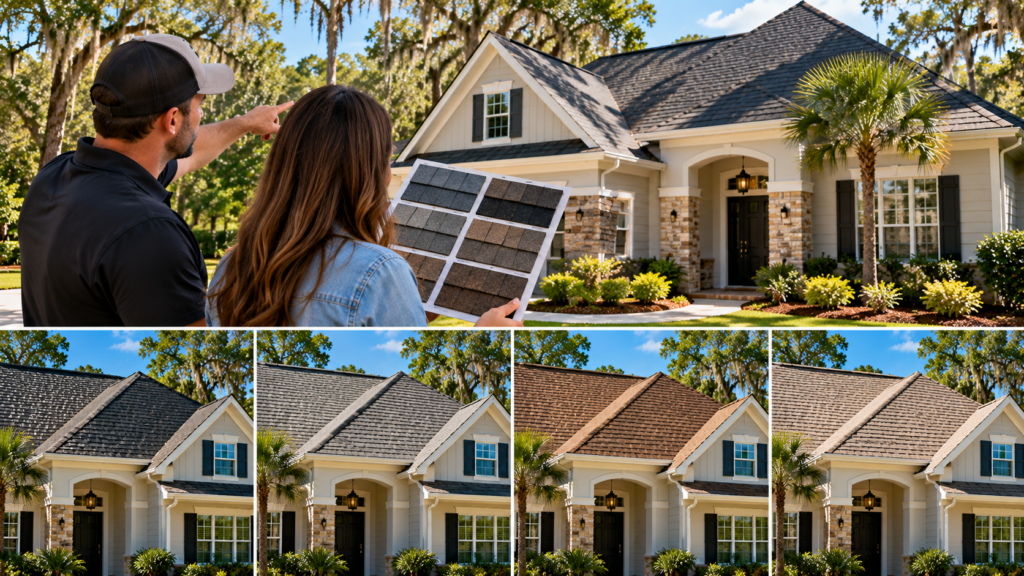
Here is how to choose roofing colors without regret. Start with what you cannot change, like brick, stone, siding and the driveway. Then factor in Tallahassee heat and your neighborhood rules. Personal taste comes last, and that is fine.
A new roof is a big purchase, and you will look at it for years. The shingle colors available today run from near-white to charcoal, plus mixed blends that often hide dirt well. Shingle roofing gives you more choices than most people expect, so a method helps.
How to choose roofing colors around fixed features
Stand at the curb and look at the house as a whole. The roof covers a large share of what you see from the street, so the roof color sets the mood for everything below it. Dark roofs make a house feel heavier, while mid-tones feel softer.
Look at the warm or cool tone in your brick, stone and trim. For example, red or orange brick usually pairs well with brown, tan or warm blended shingles. Gray stone and cool-toned siding lean toward gray or black. A clash in undertone is the easy mistake to make, and it shows from the street.
Skip trendy colors. Your roof will outlast the trend, and neutral shades usually appeal to the widest range of buyers if you sell. That is curb appeal that lasts. Choose a color you can live with for the life of the roof.
Light vs dark roof color in Florida heat
Dark roofs absorb more heat than light ones. Black and charcoal get the hottest, while white and light gray stay coolest. In a Tallahassee summer, a lighter or reflective shingle can keep the roof surface cooler.
Still, color is only part of the story. Attic ventilation and insulation often matter as much for your cooling bill. So the best roof color for Florida is not always the lightest one. It is the one that balances heat, looks and upkeep.
Humidity changes the picture. Black algae streaks are easier to see on light roofs, especially under shade from live oaks and pines. If you love a light color, ask about algae-resistant shingles. If your lot is heavily shaded, a mid-tone blend helps hide streaks and still runs cooler than black.
Metal roof colors work a little differently
Painted metal panels come in a wide range of colors, and the finish matters as much as the shade. Lighter colors reflect more sun, much like shingles. If you are weighing metal roofing, ask to see the exact finish in person. A small chip can look very different across a full roof.
Pick a color that ages well
Every roof fades a little under Florida sun. Solid, flat colors tend to show that wear and any dirt more than blended shingles do. A blend of two or three tones in the same family gives the roof depth and hides small color shifts as it ages. Our advice on how to choose roofing colors that last: pick a blend over a single flat shade.
Test samples and check HOA rules first
Never choose from a brochure or a screen. Get large roof color samples, lean them against the house and check them at morning, noon and evening. Look in sun and in shade, and look when they are wet. Color shifts more than you would think.
Then check your HOA or architectural review rules before you order. Some neighborhoods limit roof colors, and a rejected color after installation is an expensive fix. Pick your gutter and fascia colors at the same time, so everything on the roofline matches. Ask your roofer to point out finished roofs in the same color on a nearby street, so you can see the real thing.
Conclusion
Learning how to choose roofing colors takes one quiet afternoon with big samples and an honest look at your brick, your shade and your HOA rules. Photos and online color tools help, but nothing beats seeing a sample against your own brick. Do that before you commit to a roof replacement, not after the crew shows up. Once you have two finalists, call GutterHawk at 850-779-1081 for a free estimate, and we will walk through your options and answer your questions.
Frequently Asked Questions
Lighter colors and reflective shingles usually keep the roof surface cooler than dark ones. Still, no color fixes poor attic ventilation. In humid Tallahassee, light roofs also show algae streaks more clearly, so ask about algae-resistant shingles. Mid-tone blends often balance heat, streak visibility and curb appeal well.
Color affects curb appeal, and curb appeal shapes a buyer’s first impression. Neutral blends in gray, brown or black usually appeal to the widest group. Bold colors can narrow that group. A roof that suits your brick and siding rarely hurts, while a clashing one is easy to spot from the street.
Gutters and fascia should coordinate with the roof, but they do not need to match it exactly. White, brown and black gutters pair with most roof colors. Pick the roof first, then choose gutters that tie in with your trim or siding.
Yes, roofing colors fade a little as sun and weather wear the surface. The change is usually slow, and blended shingles hide it better than flat solid colors. Shade, pollen and algae can make a roof look dull before the color itself has faded. Ask your roofer what the manufacturer warranty says about color and granule loss.
Not always. Many HOAs and architectural review boards set approved colors or require sign-off before work starts. Get the rules in writing, submit your sample for approval, and wait for a written yes before you order materials. It costs far less than redoing a rejected roof.