

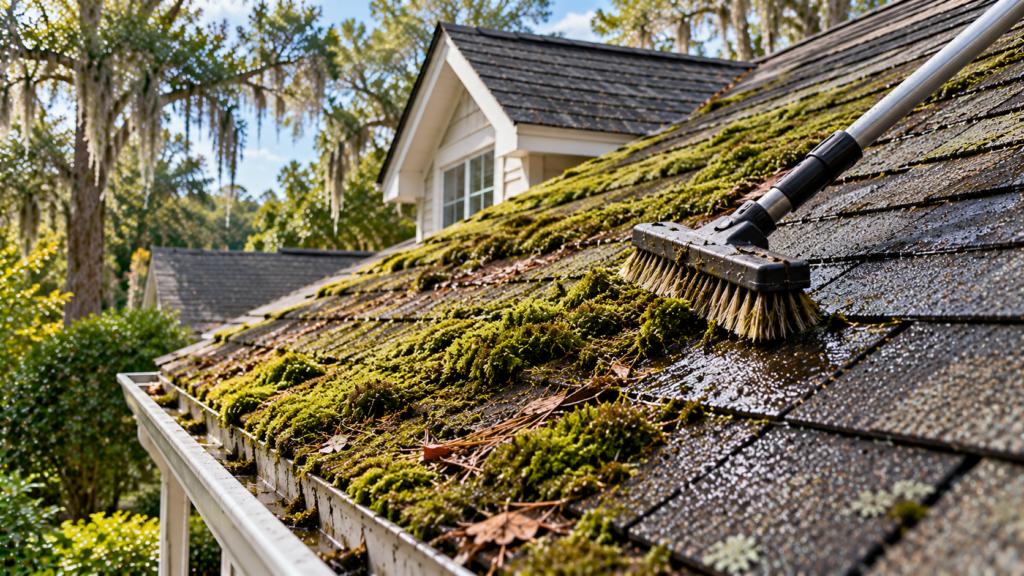
Removing moss from your roof safely comes down to three moves. Brush it loose gently, treat what is left with a roof-safe moss killer, and fix the shade and damp that fed it. Skip the pressure washer.
Moss is common in Tallahassee because humidity, summer storms and big oaks and pines keep shaded slopes wet for days. Moss on roof shingles holds that water against them and can lift their edges over time. Not sure how far it has gone? A roof inspection will show whether you need a cleaning or a repair.
Check the roof before you climb it
Moss makes a roof slippery, and wet moss is worse. Before removing moss from your roof, scan it from the ground with binoculars. Look for thick patches, lifted shingle edges and bare spots where granules have worn away.
But if the roof is steep, two stories up or soft underfoot, stop and call a pro. A fall costs far more than any cleaning bill. So if you do go up, wear soft-soled shoes, clip into a roof harness and pick a dry, cool morning.
Removing moss from your roof by hand
To remove roof moss by hand, use a soft-bristle brush or a plastic-bladed tool. Brush downhill, never up against the shingles, so you do not catch an edge. Wear gloves and eye protection.
Go slowly. Moss that resists a light brush should wait for treatment instead of a harder scrub. Scraping hard also pulls off the granules that shield the shingle from sun. Then sweep the loose moss off and bag it, because moss left in the gutters clogs them and holds water.
Using a moss killer the right way
After brushing, treat what remains. Pick a roof moss killer made for shingles and follow its directions for mixing and coverage. Oxygen bleach (sodium percarbonate) and zinc-based products are common choices, and both are easier on shingles and metal than chlorine bleach.
Apply it with a low-pressure sprayer when no rain is forecast. An overcast day works best, since the product stays wet on the moss longer. The moss turns brown and dies, and rain usually rinses it off over the following weeks.
Wet down nearby plants first and keep runoff off your lawn and beds. Many homeowners hand this step to a roof maintenance crew, because spraying a pitched roof is the riskiest part of the job.
Why pressure washing a roof backfires
Pressure washing blasts granules off asphalt shingles and can force water under them, which can lead to leaks. Chlorine bleach is the next thing to skip. It can discolor shingles, corrode flashing and gutters, and hurt the plants below.
Dry scraping with a putty knife or wire brush also damages shingles. Still, if a method would scratch a car’s paint, it is too rough for a roof. If moss keeps returning or the shingles look worn, treat that as a sign to get the roof checked.
Keep moss from coming back
Killing moss fixes the symptom. The cause is moisture and shade, so go after those to prevent moss growth. Trim branches so sun and wind reach the roof. Clear leaves and pine needles from valleys and gutters, because debris holds damp against the shingles.
Zinc strips (or copper) near the ridge release metal ions with each rain and help slow regrowth below them. Check the north side after each wet summer. Shaded slopes grow moss first.
Also check your gutters. Fallen moss and pine needles clog them, and a clogged gutter spills water back over the roof edge.
Conclusion
Removing moss from your roof works best as a slow, gentle job: brush lightly, treat with a roof-safe product, and cut back the shade that feeds it. If you find lifted shingles, soft spots or leaks underneath, that calls for roof repairs, not another round of scrubbing. Call GutterHawk at 850-779-1081 for a free estimate. We will look at the roof, tell you what is moss and what is damage, and price the fix. Financing through Wisetack is available if you need it.
Frequently Asked Questions
Yes, over time. Moss holds moisture against shingles, lifts their edges and can work under tabs, which invites leaks and rot in the deck below. Light, new growth is mostly cosmetic. Thick, long-standing moss is a bigger problem, so treat it early and check for lifted or worn shingles.
No. Pressure washing strips protective granules from asphalt shingles and can push water under them. That shortens the roof’s life and can cause leaks. Use a soft brush for loose moss and a roof-safe moss killer for the rest. If you must rinse, use a garden hose on low pressure, aimed down the slope.
Oxygen bleach (sodium percarbonate) and zinc-based moss killers made for roofs are common, shingle-friendly choices. Follow the label, apply on a dry day and rinse nearby plants. Avoid chlorine bleach, which can discolor shingles and corrode metal flashing and gutters. Check your shingle manufacturer’s guidance if your warranty matters to you.
There is no fixed schedule. Check your roof after each wet summer and again in spring, especially shaded slopes and the north side. Treat moss when you first see it, since small patches are easy to brush away. Roofs under trees usually need attention more than open, sunny ones.
They help slow it, but they are not a cure. Rain washes zinc ions down the shingles below the strip, which makes it harder for moss to grow there. Coverage is limited to the area below each strip, and they work best on a clean roof. Pair them with tree trimming and regular cleaning.