

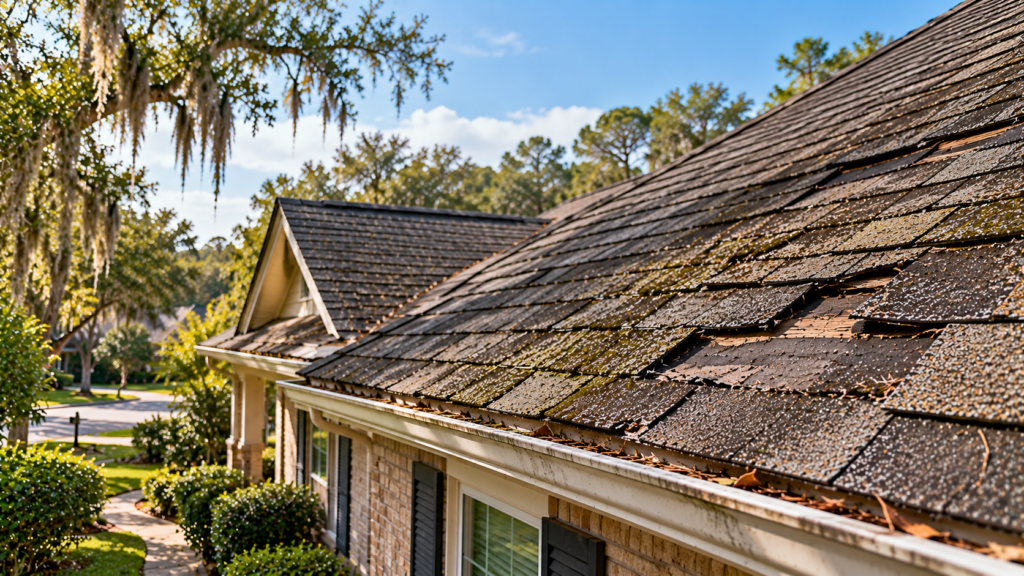
If your roof has been over your head for two decades, you’ve probably wondered whether it’s time for a new one. Replacing a roof is a big investment, so waiting feels sensible. But in Tallahassee, a roof works harder than in most places. Intense summer heat, humidity, heavy rain, and hurricane-season storms all wear on it. A 20-year-old roof here has seen a lot, and knowing where it stands can save you from expensive surprises.
How Long Does a Roof Last in Tallahassee?
Asphalt shingle roofs are often rated for 20 to 25 years, but that number assumes mild conditions. North Florida’s UV exposure and moisture can shorten that lifespan, so many shingle roofs here start declining closer to the 15 to 20 year mark. Metal roofs last longer, but even they need attention over time.
So a 20-year-old shingle roof is at or past its expected lifespan. That doesn’t mean it has failed, but it does mean it deserves a close look.
Signs Your 20-Year-Old Roof Is Ready for Replacement
Age is only part of the story. Look for these warning signs:
- Curling, cracked, or missing shingles. Shingles that buckle or lift no longer shed water properly.
- Granules in your gutters. Those gritty bits are the shingle’s protective layer. Heavy loss means the roof is wearing out.
- Recurring leaks or ceiling stains. One leak can be a simple fix. Repeated leaks usually point to widespread deterioration.
- Sagging areas. A dip in the roofline can signal trapped moisture or structural problems.
- Moss, algae, or dark streaking. Florida’s humidity encourages growth that holds moisture against your roof.
- Rising energy bills. A worn roof and failing underlayment can let heat into your attic.
If you notice several of these, replacement is likely the smarter long-term move.
When a Repair Still Makes Sense
Not every older roof needs a full tear-off. If the damage is isolated, such as a few storm-damaged shingles or a single flashing problem, targeted roof repairs can restore protection at a fraction of the cost.
The key is whether the rest of the roof is sound. Patching a roof that is failing everywhere is like putting a bandage on a broken arm. You may pay for repeated repairs and still end up replacing the roof anyway. An honest assessment separates the two cases.
The Hidden Costs of Waiting Too Long
Putting off replacement can feel like saving money, but an aging roof often costs more in the end:
- Water damage. A small leak can soak insulation, rot decking, and lead to mold in the attic and walls.
- Storm vulnerability. Brittle, worn shingles are more likely to lift or tear off in high winds, and a failure during a storm can mean emergency repairs.
- Insurance trouble. Many Florida insurers look closely at roof age and condition, and some raise premiums or limit coverage on older roofs. Check with your own carrier about its requirements.
- Resale concerns. Buyers and inspectors notice an aging roof, which can weaken your negotiating position.
Replacing the roof on your own schedule is almost always easier and cheaper than doing it in an emergency.
Start With a Professional Roof Inspection
The best way to settle the question is a professional roof inspection. A trained eye can check shingles, flashing, ventilation, decking, and signs of hidden moisture that you can’t see from the ground.
An inspection tells you whether you have a few years left, whether targeted repairs will do, or whether it’s time to plan a replacement. It also gives you time to compare options and budget instead of reacting to a crisis.
Planning for a New Roof
If the inspection points to replacement, you’ll want to choose materials suited to Florida’s climate and a contractor who can handle the structural side of the job. A full roof replacement is also a good time to look at your gutters and fascia, since water damage often hides in both. GutterHawk handles roofing and gutters together, so everything above your ceiling is covered by one team.
The Bottom Line
A 20-year-old roof isn’t automatically a failing roof, but it’s old enough to take seriously. If you see leaks, curling shingles, or heavy granule loss, replacement is probably coming sooner rather than later. If the roof still looks solid, an inspection will confirm it.
Ready to find out where your roof stands? Call GutterHawk at 850-779-1081 or email [email protected] to schedule an estimate.
Frequently Asked Questions
If damage is limited to a small area and the rest of the roof is in good shape, repairs may be enough. Widespread curling, granule loss, or repeated leaks usually mean replacement is the better investment. A professional inspection is the most reliable way to tell.
Many asphalt shingle roofs are rated for 20 to 25 years, but Florida’s heat, humidity, and storms can shorten that. Roofs in this region often show serious wear closer to 15 to 20 years.
It depends on the roof’s condition and your insurer’s policies. Some Florida insurers scrutinize older roofs and may require inspections or repairs. Contact your insurance provider to understand its specific requirements.
Most residential replacements take a few days, depending on roof size, complexity, materials, and weather. Your contractor can give a more accurate timeline after inspecting the roof.
Yes. GutterHawk offers financing options through its partner Wisetack, with plans for qualifying customers. Visit the financing page or call 850-779-1081 for details.