

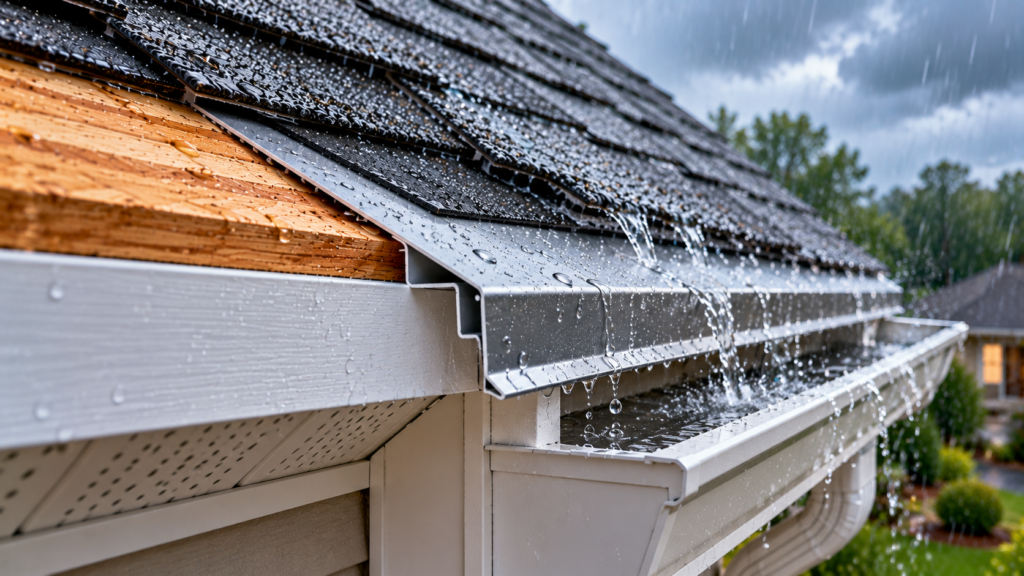
If you’ve ever watched rain slide off your roof, you’ve seen the job a drip edge does. It’s a small metal strip that goes unnoticed on most homes, but it protects some of the most vulnerable parts of your roof. Here’s what a drip edge is, why it matters in Tallahassee’s wet climate, and what to check on your own home.
What Is a Drip Edge?
A drip edge is a piece of L-shaped metal flashing installed along the edges of your roof. It directs water away from the fascia, the roof deck, and the underlying structure. Without it, water can curl back under the shingles by capillary action and soak the wood below.
Drip edge is usually made from aluminum, galvanized steel, or copper. Aluminum is the most common choice for homes because it resists rust and is easy to shape. Galvanized steel is stronger, and copper is a premium option that lasts a very long time.
Where Is It Installed?
Drip edge goes on two parts of the roof:
- Eaves: the lower edges where water runs toward the gutters. Here the drip edge goes under the underlayment, so water flows over it and into the gutter instead of behind it.
- Rakes: the sloped edges along the gable ends. Here it goes over the underlayment, which helps block wind-driven rain and keeps the edge of the roof stiff and neat.
Getting that order right is one of the most common installation details, and it’s often where rushed jobs go wrong.
Why Does a Drip Edge Matter?
It protects the roof deck and fascia. Constant moisture at the roof edge leads to wood rot, which is expensive to repair. A drip edge keeps water flowing off the roof and away from these boards.
It works with your gutters. The drip edge guides water into the gutter instead of letting it run behind it. If your gutters keep pulling away or the fascia behind them is rotting, a missing or poorly installed drip edge may be part of the problem.
It helps in storms. Florida gets heavy rain and strong winds. Wind-driven rain can push water under shingle edges, and a drip edge adds a barrier at the most exposed part of the roof.
It keeps pests out. The tight edge it creates makes it harder for insects and small animals to get under the roofing materials.
It’s usually required. Building codes, including Florida’s, generally call for drip edge on shingle roofs. Skipping it can cause problems with inspections, and some shingle manufacturers expect it for warranty coverage. Check your project’s requirements with your roofer.
Common Types of Drip Edge
- Type C (L-style): the simplest, with a short flat flange. Used for standard roof edges.
- Type D (T-style): has a longer drip lip that carries water farther from the fascia. Popular on many modern homes.
- Type F (gutter apron): a longer flange that extends into the gutter, useful when the gutters sit a little lower.
The right choice depends on your roof pitch, your gutter setup, and the look you want.
Signs Your Drip Edge Needs Attention
- Rust, dents, or bent metal along the roof edge
- Peeling paint or rot on the fascia boards
- Water stains behind or below the gutters
- Shingles lifting or curling at the edges
- No visible metal at the roof edge at all, common on older homes
When to Install or Replace It
The best time is during a roof replacement, when the edges are open and the underlayment can be layered correctly. Drip edge can also be added to an existing roof, but it takes more care to work it under the shingles without damaging them. If you’re already planning roof replacement, ask your contractor to confirm that new drip edge is included. If you have localiezed damage, a pro can often handle it as part of roof repairs. And because drip edge and gutters work as a team, it’s worth reviewing it when you schedule gutter installation.
Let GutterHawk Take a Look
For over 20 years, GutterHawk has served Tallahassee homeowners as roofing and gutter specialists. We’re experienced with both, so we can make sure your roof edge, drip edge, and gutters all work together. Call us at 850-779-1081 or email [email protected] for a free estimate.
Frequently Asked Questions
In most cases, yes. It protects the fascia and roof deck from water damage, supports your gutters, and is generally required by building codes for shingle roofs.
Yes. It can be retrofitted, though it’s easiest during a re-roof. A professional can slide it under the first shingle course carefully to avoid damage.
Aluminum and galvanized steel typically last for decades, though that depends on the weather and the quality of the installation. Copper can last even longer.
Drip edge is a specific type of flashing used at the roof’s edges. Other flashing, such as around chimneys, vents, and valleys, protects different areas where water could enter.
No. It guides water off the roof edge and into the gutter. Gutters then carry that water away from your foundation, so you need both.