

Between summer thunderstorms, hurricane-season winds, heavy humidity, and falling limbs from Tallahassee’s tree canopy, your roof takes a lot of punishment. Most roof problems don’t need a brand-new roof, though. Knowing the common types of roof repairs helps you catch trouble early, talk to a contractor with confidence, and avoid paying for more than you need.
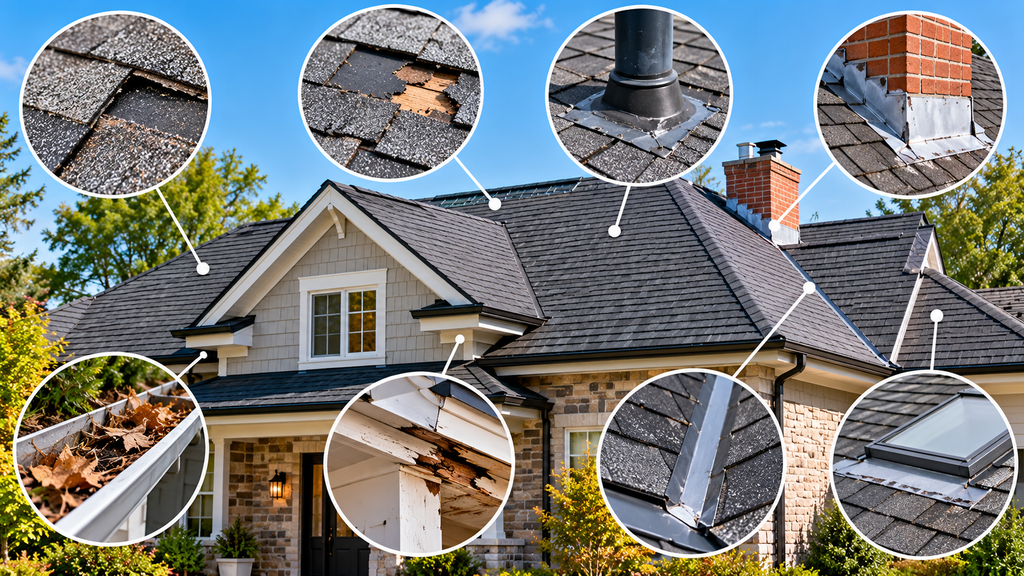
1. Shingle Repair
Asphalt shingles are the most common roofing material in our area. Wind can lift, curl, or tear them away, and age causes cracking and granule loss. A roofer can replace damaged shingles one at a time and reseal lifted tabs. Fixing them promptly keeps water from reaching the underlayment and decking.
2. Roof Leak Repair
Leaks are the most urgent repair. Warning signs include ceiling stains, a musty smell, and drips in the attic. Water often travels along rafters before it shows up inside, so the visible spot is rarely the source. A proper repair finds the entry point and fixes it, whether that means resealing a penetration, replacing underlayment, or patching decking. Our roof repairs team traces leaks to the source rather than just covering the stain.
3. Flashing Repair
Flashing is the thin metal that seals the joints around chimneys, skylights, vents, and valleys. It rusts, lifts, and loses its sealant over time, which makes it one of the most common leak points. Repair usually means resealing or replacing the damaged section, which is far cheaper than repairing water damage later.
4. Storm Damage Repair
Tropical storms and strong thunderstorms can leave missing shingles, dented panels, and debris punctures. After a storm, take photos of the damage for your insurance claim. If the roof is exposed, a temporary tarp can protect your home until permanent repairs begin.
5. Metal Roof Repair
Metal roofing is popular in Florida for its durability. It still needs occasional attention, such as backed-out fasteners, failed sealant at seams, and scratches that invite corrosion. These are usually quick fixes when caught early.
6. Flat Roof Repair
Flat and low-slope roofs are common on commercial buildings and home additions. Typical problems are ponding water, blisters, and separated seams. Repairs include patching the membrane, resealing seams, and improving drainage so water doesn’t sit on the surface.
7. Decking and Rot Repair
If a section of your roof feels soft or sags, the wood decking underneath may be rotted. Florida’s humidity makes this common after long-term, unnoticed leaks. The fix is to replace the damaged sections of decking before reinstalling the roofing on top.
8. Gutter-Related Repairs
Your roof and gutters work as one system. Clogged or detached gutters push water back onto the roof edge and fascia, causing rot. That’s why GutterHawk handles both, so one team can fix the whole problem.
Repair or Replace?
As a general rule, localized damage calls for repair. Widespread damage, repeated leaks, or a roof nearing the end of its service life usually make roof replacement the smarter investment. The best way to know is a professional assessment. A roof inspection shows exactly what condition your roof is in, so you can decide with real information.
Get Your Roof Fixed the Right Way
GutterHawk has served Tallahassee homeowners and businesses for over 20 years. We’re licensed as both a roofing contractor (CCC 1330917) and a building contractor (CBC 1255295), so we can handle structural work in-house. Whether you have a small leak or storm damage, we’ll give you an honest recommendation and a free estimate.
Call 850-779-1081 or email [email protected] to schedule your inspection.
Frequently Asked Questions
Look for water stains on ceilings, missing or curling shingles, granules in your gutters, sagging areas, or daylight in the attic. After any major storm, check for visible damage too. When in doubt, a professional inspection will tell you for sure.
Cost depends on the type of damage, roof material, roof size, and how easy the area is to reach. A few replaced shingles cost far less than decking or flashing work. GutterHawk offers free estimates, so you’ll know the price before work begins.
Minor tasks like clearing debris are fine from the ground. Roof repairs themselves are risky, since falls are a serious hazard and improper work can cause leaks or void your warranty. It’s safer to hire a licensed contractor.
Many small repairs, like replacing shingles or resealing flashing, can be finished in a day. Larger jobs such as decking replacement or storm damage take longer, and Florida’s rainy weather can affect scheduling.
Yes. We offer free inspections and estimates, and financing is available through our partner Wisetack for qualifying customers, so you can fix problems before they get bigger.