

Walk up to a roof under construction and you’ll see shingles, nails, and ladders. What you won’t see once the job is finished is one of the most important layers on the whole roof: roofing felt. It sits quietly under your shingles and works every day to protect your home.
So, what is roofing felt used for? Let’s look at what it is, what it does, and why it matters for Tallahassee homes.
What Is Roofing Felt?
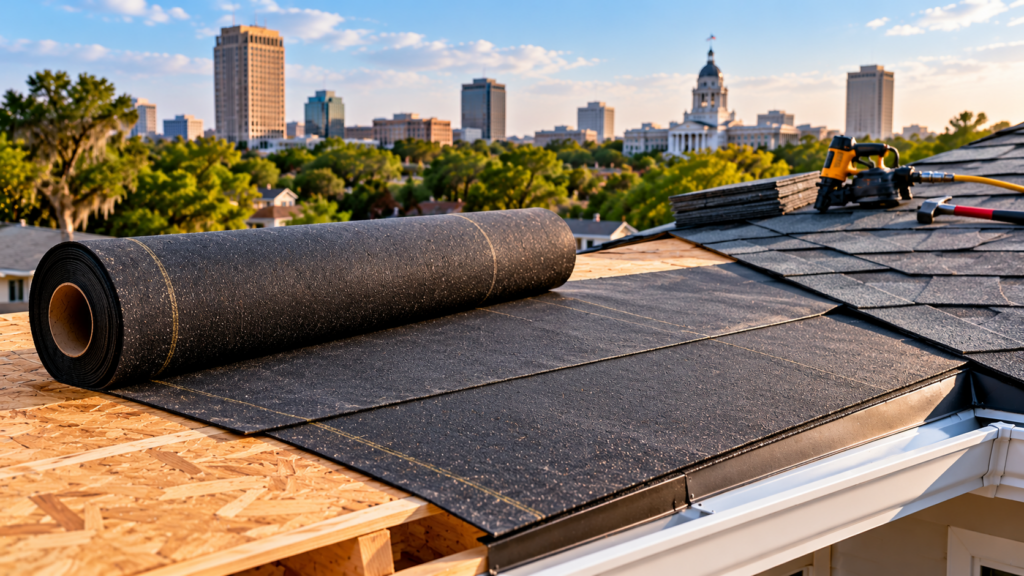
Roofing felt, also called tar paper or underlayment, is a water-resistant layer installed directly over the roof deck (the plywood or wood boards) and under the shingles. Traditional felt is made from organic materials or fiberglass and saturated with asphalt. That coating is what makes it repel water.
Many homeowners assume the shingles do all the work. Shingles are the first line of defense, but they aren’t completely waterproof on their own. Roofing felt is the backup layer that catches whatever gets past them.
The Main Uses of Roofing Felt
1. A Secondary Barrier Against Water
Wind-driven rain can push water sideways and up under shingles, especially during Florida’s summer storms and hurricane season. Roofing felt stops that moisture from reaching the wood deck, where it could cause rot, mold, and leaks.
2. Protecting the Roof Deck During Installation
A new roof doesn’t always go on in a single day. Once the old shingles are torn off, the bare deck is exposed. Felt gives immediate protection if rain rolls in before the shingles are finished. This is one reason experienced crews lay felt right after the deck is prepared.
3. Creating a Smooth, Even Surface
Felt covers small gaps, seams, and rough spots in the roof deck. This gives the shingles a clean, uniform surface so they lie flat and wear evenly.
4. Shielding the Deck From Shingle Chemicals
Asphalt shingles can release oils that react with bare wood over time. Felt acts as a buffer, helping keep the deck in good condition for longer.
5. Adding Fire and Weather Resistance
Many roofing assemblies earn their fire rating partly because of the underlayment. It also adds an extra layer of insulation against temperature swings and helps manage moisture.
Felt vs. Synthetic Underlayment
Traditional felt is still widely used, but synthetic underlayment has become a popular alternative. Synthetic products are typically lighter, tear-resistant, and better at handling long exposure to sun and moisture. They also don’t absorb water the way felt can.
Felt generally costs less, while synthetic options often last longer and perform better in demanding climates. The right choice depends on your roof type, your budget, and how much weather your home faces. A qualified roofer can recommend the best fit for your property.
Why It Matters in Tallahassee
Our area deals with heavy rain, high humidity, intense sun, and the occasional tropical storm. A roof is only as strong as its weakest layer, and underlayment is easy to overlook until it fails. A poor or missing underlayment can lead to hidden leaks, damaged decking, and expensive repairs down the road.
If your roof is aging or you’ve noticed stains on your ceiling, it’s smart to have a professional take a look. Our team offers professional roof inspections to catch problems early, and if your roof is past its prime, we can walk you through new roof installation from start to finish. Since a roof and gutters work together to move water away from your home, we also provide gutter installation and repair as part of our one-stop service.
Protect Your Home From the Ground Up
Roofing felt may be hidden from view, but it plays a big role in keeping your home dry and your roof lasting longer. If you have questions about your roof’s underlayment or want an honest opinion on your roof’s condition, Gutter Hawk is here to help.
Call us at 850-779-1081, email [email protected], or visit us at 5928 North Monroe Street or 3034 Shamrock St N in Tallahassee.
Frequently Asked Questions
Yes, the terms are used interchangeably. Both refer to asphalt-saturated underlayment installed beneath shingles.
In most cases, yes. Building codes and shingle manufacturers generally call for an underlayment, and it provides essential backup protection against leaks.
Roofing felt is designed to work for as long as your roof does, typically 20 to 30 years when protected by shingles. However, it can degrade if left exposed to the sun and weather for long periods before shingles are installed.
No. It is a temporary shield during construction, not a permanent roof covering. It needs shingles, tile, or metal over it to perform properly.
Synthetic underlayment is often stronger, lighter, and more resistant to moisture and UV exposure, but felt remains a reliable, budget-friendly option. The better choice depends on your roof and budget.