

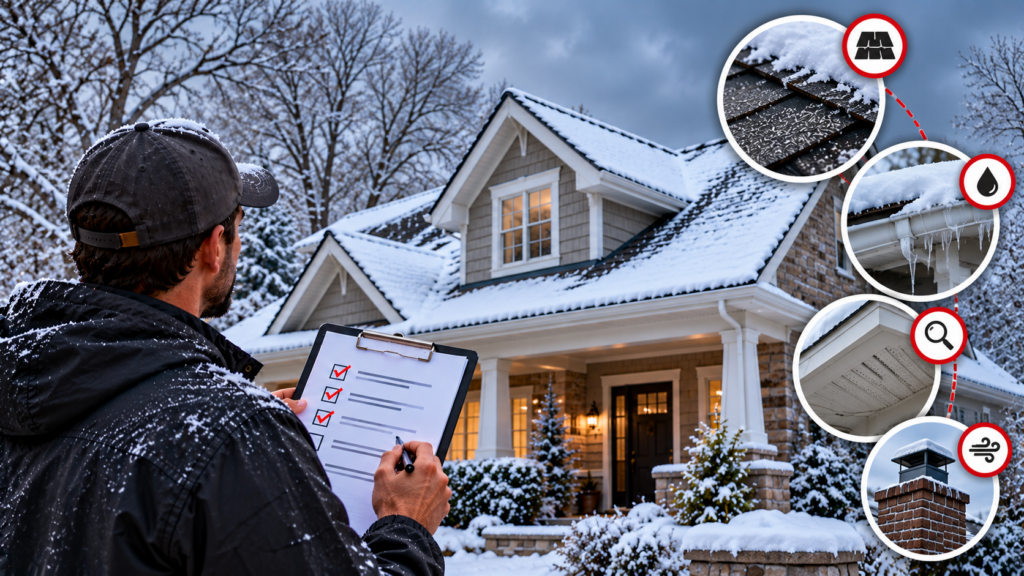
Is your roof ready for winter? Here is a quick test. If you can say no to loose shingles, clogged gutters, soft spots and ceiling stains, you are in good shape. If not, fix them before the cold fronts and heavy rains arrive.
Tallahassee winters are mild next to the north, but they are not harmless. Cold snaps, strong wind and long wet spells find every weak spot on a roof. A short roof inspection now costs far less than repairing a wet ceiling in January.
Is your roof ready for winter? Start outside
You do not need a ladder. Stand back from the house with binoculars or your phone camera zoomed in. Look for shingles that are lifted, cracked, curling or missing. Check the metal flashing around the chimney, vents and skylights, because that is where many leaks start. Also look for a sagging ridge line, which points to a deck problem.
Granules are the sandy grit on your shingles. If you find piles of it at the bottom of your downspouts, the shingles are wearing out. Take photos of anything odd so you can show a roofer later.
Clear the gutters and downspouts
Fall leaves and pine needles are the main winter problem. Once gutters fill, rain spills over the edge and soaks the fascia and soffit. Over a wet season that leads to wood rot, which is a far bigger bill than a cleaning. Flush each downspout with a hose and make sure water leaves fast. If your gutters hang loose or pull away from the fascia, tighten the fasteners now, because a full gutter of wet leaves is heavy. Regular gutter maintenance keeps this from piling up, and it takes one visit before the rainy stretch.
Look inside the attic
The attic tells you what the roof will not. On a dry day, turn off the lights and look for pinholes of daylight. Check for dark stains on the wood, damp insulation and a musty smell. Cool nights and warm indoor air can also create condensation, which can mean the attic is not venting well. Poor ventilation shortens the life of your shingles too, so do not skip this step.
Warning signs you should not ignore
Some signs mean call now: water stains that grow, a ceiling that bubbles or sags, daylight in the attic, shingle pieces in the yard after a wind, and drips during rain. Do not wait to see if it dries. Water travels along rafters, so the stain is often far from the actual leak. Put a bucket under any drip, move belongings, take photos for your insurance, and call a roofer.
Trim trees and clear the roof
Branches that touch the roof scrape shingles in every gust. Cut back anything that hangs over it, and hire a pro for large limbs. Clear leaves and pine needles from valleys and low spots with a long-handled tool from the ground, because wet debris holds moisture against the roof and feeds algae and moss. Never walk a wet or steep roof yourself, and skip the pressure washer, which can strip granules.
Repair now or wait? Our advice
Fix small problems before winter, not during it. A few missing shingles or a cracked flashing seal is a quick job in dry weather. In a storm, the same damage lets water into the deck and insulation. If your shingles are curling across the whole roof, or you are seeing leaks in more than one spot, ask for a replacement quote instead of paying for repeat patches.
Conclusion
Is your roof ready for winter? If you checked the shingles, gutters, attic and trees and found problems, deal with them while the weather is dry. Small repairs now are cheap, and they stop water from reaching your ceiling. Not sure what you saw? Our team can look at it with you. A quick visit now beats an emergency call at midnight in the rain. Learn how our roof repairs work, then call GutterHawk at 850-779-1081 for a free estimate before the next cold front.
Frequently asked questions
Late October through November works best. Leaves are mostly down and the weather is still dry, so repairs go quickly. Waiting until the first cold front or storm means rushed work and longer waits. Book an inspection early and fix small issues before the rainy stretch begins.
Check for lifted, cracked or missing shingles, damaged flashing around chimneys and vents, and granules in your downspouts. Then look at the gutters, the attic for stains or damp insulation, and any branches touching the roof. Do the visual check from the ground, and call a roofer for anything you cannot judge safely.
Yes, though less than in northern states. Cold snaps make shingles stiff and more likely to crack under wind or foot traffic. Heavy rain exposes weak flashing, and strong fronts lift loose shingles. Mild winters hide problems until a storm tests the roof, so a pre-winter check is still worth doing.
They do. Full gutters push water over the edge or back under the first row of shingles, where it soaks the fascia, soffit and roof deck. That causes rot, stains and leaks. Cleaning gutters before the rainy season is one of the cheapest ways to protect the roof edge.
Repair if the damage is limited to a few shingles or one flashing spot. Replace if shingles are curling across the roof, leaks show up in several places, or repairs keep repeating. An inspection will tell you which makes sense, so you avoid paying for patches on a roof that is finished.