

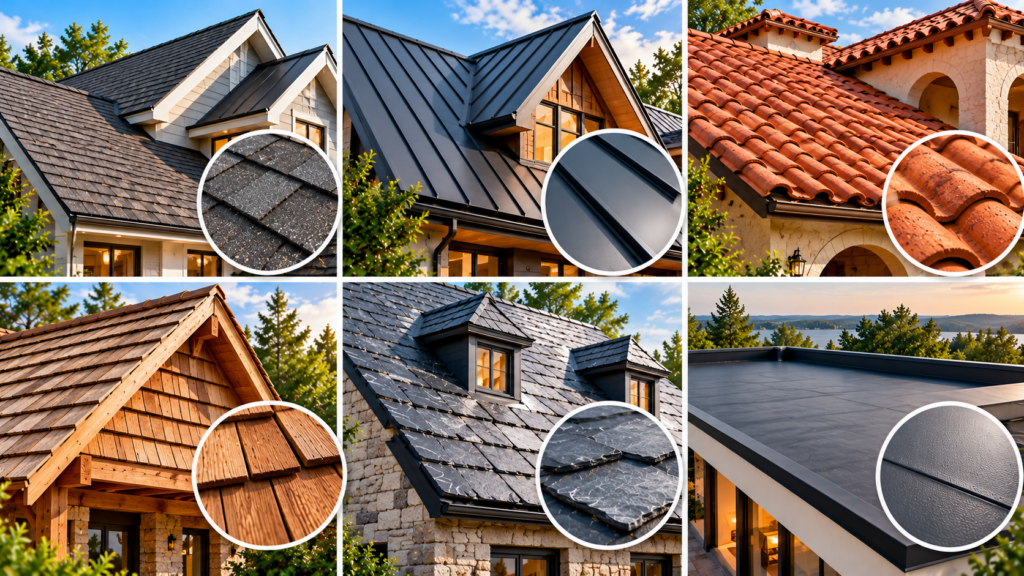
The most common roof types on Tallahassee homes are asphalt shingle, tile, metal and flat or low-slope systems. Asphalt shingles cover most houses here. Metal is the strongest runner-up, and tile shows up on a smaller share of homes. Each one handles our humidity and summer storms differently, so the right pick depends on your house and how long you plan to stay.
Here is a plain look at the most common roof types, with the tradeoffs a contractor would give you at the kitchen table. We start with shingle roofing, since that is probably what covers your house right now. Prices swing with roof size and pitch, so we skip dollar figures and focus on how these roofing materials behave.
Asphalt shingles are the default
Asphalt shingles come in two main styles. Three-tab shingles are thin and cheaper. Architectural shingles are thicker with a layered look, and they usually last longer and resist wind better. For most Tallahassee homeowners, I would skip three-tab and go architectural. The price gap is small next to the extra years you get.
Humidity here feeds algae, which leaves dark streaks across the roof. Ask for algae-resistant shingles to slow that down. Also check the wind rating on the product, because our summer storms and hurricane season can push hard from any direction.
Tile and slate look great but weigh a lot
Clay and concrete tile roofing handles heat well. It is heavy, though, so your framing has to carry the load. That is where a contractor with structural skills matters. At GutterHawk, our building contractor license means we handle that framing work ourselves.
Tile can crack under foot traffic, so keep people off it. Slate lasts a very long time, but it costs the most and needs a crew that knows the material. Both make sense only if the house is built for them.
Metal roofing costs more but lasts longer
Metal roofs often last 40 years or more, and they shed rain fast. Standing seam panels hide the fasteners, so there are fewer spots for leaks. Exposed-fastener panels cost less, but the screws and washers need checking as they age. If you plan to stay for decades, metal roofing deserves a hard look.
Many people worry about noise. Over solid decking with underlayment, rain on metal is usually quieter than they expect. The real tradeoff is upfront cost, since metal typically runs higher than shingles. Metal also does not attract lightning, a myth that comes up often.
Flat and low-slope roofs
Flat roofs show up on porches, additions and many commercial buildings. They are not truly flat, because they slope slightly toward drains. Common materials include TPO, EPDM and modified bitumen, and the best one depends on the building and its use.
Ponding water is the main enemy. After a heavy storm, puddles that sit for days point to a drainage problem. Keep drains and scuppers clear, and have someone look at the roof if water keeps pooling. Our afternoon downpours test these roofs hard.
How to choose among the most common roof types
Start with how long you will stay. If it is under ten years, architectural shingles usually make the most sense. If this is your forever house, metal or tile may pay off over time.
Next, check the age and condition of what you have. A roof inspection tells you whether a repair will do or a replacement makes sense. Also ask the contractor about manufacturer certification, since certified installers can often offer stronger warranties.
Finally, ask about payment options. GutterHawk offers Wisetack financing up to $15,000, with 0% APR for qualifying customers, so a bigger roof does not have to wait.
Conclusion
The most common roof types each fit a different owner. Architectural shingles suit most budgets, metal rewards people who stay put, tile needs the right framing, and flat roofs need good drainage. If your roof is aging, get an honest look at its condition before you choose a material. GutterHawk has worked on Tallahassee roofs for over 20 years, and we can walk you through your roof replacement options with no pressure and tell you plainly what your roof needs. Call GutterHawk at 850-779-1081 for a free estimate.
Frequently Asked Questions
Asphalt shingles are the most common roof type across the US, and the same holds in Tallahassee. They cost less up front than most other materials and come in many colors. Architectural shingles are the better pick for most homes because they last longer and handle wind better than three-tab.
Slate can last the longest, sometimes a century when installed well, followed by metal, which often runs 40 years or more. Tile can also last many decades. Asphalt shingles have the shortest life of the common options, and their lifespan depends on shingle grade and attic ventilation.
No roof is storm-proof, but how well it is installed matters as much as the material. Metal with a high wind rating and architectural shingles installed to the manufacturer’s specs both perform well. Check the wind rating on the product and ask your contractor how the roof deck is fastened.
For many owners, yes, if you plan to stay long term. Metal costs more up front, but it often lasts decades longer than shingles and sheds rain quickly. If you might sell within ten years, you may not recoup the extra cost, so architectural shingles can be the smarter choice.
Asphalt shingles, especially three-tab, are usually the lowest-cost option among the common types. Cheaper does not always mean lower cost over time, though. A roof that needs replacing sooner can cost more across the years. Get a free estimate to compare materials for your specific house and roof size.