

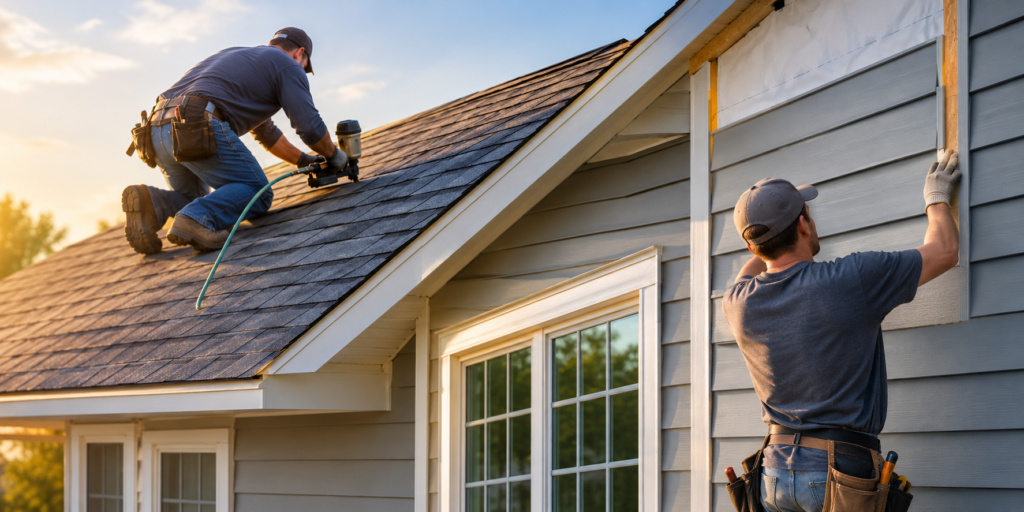
If you’re planning exterior upgrades on your Tallahassee home, one question comes up before the first contractor visit: do you replace the roof or the siding first? In most cases, the roof comes first. The right order depends on your home’s condition, so here is how to decide and why the sequence matters.
The Short Answer: Roof First, Then Siding
Water runs from the top of your home to the bottom, so the roof is your first line of defense. Your siding, windows, and foundation depend on it. Fixing the roof first protects every other upgrade you make afterward.
There are four practical reasons to follow this order.
1. Roofing work is rough on new siding. Tear-off crews drop old shingles, nails, and underlayment, and ladders and equipment lean against your walls. Fresh siding can get scratched, dented, or stained by falling debris. Finishing the roof first avoids that risk.
2. Flashing and siding need to work together. Where your roof meets a wall, step flashing tucks behind the siding and over the roofing material. That layering sends water away from the wall. When the roof is done first, the siding crew can overlap the flashing correctly and finish the water barrier. Reverse the order and you may end up cutting into brand-new siding to fix flashing.
3. A leaking roof can ruin new siding. Moisture that gets behind siding can cause mold, rot, and warped panels. Florida’s heavy rain and humidity make this a bigger concern than in drier climates. Sealing the top of the house first keeps the walls dry.
4. It’s easier to budget and schedule. A roof replacement is usually the larger project. Doing it first lets you plan the siding phase with accurate numbers, and your contractor can inspect the roof edges and eaves before the walls are finished.
When Siding Should Come First
There are exceptions. If your siding has widespread rot, deep cracks, or gaps that let water into the wall, those problems shouldn’t wait. Active moisture damage in the walls can spread quickly, and the structure behind the siding may need repair either way.
In that situation, make targeted siding repairs first to stop the water, then replace the roof, then finish the full siding project. A professional inspection tells you how urgent each piece is. Our roof inspection service checks the roof for leaks, worn shingles, and flashing problems, so you know what needs attention now and what can wait.
Don’t Forget the Third Step: Gutters
Gutters belong at the end of the sequence. They attach to the fascia along the roof edge, and their placement depends on the finished roofline and siding. If you install them early, the roofing and siding crews may knock them loose or damage them.
Once the roof and siding are done, a new gutter system carries water away from your walls and foundation. That protects the investment you just made. Our gutter installation team can fit seamless gutters to your updated exterior so everything works as one system.
How to Plan Your Exterior Project
- Start with an inspection. Get a clear picture of your roof, siding, and drainage before choosing a sequence.
- Check the roof’s age and condition. Missing shingles, granule loss, and leaks suggest it’s time for roof replacement.
- Look at the siding. Warping, soft spots, and peeling are signs of moisture trouble.
- Work with one contractor when you can. A company that handles roofing, gutters, and siding keeps the schedule and flashing details coordinated.
- Plan for weather. Tallahassee’s storm season can delay exterior work, so build in some flexibility.
Ready to Get Started?
GutterHawk has served Tallahassee homeowners for over 20 years, and we handle roofing, gutters, and exterior work under one roof. We offer free estimates and will help you decide what to do first. Call us at 850-779-1081 or email [email protected] to schedule your inspection.
Frequently Asked Questions
In most cases, replace the roof first. It protects your walls, keeps debris off new siding, and lets the flashing be installed correctly. The exception is siding with serious water damage, which should be repaired right away.
Yes, if one contractor coordinates both. Crews can work in sequence so the roof is finished before the siding goes on. This can shorten the overall timeline and keep the flashing details consistent.
It can. Falling debris, ladders, and equipment can scratch, dent, or crack siding, especially older vinyl. Good contractors take precautions, but replacing siding after the roof lowers the risk.
Look for warping, cracking, soft or rotting spots, peeling paint, mold, or gaps. Water stains inside your home near exterior walls can also signal moisture getting behind the siding. A professional inspection can confirm the problem.
Install gutters last. They attach to the fascia and depend on the finished roofline, and installing them earlier risks damage from the other crews. New gutters then complete the drainage system and protect your walls and foundation.