

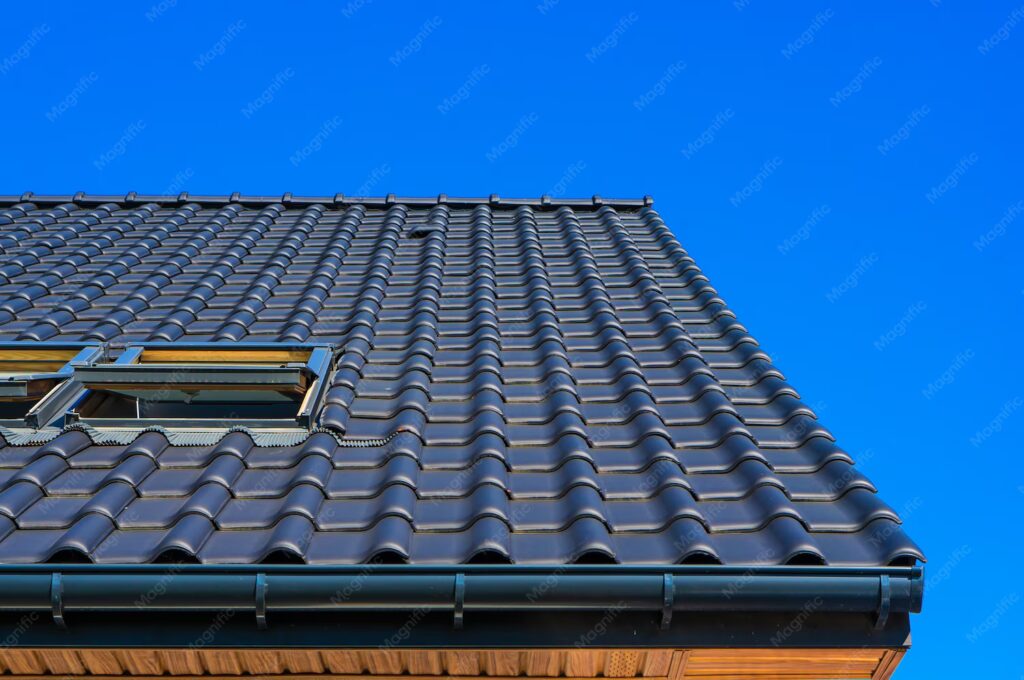
The best fire-resistant roofing material is one with a Class A fire rating, installed as a complete system and kept free of debris. Class A is the top tier. Class B and C rank below it, and some roofs are unrated.
Metal roofing, clay tile, concrete tile, slate and most fiberglass-mat asphalt shingles can all qualify, though it depends on the product. This guide shows how to compare them for a Tallahassee home and where the weak spots hide.
What the Class A, B and C ratings mean
Roof coverings are tested for how far flames spread, how well they protect the deck, and whether they throw off burning pieces. Class A passes the toughest test. Class B handles a moderate fire and Class C a light one. Unrated means no protection claim at all.
One catch: a rating can come from the covering alone or from the whole assembly. Some products earn Class A only with a specific underlayment or capsheet beneath them. Read the installation instructions, because a roof built without that layer may not qualify.
Fire-resistant roofing material options compared
Metal is the premium pick. Standing seam panels do not ignite and shed embers, and they last a long time, but they cost more up front. Confirm that the exact panel carries a Class A listing.
Clay tile, concrete tile and slate resist fire well. Tile does leave gaps at the eaves and ridge, though, and embers can slip underneath. Sealing those gaps matters as much as the tile itself. Slate and tile are also heavy, so ask whether your framing can carry the load.
Fiberglass-mat asphalt shingles are the budget route. Most earn Class A, and they repair easily. See our asphalt shingle roofing page for the styles we install.
Skip wood shakes. Untreated shakes feed a fire, and treated ones need paperwork proving the treatment. For most Tallahassee budgets, Class A shingles do the job. If you plan to stay for decades, step up to metal.
The weak spots a Class A rating will not fix
Fire reaches a home three ways, according to NFPA’s wildfire guidance: embers, radiant heat and direct flame. Embers get into vents, eaves and gable ends. Cover vent openings with 1/8-inch wire mesh and box in open eaves with fire-resistant material.
Debris is the other weak spot. Dry leaves in a gutter can catch from a single ember and pass flames to the roof edge and fascia. So clean gutters matter as much as the shingle you pick. Also remember that a roof rating means little once the attic is burning.
Balance fire rating with Florida storms
Fire is one risk. In Tallahassee, wind, hail and heavy rain are the more regular threats, so a fire rating should not be your only filter. Impact-resistant shingles and metal systems can cover both needs. Ask for a product that carries a Class A rating and a wind rating that fits your area, then compare prices on those two.
How to choose for your home
Picking fire-resistant roofing material starts with your budget and how long you will stay. Then get the Class A listing in writing, and ask whether it is stand-alone or assembly rated. Check local building rules, and ask your insurer whether roof type affects your policy. Do this before you sign, since a missing rating is hard to fix after the roof is on.
Last, hire a crew that handles the whole assembly, from deck to covering. GutterHawk holds both a roofing and a building contractor license, so structural repairs and the roof itself stay with one team.
Conclusion
Choosing fire-resistant roofing material comes down to four checks: a Class A rating, the right assembly, sealed vents and eaves, and clean gutters. Metal gives the longest life, and Class A shingles give the best value. Skip wood shakes. If your roof is aging and you want a fire-rated upgrade, talk to us about roof replacement. Call GutterHawk at 850-779-1081 for a free estimate, and we will walk you through the options for your home. We start with a full look at the deck and attic.
Frequently Asked Questions
No single material wins in every case, but Class A products rank highest. Metal, clay tile, concrete tile and slate all perform well, and most fiberglass-mat asphalt shingles earn Class A too. Pick based on the specific product’s listing, your budget and how the roof is assembled, not the material name alone.
Most fiberglass-mat asphalt shingles carry a Class A rating, the highest level. Some earn it only as part of an assembly, meaning a specific underlayment must sit beneath them. Check the product’s installation instructions so your finished roof actually qualifies, and ask your roofer to confirm the rating in writing.
Metal does not ignite, and many metal roofing products carry a Class A rating. The exact rating depends on the product and sometimes the underlayment beneath it. Metal also sheds embers rather than holding them. Ask for the listing on your specific panel, since not every metal system is tested the same way.
Not by default. Untreated wood shakes feed a fire and sit at the low end of the rating scale. Fire-retardant treated shakes can reach a higher rating, but you need manufacturer paperwork proving the treatment. If a roof has no such documentation, assume it is untreated and consider replacing it.
Yes. Dry leaves and needles collect in gutters, and a single wind-blown ember can ignite them. Flames then reach the roof edge and fascia, even on a Class A roof. Cleaning gutters regularly, and keeping them free of debris, removes easy fuel near your roof.