

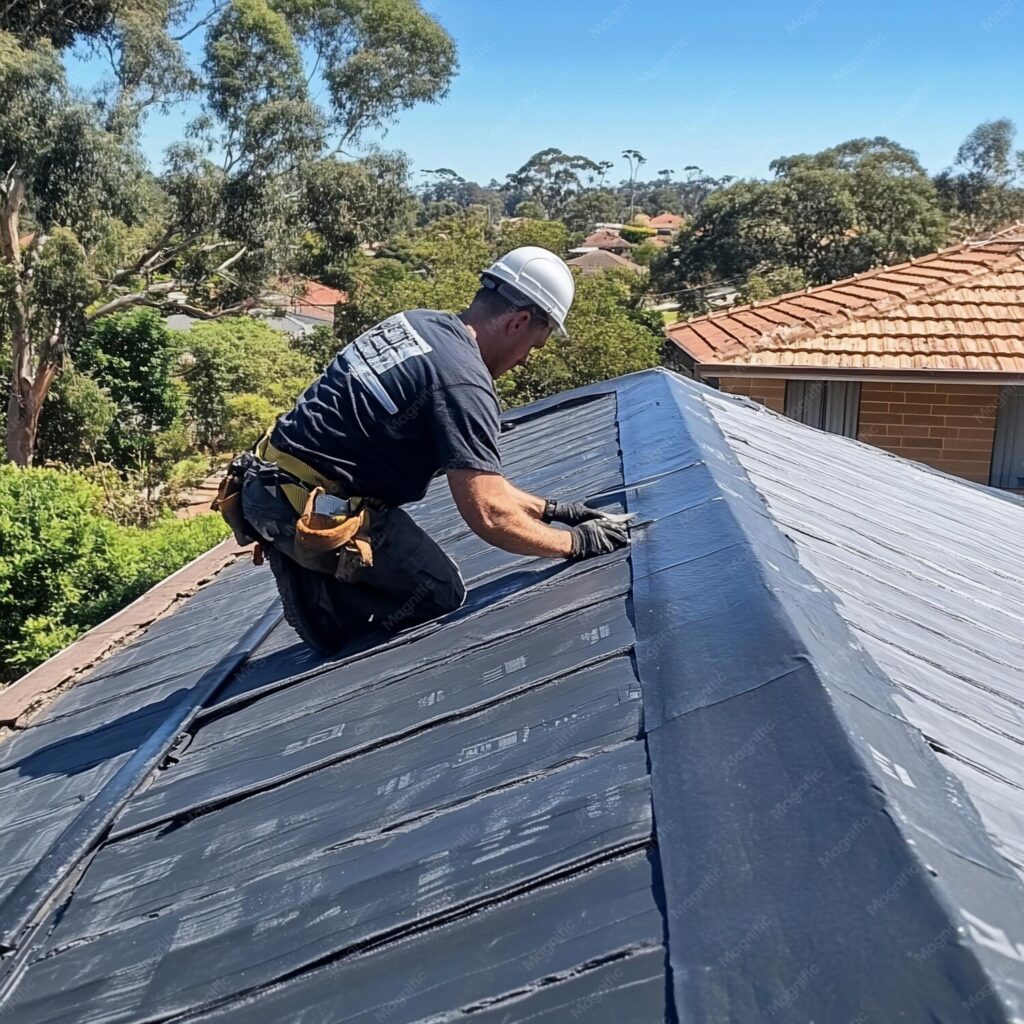
For most Tallahassee homes, synthetic wins the felt vs synthetic underlayment debate. It tears less, lies flat and handles a rainy week on the deck. Felt still has a place on tight budgets and simple roofs. The gap is smaller than some roofers make it sound.
Underlayment is the layer between your roof deck and your shingles. It is your backup when wind-driven rain gets past the shingles. This guide covers how each type works, where each one fails and what we would put on your roof.
How felt and synthetic underlayment differ
Felt is paper or fiber soaked in asphalt. It comes in 15-pound and 30-pound rolls, and the heavier roll is thicker and tougher. Roofers have used it for decades, and it works when it is installed well.
Synthetic underlayment is made from woven or non-woven polymer sheets, usually polypropylene or polyethylene. It does not soak up water. It is also lighter, and the rolls are longer, so a crew covers more roof per trip up the ladder.
Felt vs synthetic underlayment in Florida weather
Water is the whole job here. Felt can absorb moisture, then wrinkle and buckle. Those ripples can show through the shingles later. Synthetic stays flat when it gets wet.
Storms add another test. Gusts can rip loose felt off a deck before the shingles go on. Synthetic is harder to tear, so it copes better when weather delays a job. Sun matters too. Felt is meant to be covered within days, while many synthetics tolerate longer exposure. Follow the maker’s limit either way.
Safety is the one point against synthetic. Some brands get slick when wet, so crews need care on steep pitches. Ask your roofer how they handle it.
Cost and lifespan: what you actually pay
Synthetic costs more per roll, and felt costs less up front. But synthetic rolls cover more area, go down faster and wrinkle less, so there is less rework. Once labor counts, the real price gap on a typical home shrinks.
Aging is where synthetic pulls ahead. Underlayment only protects while it stays intact. Felt can dry out and crack over the years. Synthetic does not rot or dry out the same way, so a roof that leaks at a flashing is less likely to soak the deck.
Which one we would pick
In the felt vs synthetic underlayment choice, our pick is synthetic for most re-roofs. If your budget is tight and the roof is simple, 30-pound felt is a fair choice. Skip 15-pound felt on any roof you want to last. Weighing metal roofing instead? The same question applies, and synthetic is the usual answer.
Match the underlayment to the shingle system too. Manufacturers like GAF and CertainTeed publish approved combinations, and following them helps keep your warranty intact. See the systems we install on our shingle roofing page.
What to ask before the old roof comes off
Underlayment is hidden once the shingles go down, so you decide before tear-off. Get the brand and weight in writing. Find out what goes in valleys and around vents and chimneys, since leaks often start there. Then check how long it can sit exposed if rain delays the job.
Many Florida crews add a self-adhered membrane in those trouble spots for extra leak protection. It costs more, but it is a small cost next to ceiling repairs. Not sure you need a full roof replacement? A roof inspection tells you where the roof stands, and roof repairs may cover a small leak. If the full job is the answer, financing through Wisetack spreads the cost.
Conclusion
Felt vs synthetic underlayment comes down to money now versus protection later. Felt is fine on a simple roof with a tight budget. Synthetic is the better bet for most Tallahassee homes because it stays flat, resists tearing and copes with storm delays. Whatever you choose, get the product and brand in writing before tear-off. Want a clear answer for your roof? Call GutterHawk at 850-779-1081 for a free estimate, and we will look at your deck, explain the options and price the one that fits.
Frequently Asked Questions
For most roofs, yes. Synthetic tears less, does not absorb water and lies flat under shingles. Felt is cheaper and still works on simple roofs with tight budgets. The better product is the one installed correctly, so pay attention to the crew and the manufacturer instructions as much as the material.
It depends on the product. Felt is generally meant to be covered within days, while many synthetic underlayments allow longer exposure, often measured in months. Each manufacturer sets its own limit, so read the label. If weather delays your roof, ask the crew whether the underlayment is rated for that wait.
The number refers to the felt’s nominal weight per roofing square, and the heavier 30-pound roll is thicker and tougher. Thirty-pound felt resists tearing and wrinkling better, so it is the usual choice when felt is used. Fifteen-pound felt is thinner and cheaper, and we would skip it on a roof meant to last.
It can. Shingle manufacturers publish which underlayments they approve for their roof systems, and a mismatched product can limit coverage. Ask your roofer which underlayment the manufacturer requires for the warranty you want, and get that product and brand written on your contract before work starts.
Not really. Underlayment sits under the shingles, so reaching it means removing them. The practical time to upgrade is during a full roof replacement or a large section repair. If you only have a leak, a roof inspection can find the source and show whether a repair is enough.