

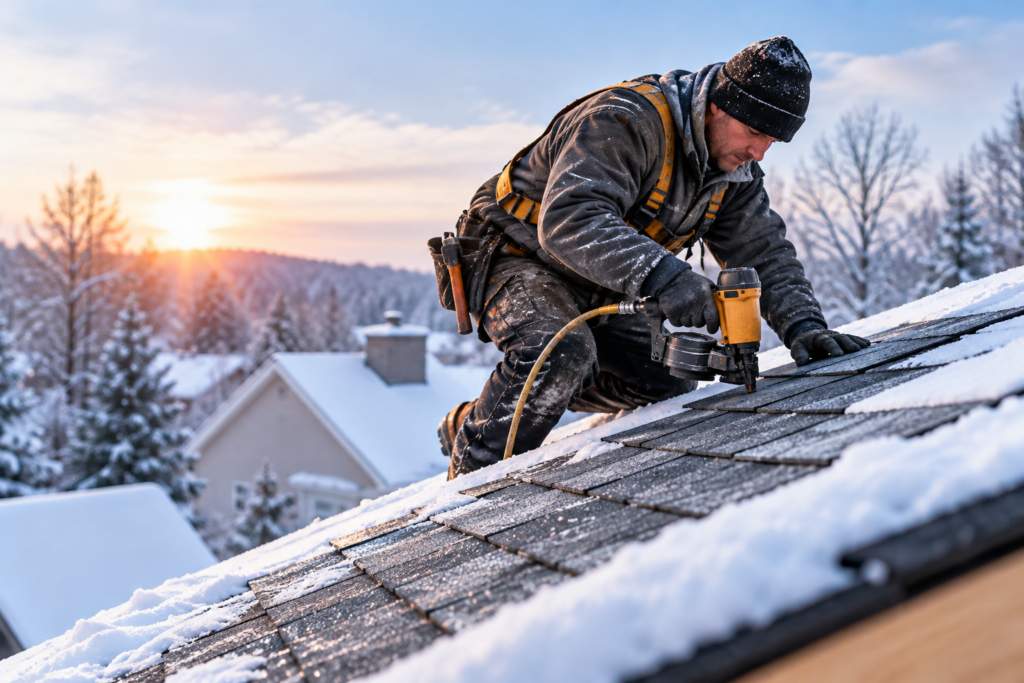
Do roofers replace roofs in the winter? Yes, and in Tallahassee most of the season works fine for roofing. The real answer depends on the temperature, the forecast and the shingle on your roof, so it helps to know what a good crew watches for.
This guide covers what changes in cold weather, when a crew should wait, and how to book a winter job without risking a leak.
Why cold weather roofing is harder on shingles
Shingles are built to seal themselves. A strip of adhesive on each one softens in the sun’s warmth and bonds to the shingle below. In cold weather that bond can be slow or weak, and a shingle that never seals can lift in the wind.
Cold also makes shingles stiff. A stiff shingle can crack when it bends over a ridge or takes a hard nail. Cold air also changes how a nail gun drives, which can leave nails too deep or too shallow. Good crews check nail depth often and hand-seal tabs with roofing cement when the sun will not do the job.
Do roofers replace roofs in the winter in Tallahassee?
North Florida winters are mild, so most days are workable. Many roofers also have more openings once hurricane season ends on November 30, because the storm rush fades. Cooler air helps the crew as well, and shingles scuff less underfoot than in summer heat.
Winter has real limits, though. Days are short, so a crew has less light to finish and cover the roof. Fronts bring rain, and an open roof is a leak waiting to happen. A good roofer tears off only what the team can cover the same day and checks the forecast every morning.
When a roofer should wait
A hard freeze is the clearest reason to pause. Frost or ice on the deck is another, since nails and sealant both struggle on a wet, slick surface. Strong wind can blow loose shingles off before they bond. And steady rain means no work at all.
Waiting a few days costs you very little. Rushing costs a lot more. Our view: if your roof is not actively leaking, let the crew pick a clear window instead of pushing them to start on a bad day. If it is leaking, call for a roof repair now and plan the full replacement for better weather.
Signs your roof should not wait for spring
Some problems do not improve with time. Water stains on a ceiling, daylight in the attic, missing shingles and sagging spots all point to trouble. A leak that sits through a wet winter can soak insulation and rot the decking underneath. If you see any of these signs, get the roof looked at this month, because a timely roof replacement can cost less than the damage a long wet winter causes.
How to book a winter roof replacement
Start with a roof inspection. It tells you whether you need a full replacement or a repair, and it gives you time to plan. Then ask each roofer three things. How do they seal shingles in cooler weather? What is the tarp plan if rain shows up? How do they decide to postpone a day?
Your material matters as well. Shingle roofing is the most sensitive to cold because of that sealing step. Most metal roofing panels fasten mechanically, so they do not depend on adhesive strips, though wind and rain still set the schedule. Cost is another worry for many homeowners, so ask about financing before you decide to wait.
Conclusion
So, do roofers replace roofs in the winter? Yes, and in Tallahassee it is often a smart time to do it. The catch is who does the work. Look for a roofer who checks the forecast daily, seals shingles by hand when it is cool, and tarps every night. Skip anyone who promises to start on any day, no matter the weather. Ready to plan yours? Call GutterHawk at 850-779-1081 for a free estimate, and we will inspect the roof and pick a safe window to start.
Frequently Asked Question
Yes, as long as the weather allows. Shingles seal best in mild, dry conditions, so crews watch temperatures and forecasts. A roofer can hand-seal shingles when the sun is weak. A hard freeze, ice or steady rain is the signal to wait a day or two.
Late fall through early spring is a strong window in North Florida. The weather is milder and less stormy, and hurricane season has ended. Summer works too, but afternoon storms and heat slow crews. The best time is really whenever your roof needs it and a clear forecast opens up.
They seal more slowly. The adhesive strip needs warmth, usually from the sun, to bond. In cool weather the bond can take days or never form. Crews fix this by hand-sealing tabs with roofing cement, which holds shingles down until warmer days finish the job.
Not always. Pricing depends mostly on your roof and materials, not the season. Some roofers book faster when demand is lower, which can help your schedule. Compare written quotes for the same shingle, and ask about financing if you want to spread out the cost.
Most homes take a few days, depending on size, roof pitch, material and weather. Short winter days and rain delays can stretch the schedule. Ask your roofer for a start window instead of a fixed date, and expect them to postpone if conditions turn bad.