

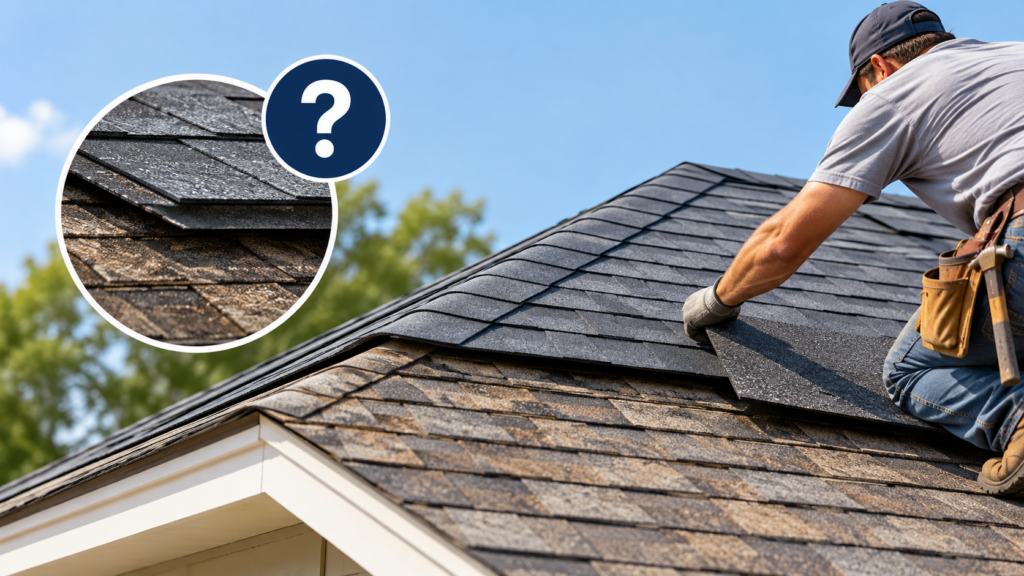
Yes, you can put a new roof over an old roof in some cases. The method is called an overlay or roof recover. It is only allowed over a single layer of shingles that is still flat, dry and solid. In Tallahassee, we usually recommend a full tear-off instead, and the reasons below explain why.
Here is how to tell which route fits your home, what an overlay really saves, and what it can cost you later.
When a roof overlay is allowed
Building codes set the limits. Most codes allow a new layer of shingles over an existing one, but never over two layers. If your roof already has two, everything has to come off. The same goes for soft or sagging decks, curled or cracked shingles, and any sign of trapped moisture. Tile, slate and wood shakes are not suitable bases either.
An overlay still counts as a reroof, so it needs a permit like any other roof job. Your local permit office applies the rules, so the final call is theirs.
What an overlay actually saves
The pitch is simple. Skipping the tear-off cuts labor, shortens the job and avoids hauling away a dumpster of old shingles. That can lower the upfront price. For a healthy roof on a tight budget, a single overlay can be a fair short-term move.
The problems an overlay can hide
The costs show up later. A second layer adds weight to the roof structure. It also traps heat, which can age shingles faster. Worst of all, nobody can see the deck underneath. Rot, loose decking and old leak damage stay buried until water finds a way in.
In Florida, that hidden deck matters even more. Hurricane season tests how well a roof is attached, and a layover makes it harder to confirm the nails and decking are doing their job. Some insurers and wind inspectors also prefer a clean tear-off, so ask your carrier before you decide. Manufacturer warranties can be stricter about what sits under the shingles, and a bumpy second layer is something home inspectors flag at resale.
Quick signs your roof needs a tear-off
Before you put a new roof over an old roof, look from the ground and the attic. Shingles that curl, crack or lose granules point to a worn roof. Dark stains on attic wood, daylight through boards or a roofline that dips suggest deck trouble. Any of these means an overlay would only cover the problem. Also count layers at the roof edge or ask your last roofer. If a prior roofer already added one overlay, a second is off the table.
Should you put a new roof over an old roof in Tallahassee?
Our advice: tear off. A full roof replacement lets the crew inspect the deck, fix rot, install fresh underlayment and flashing, and start one clean warranty clock. It costs more today and usually saves money on repairs later. Use an overlay only when the roof has one layer, a solid deck and a short horizon, such as a rental you plan to sell soon.
Not sure what is under your shingles? Book a roof inspection first. It shows the layer count and deck condition, and it tells you whether small roof repairs can buy you time.
Looking at other materials? Metal roofing can go over existing shingles in some cases, but we still check the deck first. And if the tear-off price worries you, financing through Wisetack spreads it out, up to $15,000, with 0% APR for qualifying customers.
Conclusion
You can put a new roof over an old roof, but only once, only over a sound deck, and only if your permit office agrees. For most Tallahassee homes, the tear-off is the safer buy. It lets you see the deck, fix what is hidden and start fresh with a clean warranty. Not sure which route your roof needs? Call GutterHawk at 850-779-1081 for a free estimate. We will inspect the roof, show you what is underneath and give you a straight answer on overlay versus replacement.
Frequently Asked Questions
Often yes, but with limits. Codes generally allow one overlay over a single sound layer of shingles, and you still need a permit. Two existing layers, a damaged deck or tile, slate or shake roofs require a full tear-off. Your local permit office has the final say.
Most building codes cap a roof at two layers of shingles total, meaning the original plus one overlay. A third layer is never allowed. Even with two layers permitted, many roofers advise against a second one because it hides deck problems and adds weight the structure may not handle well.
It lowers the upfront price because you skip tear-off labor and disposal. But the savings can disappear. Hidden rot, a shorter roof life and tougher insurance or warranty conversations often cost more later. A tear-off usually gives better value if you plan to keep the home for years.
Sometimes. Metal can go over one layer of flat, sound shingles when installed with the right underlayment and fastening. The deck still has to be solid, and local code applies. We inspect the roof first, because covering hidden damage with metal causes the same problems as any overlay.
Check for curling or cracked shingles, heavy granule loss, sagging lines, attic stains and daylight through the boards. If your roof already has two layers or has leaked more than once, plan on a tear-off. A professional roof inspection will confirm the layer count and the deck condition.