GutterHawk Roofing & Gutter Specialists


- About
- Roofing
- Gutters
- Areas Served
Killearn Estates
Killearn Acres
Bradfordville
Betton Hills
Lafayette Park
Southwood
Killearn Lakes Plantation
OX Bottom Manor
Summerbrooke
Golden Eagle
Foxcroft
Bull Run
Waverly Hills
Buck Lake Mahan
Piney-Z
Apalachee Ridge Estates
Myers Park
Maclay
Bobbin Brook
Live Oak Plantation
Timberlane
Woodgate
Lake Jackson
Meridian Hills
Midtown
Downtown Tallahassee
Havana
- Financing
- Testimonials
- Recent Projects
- About
- Roofing
- Gutters
- Areas Served
Killearn Estates
Killearn Acres
Bradfordville
Betton Hills
Lafayette Park
Southwood
Killearn Lakes Plantation
OX Bottom Manor
Summerbrooke
Golden Eagle
Foxcroft
Bull Run
Waverly Hills
Buck Lake Mahan
Piney-Z
Apalachee Ridge Estates
Myers Park
Maclay
Bobbin Brook
Live Oak Plantation
Timberlane
Woodgate
Lake Jackson
Meridian Hills
Midtown
Downtown Tallahassee
Havana
- Financing
- Testimonials
- Recent Projects
Roofing and Gutter Services in Timberlane
Roofing and gutters in Timberlane
Roofing and gutters in Timberlane
Timberlane sits in the north-central part of Tallahassee, strung out along Timberlane Road. GutterHawk works this corridor out of our Shamrock location, and it’s a regular stop for our trucks between jobs closer to Shamrock and the neighborhoods further out Thomasville Road. We handle roofing, gutters, siding, fascia and soffit, wood rot repair, and screen porch work here. Most calls start with one problem – a stain on a ceiling, a gutter pulling loose, a soffit panel gone soft – and often turn into a broader look at what the roof and exterior have been through.
Call the Shamrock office at {PHONE_A} to get someone out to look at it. We’re not going to sell you the entire house. We’re going to tell you what’s actually failing and what can wait.
The homes here
The homes here
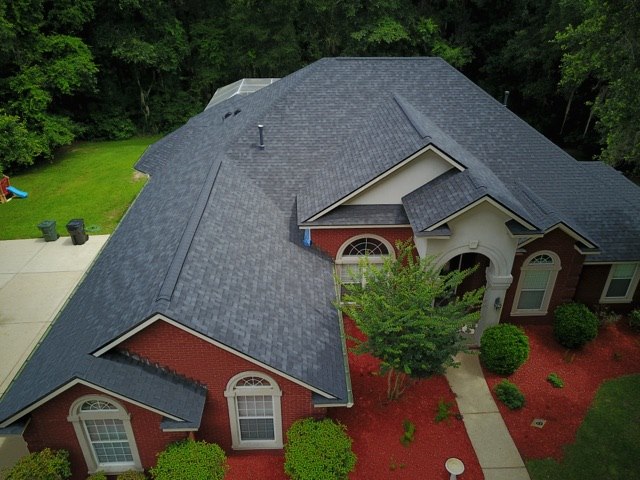
Timberlane has a mixed housing stock. You’ll find brick ranch homes from the 1950s through 1970s mixed in with newer infill and some later-era subdivision construction pushing toward the Thomasville Road side. That mix matters for roofing because the older ranches were mostly built with lower-pitch rooflines and simple gable or hip shapes, while newer construction tends to carry steeper pitches with more valleys, dormers, and roof-to-wall transitions – more places for water to find a way in if flashing or underlayment gets old.
The tree canopy is heavy through here, a lot of mature pine and oak that shades yards and roofs most of the year. That’s good for the electric bill and bad for gutters. Pine needles drop steadily and pack into gutter runs and valleys, especially where roof planes meet under tree cover. Oak leaves and pollen add to it in spring. If gutters aren’t cleaned on a schedule, water backs up under the shingle edge or over the fascia during a hard rain, and Tallahassee’s summer afternoon storms can dump a lot of water in a short window.
Roof age is where we spend a lot of our time here. Older ranch roofs that haven’t been replaced are well past the point where a shingle repair is a permanent fix. On the newer builds, we mostly see wear issues – fastener pull, flashing that was installed light, gutter hangers that were never quite right from the start. North-facing slopes in shaded lots also show algae streaking earlier than sun-exposed ones, which is a humidity and shade issue as much as it is a roofing issue.
Whether a specific pocket of Timberlane falls under an HOA that governs roof color, gutter style, or exterior material choices is something we check on a house-by-house basis rather than assume. If your property has architectural review requirements, tell us before we scope the job and we’ll work within them.
What we do in Timberlane
- Roof Replacement — A full tear-off and new roof system, sized and detailed for the pitch and valleys common on Timberlane rooflines, done to the applicable Florida Building Code and Leon County permitting requirements.
- Roof Repair — Targeted fixes for leaks, damaged flashing, or storm-lifted shingles, usually the first call when a stain shows up on a ceiling under a shaded slope.
- Shingle Roof Replacement — Full replacement specifically for dimensional or three-tab shingle roofs, the most common system on original-era homes in this neighborhood.
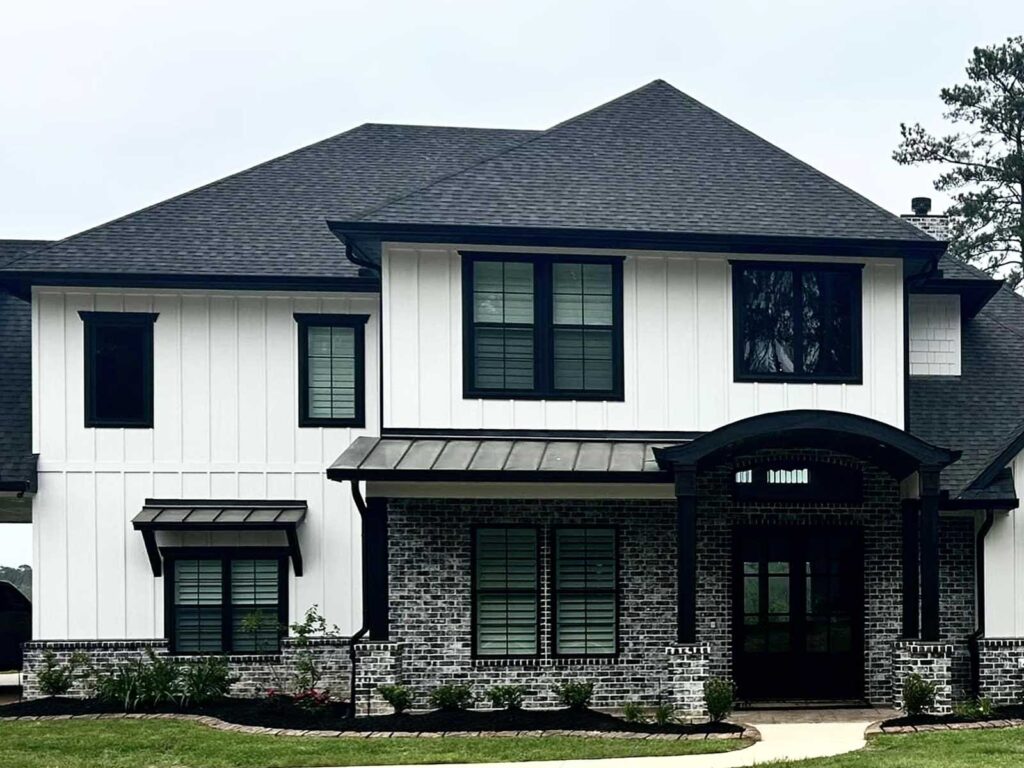
- Metal Roof Installation — Standing seam metal for full roofs, additions, or porch roofs, an increasingly common upgrade choice on Timberlane homes.
- Roof Inspections — A walk of the roof and attic to document current condition, useful before a sale, after a storm, or when you just want a straight answer on remaining life.
- Storm Damage Roof Repair — Assessment and repair after wind or hail events common to Tallahassee's summer storm pattern and hurricane season, with documentation you can take to your insurer.
- Seamless Gutters — Custom-formed gutters cut to fit your fascia line, the standard we install for new gutter runs in this neighborhood.
- Gutter Installation — New gutter systems sized for the roof area and pitch feeding them, accounting for the debris load a tree-covered lot puts on a system.
- Gutter Repair — Fixing sagging runs, separated seams, and pulled fasteners, often caused by the weight of wet pine needles sitting in a gutter for months.
- Gutter Guards — Debris covers designed to cut down on how often a heavily shaded Timberlane roof needs its gutters cleared.
- Gutter Cleaning — Clearing pine straw, leaves, and granule buildup before it causes overflow at the fascia line or backs water up under the roof edge.
- Downspout Installation — Adding or relocating downspouts so water actually clears the foundation, relevant on the mature, well-landscaped lots typical here.
- Siding Installation — New siding for additions, full re-sides, or sections replaced after wood rot or storm damage.
- Siding Repair — Patching or replacing damaged panels or boards without a full re-side.
- Vinyl Siding Replacement — Full replacement of aging or damaged vinyl siding runs.
- Fascia Repair — Replacing fascia boards that have taken on water behind clogged or poorly pitched gutters, a common finding once we pull a gutter off an older Timberlane roofline.
- Soffit Repair — Fixing soffit panels damaged by moisture or pest entry, often found alongside fascia issues in the same inspection.
- Fascia and Soffit Replacement — Full replacement where damage extends beyond a spot repair, typically on original-era rooflines that have never had this addressed.
- Wood Rot Repair — Cutting out and replacing rotted structural wood around rooflines, porches, and trim before it spreads further into the framing.
- Rotted Trim Replacement — Replacing decorative and protective trim boards damaged by long-term moisture exposure under tree canopy.
- Screen Porch Installation — New screened enclosures built to hold up under this area's summer storm pattern.
- Screen Porch Repair — Reframing, rescreening, or roof repair on existing screen porches, including ones damaged by falling limbs, which is a regular occurrence on heavily wooded lots.
How we work
What we do in Timberlane
- Asphalt shingle roofing – the majority material on Timberlane’s older ranch homes, and still the most common choice for full replacements and repair work.
- Metal roofing – installed on homes looking for a longer-term roof surface, particularly where tree debris and moisture make shingle wear faster.
- Roof replacement – for houses where repair has run its course, especially on original 1960s and 70s roof decks.
- Roof repair – flashing, valleys, and localized leaks that don’t require a full tear-off.
- Roof inspection – a walk of the roof surface and attic to document condition before you buy, sell, or file anything.
- Roof leak repair – tracking a leak back to its actual entry point, which is often not where the ceiling stain shows up.
- Emergency roof repair – storm damage tarping and stabilization after severe weather passes through.
- Storm damage repair – assessment and repair after wind and hail events common to Leon County’s hurricane season.
- Roof maintenance – scheduled checks aimed at pine needle buildup, flashing wear, and moss or algae growth under tree canopy.
- Seamless Gutters – custom-formed gutter runs cut to length on-site, no seams to fail along the run.
- Gutter installation – new gutter systems sized for the roof area and pitch they’re draining.
- Gutter replacement – swapping out old sectional gutters that have pulled away from fascia or rusted through.
- Gutter repair – fixing sagging runs, separated joints, and misaligned downspouts.
- Gutter cleaning – the most frequently needed service in a neighborhood this shaded, given the pine needle and leaf load.
- Gutter guards – reducing how often gutters need clearing out under heavy tree cover.
- Downspout installation – routing water away from foundations, which matters on the older ranch slabs common here.
- Fascia repair – replacing wood fascia boards that have softened from years of gutter overflow.
- Soffit repair – addressing sagging or rotted soffit panels, often found alongside fascia damage.
- Siding installation – new siding for homes updating from original exterior material.
- Siding repair – patching or replacing damaged siding sections without a full re-side.
- Wood rot repair – trim, fascia, soffit, and framing repair where moisture has been sitting against wood.
- Screen porch repair – fixing torn screens, frame damage, and rot on porch structures common to this era of home.
- Screen porch installation – building new screened outdoor space onto an existing patio or deck.
Frequently Asked Questions
How we work
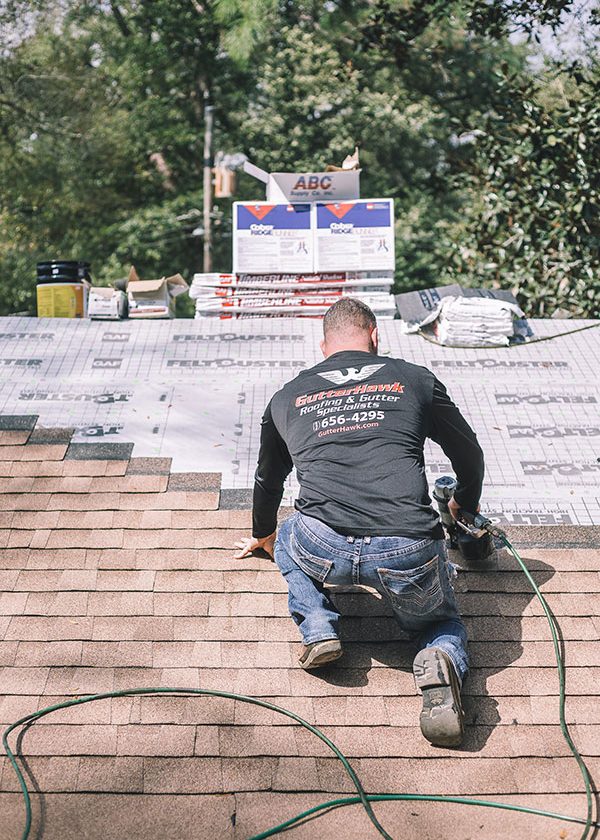
We start with a look at the roof and the exterior, not a sales pitch. For roofing, that means getting on the roof deck when it’s safe to do so and checking the attic side for moisture staining or ventilation problems. For gutters, we check pitch, hanger spacing, and downspout placement against how the roof actually sheds water, not just how the existing system was originally installed.
You get a written scope before work starts. If we find something during the job that changes the plan, we stop and tell you before we keep going, not after. Work is done to the applicable Florida Building Code and Leon County permitting requirements for the scope involved. Scheduling around here shifts some in June through November, since hurricane season backs up storm-related calls across Tallahassee, so if you’re planning non-emergency work, earlier in the year tends to give more flexibility on timing.
Cleanup is part of the job, not an afterthought – old shingles, gutter debris, cut wood trim, all of it leaves with us.
Common questions
Q.2 Why do my gutters fill up again so fast after cleaning?
The tree canopy in Timberlane drops pine needles and leaf litter nearly year-round. A gutter cleaned in spring can be full again well before fall. Gutter guards cut down on the frequency but don’t eliminate cleaning entirely.
Q.3 My roof has dark streaking on one side only. What is that?
That’s typically algae growth, more common on shaded, north- or east-facing slopes that stay damp longer after rain, which describes a lot of rooflines under this neighborhood’s tree cover. It’s a maintenance and appearance issue, not automatically a sign of failure, but we’ll check it during an inspection.
Q.4 Do I need HOA approval before you start?
Possibly, depending on which section of Timberlane you’re in. Check your deed restrictions or HOA board before scheduling exterior work. We’ll work with whatever material and color requirements you’re given.
Q.5 Can you match materials on a partial repair so it doesn’t look patched?
We try, but shingle and siding lines get discontinued and colors fade over time. We’ll tell you honestly if an exact match isn’t possible before you commit to a repair versus a fuller replacement.
Q.6 Do you handle work after storm damage?
Yes. Storm damage roof repair and inspection are regular calls here during hurricane season. We document condition and damage, which you can use with your insurer, though we don’t handle the claim itself or speak to what it will or won’t cover.
Working With Us Is Easy
01.
Request Your Quote
Getting the process started is easy! Simply fill out our quick form or call us at 850-656-4295. One of our friendly staff members will get in touch to finalize the details.
02.
We Work On Your Estimate
One of our expert estimators will get to to work analyzing your job and crafting a proposal. Of course, we’re here to answer any questions you may have.
03.
GutterHawk Gets To Work!
Contact Us
Have questions about your roof? Do you need information on gutter maintenance plans? No matter the question, GutterHawk is here to help!