GutterHawk Roofing & Gutter Specialists


- About
- Roofing
- Gutters
- Areas Served
Killearn Estates
Killearn Acres
Bradfordville
Betton Hills
Lafayette Park
Southwood
Killearn Lakes Plantation
OX Bottom Manor
Summerbrooke
Golden Eagle
Foxcroft
Bull Run
Waverly Hills
Buck Lake Mahan
Piney-Z
Apalachee Ridge Estates
Myers Park
Maclay
Bobbin Brook
Live Oak Plantation
Timberlane
Woodgate
Lake Jackson
Meridian Hills
Midtown
Downtown Tallahassee
Havana
- Financing
- Testimonials
- Recent Projects
- About
- Roofing
- Gutters
- Areas Served
Killearn Estates
Killearn Acres
Bradfordville
Betton Hills
Lafayette Park
Southwood
Killearn Lakes Plantation
OX Bottom Manor
Summerbrooke
Golden Eagle
Foxcroft
Bull Run
Waverly Hills
Buck Lake Mahan
Piney-Z
Apalachee Ridge Estates
Myers Park
Maclay
Bobbin Brook
Live Oak Plantation
Timberlane
Woodgate
Lake Jackson
Meridian Hills
Midtown
Downtown Tallahassee
Havana
- Financing
- Testimonials
- Recent Projects
Siding Installation in Downtown Tallahassee, FL
Downtown Downtown Tallahassee is not one building type. You’ve got mid-century brick storefronts standing next to wood-frame residential holdouts, government-adjacent office buildings with EIFS or metal panel systems, and a scatter of older houses that got swallowed by commercial rezoning decades ago. A siding crew working this part of the city has to know masonry veneer, fiber cement, and old wood clapboard, sometimes on the same block. That variety is the first thing to plan around, not an afterthought.
Siding Materials We Install
- Vinyl — the most common choice. Low cost, no painting, wide colour range, and it will not rot. Quality varies enormously by gauge, and thin vinyl warps in Florida sun.
- Insulated vinyl — vinyl with a foam backing that adds rigidity, cuts noise, and improves the wall assembly slightly. Costs more, dents less.
- Fiber cement — the premium option. Heavy, dimensionally stable, holds paint well, resists impact and pests, and handles humidity far better than wood.
- Board and batten — vertical profile available in both vinyl and fiber cement, common on farmhouse-style and modern builds.
- Shake and shingle profiles — used on gables and accent areas rather than whole houses, where a texture change breaks up a large elevation.
- Soffit and trim — the pieces that finish the job. Vented soffit matters for attic airflow, and trim is where water gets in when it is done badly.
What Goes Behind the Siding
Siding Installation in Downtown Downtown Tallahassee
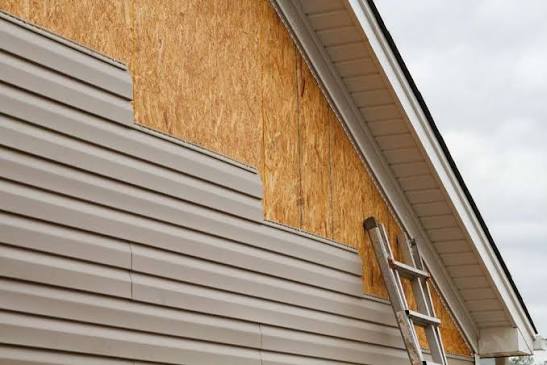
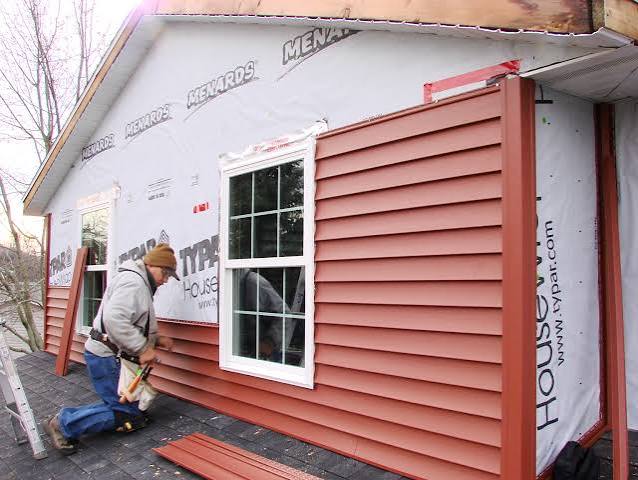
This page covers full siding replacement: stripping the existing cladding down to the sheathing, addressing what’s underneath, and installing new siding as a complete system rather than patching a few damaged boards. We work with fiber cement, vinyl, and engineered wood siding depending on the building and what the owner wants to maintain long term. Full replacement means new weather-resistant barrier, new flashing at windows, doors, and transitions, and siding installed to the applicable Florida Building Code and manufacturer fastening schedule for our wind zone.
On downtown properties this often includes coordination around signage, awnings, and mounted fixtures that have to come off and go back on. It also means matching or intentionally changing the look of a building that other people in this part of the city see every day. We price and install for that reality, not for a suburban lot with no foot traffic.
Full siding replacement is a different job from siding repair. If you’re dealing with a handful of cracked panels or a rot spot near a downspout, that’s a smaller scope. This page is for owners who are past patching and ready to replace the whole wall system.
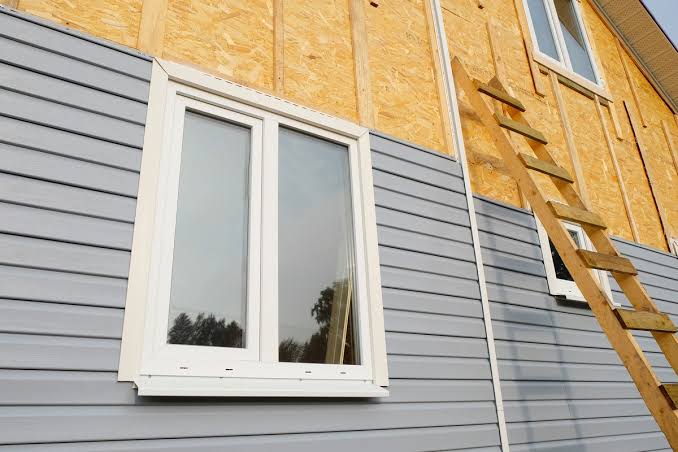
Vinyl or Fiber Cement?
What Downtown Downtown Tallahassee homes are dealing with
The residential stock left in and around Downtown Downtown Tallahassee skews older, much of it pre-dating current energy codes and built with wood siding or brick veneer over wood framing. Roof pitches tend to be lower on the commercial buildings and moderate on the remaining houses, often with built-up or standing seam roofing rather than shingle, which changes how siding meets the roofline and where box gutters come into play on flat commercial sections. Where you still have residential lots downtown, the tree canopy is real but patchier than the outer neighborhoods, meaning less pine needle load overall but still enough oak and pine debris to clog transitions where siding meets roof edge.
Downtown lots sit close together with limited setbacks, which affects drainage. Water coming off a roof or an adjacent building can run straight at a wall if grading and flashing aren’t handled correctly, and that’s a common cause of rot behind siding on this style of construction. There’s no single HOA governing exterior work downtown the way there is in a planned subdivision, but many properties fall under city historic or design review depending on their exact location, and commercial buildings often answer to a landlord or a business improvement framework rather than a homeowners association. We ask about that before we order material, because it changes what’s allowed.
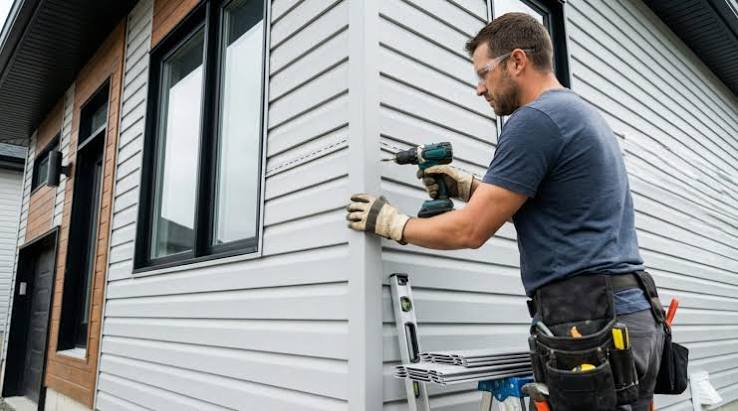
The Siding Installation in Downtown Tallahassee FL Process
How the job runs
Day one starts with material staging and protection, because downtown lots don’t give you much room to spread out. We tarp landscaping, protect sidewalks and any adjacent building surfaces, and confirm parking and access before a single panel comes off the wall. Removal comes next: old siding stripped back to the sheathing so we can actually see what’s there, not guess at it.
Once the wall is open, we check the sheathing and framing for rot or moisture damage and replace anything compromised before covering it back up. New weather-resistant barrier goes on, then flashing at every window, door, and wall penetration, then the new siding itself, run to the manufacturer’s fastening pattern for our wind exposure. Trim, corners, and any transitions to masonry or roofing get finished last.
What we need from the homeowner or business owner: clear access to the exterior during work hours, advance notice if signage or fixtures need special handling, and a decision on color and material before we order, since downtown lead times can run longer for less common profiles. If the building is under any design review, that approval needs to be in hand before installation starts.
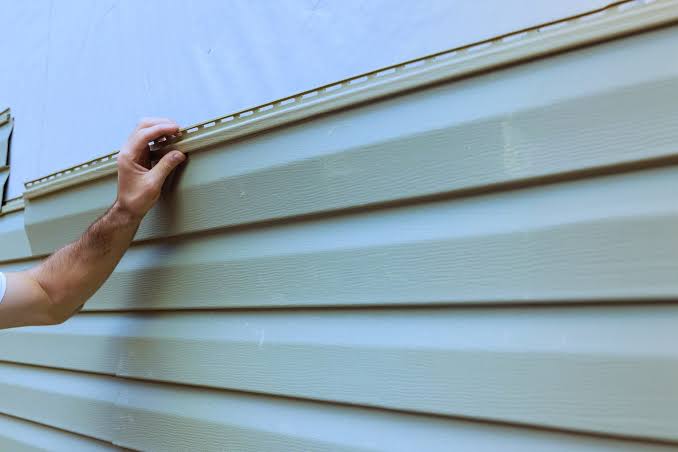
Moisture, Mould, and Why Walls Fail Here
What it costs
Full siding replacement in Downtown Downtown Tallahassee generally runs {PRICE_LOW} to {PRICE_HIGH}, and where a project lands in that range depends on a few concrete things. Material choice moves it first, fiber cement costs more than vinyl but holds up differently against the humidity and afternoon storms this area gets. Wall complexity matters too, a downtown building with multiple stories, tight access, or a lot of window and door openings takes more labor than a simple flat wall. What we find once the old siding comes off also matters. Sound sheathing keeps the job on the estimate; rot repair adds to it. We give you a firm number after inspection, not before.
Wind and Storm Considerations
Common questions
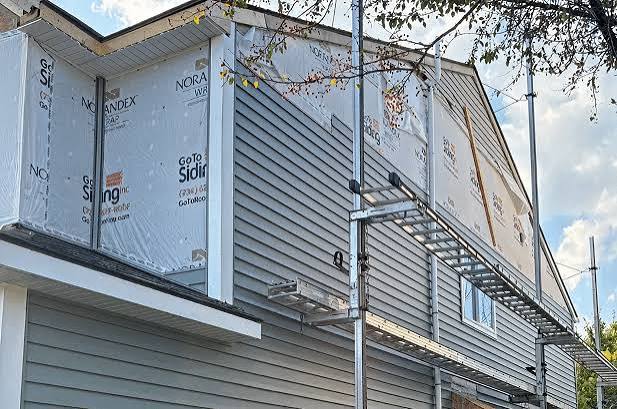
Siding, Fascia and Soffit, or Wood Rot?
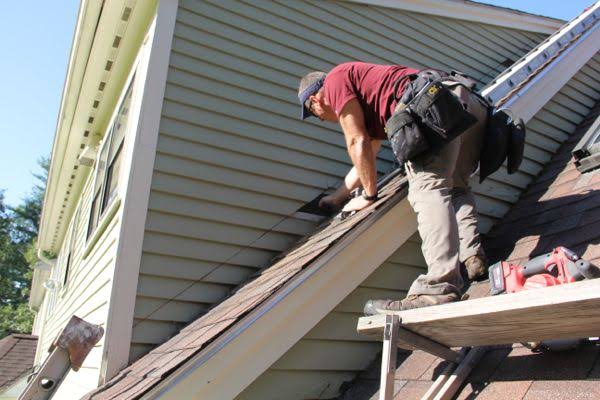
Siding installation covers the wall surface. Vinyl fascia and soffit repair covers the roofline: the boards at the eaves and the underside of the overhang, which are a different job even though they are often done at the same time. Wood rot repair deals with the structural timber behind either, where water has already done damage. On a lot of houses all three come up together, and doing them in one visit costs less than three separate mobilisations.
Get a Siding Quote
If your siding is cracked, warped, or letting water into the wall behind it, the wall is what you are actually paying for by waiting. Call GutterHawk at 850-779-1081 for siding installation in Downtown Tallahassee FL.
Frequently Asked Questions
Q.1 How long does a siding job take?
Most homes are several days to a week, depending on size and material.
Q.2 Vinyl or fiber cement?
Vinyl for cost and low upkeep. Fiber cement for durability and appearance, at a higher price.
Q.3 Can new siding go over the old?
We advise against it. You cannot inspect or flash a wall you never opened up.
Q.4 Does siding need painting?
Vinyl does not. Fiber cement comes pre-finished or gets painted, and will need repainting eventually.
Q.5 What if there is rot behind the old siding?
We show you, and repair it at the rate written into your contract before the new siding goes on.
Q.6 Do you do partial siding replacement?
Yes, though matching older faded colour exactly is rarely possible.
Q.7 How much does siding installation in Downtown Tallahassee FL cost?
Priced per square and varies with material and wall area. We quote in writing after measuring.
Working With Us Is Easy
01.
Request Your Quote
Getting the process started is easy! Simply fill out our quick form or call us at 850-656-4295. One of our friendly staff members will get in touch to finalize the details.
02.
We Work On Your Estimate
One of our expert estimators will get to to work analyzing your job and crafting a proposal. Of course, we’re here to answer any questions you may have.
03.
GutterHawk Gets To Work!
Contact Us
Have questions about your roof? Do you need information on gutter maintenance plans? No matter the question, GutterHawk is here to help!