GutterHawk Roofing & Gutter Specialists


- About
- Roofing
- Gutters
- Areas Served
Killearn Estates
Killearn Acres
Bradfordville
Betton Hills
Lafayette Park
Southwood
Killearn Lakes Plantation
OX Bottom Manor
Summerbrooke
Golden Eagle
Foxcroft
Bull Run
Waverly Hills
Buck Lake Mahan
Piney-Z
Apalachee Ridge Estates
Myers Park
Maclay
Bobbin Brook
Live Oak Plantation
Timberlane
Woodgate
Lake Jackson
Meridian Hills
Midtown
Downtown Tallahassee
Havana
- Financing
- Testimonials
- Recent Projects
- About
- Roofing
- Gutters
- Areas Served
Killearn Estates
Killearn Acres
Bradfordville
Betton Hills
Lafayette Park
Southwood
Killearn Lakes Plantation
OX Bottom Manor
Summerbrooke
Golden Eagle
Foxcroft
Bull Run
Waverly Hills
Buck Lake Mahan
Piney-Z
Apalachee Ridge Estates
Myers Park
Maclay
Bobbin Brook
Live Oak Plantation
Timberlane
Woodgate
Lake Jackson
Meridian Hills
Midtown
Downtown Tallahassee
Havana
- Financing
- Testimonials
- Recent Projects
Box Gutter (Commercial and 7 inch) in Havana, FL
Downtown Havana’s antique district runs a strip of old brick storefronts with flat and low-slope roofs that were never meant to shed water off the edge the way a residential roofline does. Those roofs need a box gutter that can actually hold volume during a July thunderstorm, not a 5 inch K-style hung off a fascia board that was sized for a house.
When Box Gutter Is the Right Answer
- Large roof planes — where a single slope drains a lot of area into one run and five or six inch gutter overflows regardless of how clean it is.
- Commercial and industrial buildings — warehouses, retail, churches, and schools where roof areas are large and overflow interrupts a business.
- Metal roofs — water leaves a metal panel fast and hits the gutter with force. Conventional gutter is regularly overshot on steep metal.
- Steep pitches — the steeper the roof, the faster the runoff arrives and the more capacity you need at the edge.
- Historic and architectural buildings — many older buildings were designed with built-in box gutter, and replacement has to match the original detail.
- Homes with persistent overflow — where a 7 inch box system solves what upsizing to 6 inch K-style did not.
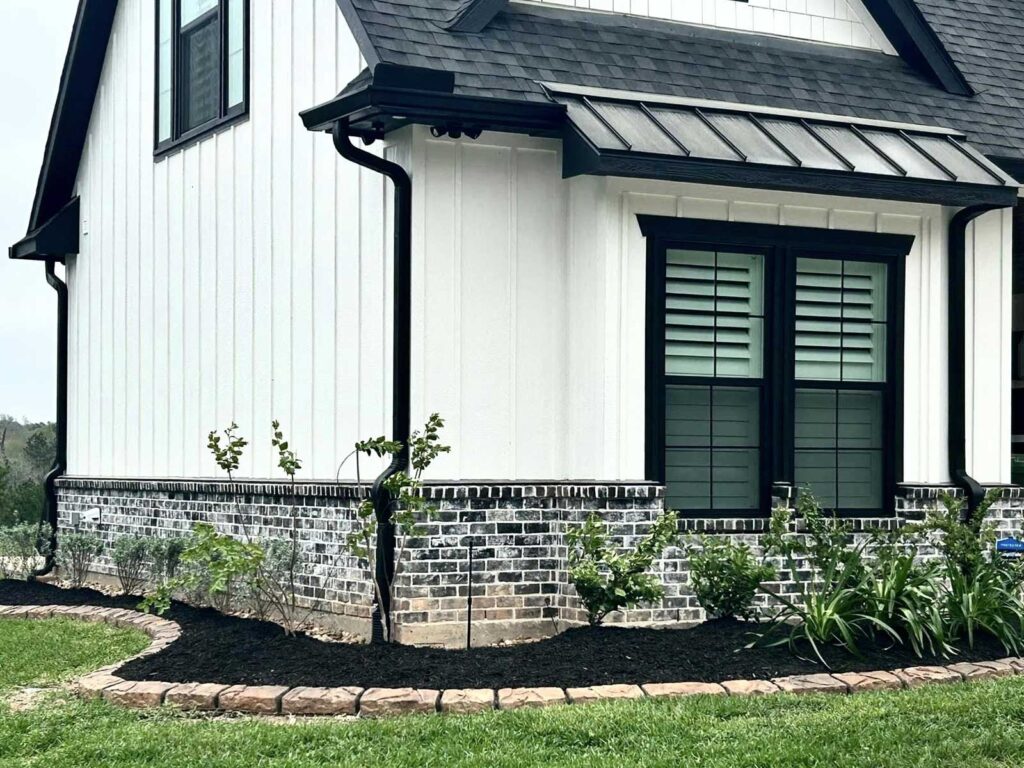
Seven-Inch Box Gutter for Homes
Box Gutter (Commercial and 7 inch) in Havana
A box gutter is not a bigger version of a standard gutter. It’s a built-in or built-up trough, usually lined in a single piece of metal, sized to handle a roof plane that a 5 or 6 inch K-style can’t keep up with. On commercial buildings around Havana’s main strip and on larger residential roofs with wide, unbroken planes, we build or replace box gutters at 7 inch capacity and up, matched to the actual square footage of roof draining into them, not a guess.
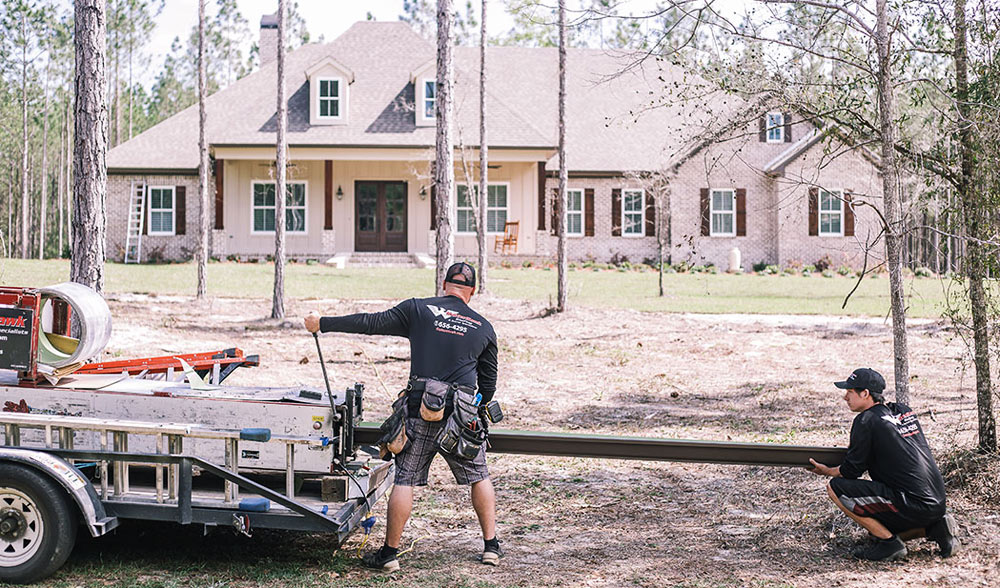
This work covers built-in box gutters set into a parapet or behind a fascia, and surface-mounted box systems hung below the roof edge on commercial storefronts. We fabricate the liner on site or shop-form it depending on the run length and the metal, seal every seam with a compatible sealant rated for standing water, and tie the outlets into downspouts sized to actually move the volume the trough collects. We do not install a 7 inch box gutter and leave it draining through a 3 inch downspout. The whole system gets sized together.

Commercial Box Gutter Systems
What Havana homes are dealing with
Havana’s older stock, the brick and frame buildings around the historic commercial core, was built for a slower drainage era. Many of those roofs are flat or nearly flat with parapet walls, which is exactly the roof type that needs a real box gutter instead of a hung K-style. Add in the live oak and pecan canopy that shades a lot of the residential streets nearby, and you get gutters loaded with leaf litter and pods on top of the rain volume, which is a bad combination in a built-in trough that’s hard to inspect from the ground.
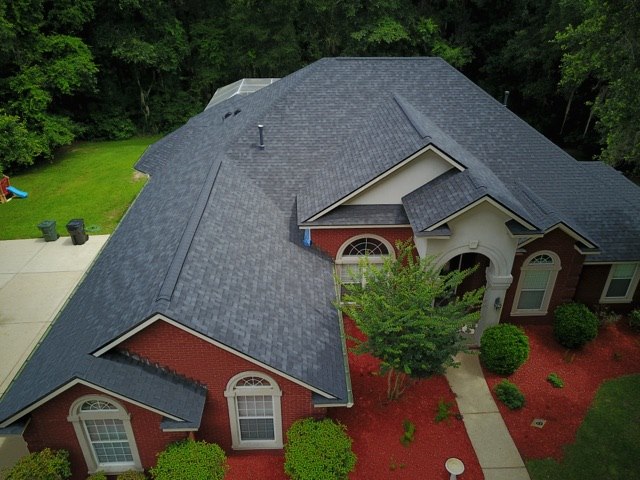
Out from the core, the newer construction along Highway 27 tends toward standard asphalt shingle roofs with normal pitch, where box gutters show up less often except on larger custom homes with wide roof planes or attached porches that concentrate a lot of water into one run. Havana doesn’t have the kind of blanket HOA architectural review you’d find in a Havana subdivision, but if a property sits inside the historic district, exterior changes to a commercial facade can run through a local review process, and we plan the work around that before we start cutting into fascia or parapet flashing.

The Box Gutter in Havana FL Process
How the job runs
Day one, we’re on the roof measuring the actual drainage area feeding the gutter run and checking the existing slope, fascia condition, and any parapet flashing that ties into it. On a commercial building we’re also looking at how the box gutter interfaces with the roof membrane, since a bad tie-in there is where most box gutter leaks actually start, not the gutter itself.
From there we fabricate the liner to the length and shape the roof needs, remove the old gutter or open up the built-in trough, and set the new liner with proper slope toward the outlets. Seams get soldered or sealed depending on the metal, outlets get cut and tied to downspouts sized for the load, and we test the run with water before we call it done. On a storefront job we work around business hours where we can. On a residence, the main thing we need from the homeowner is clear access to the roof edge and any locked gates, and enough notice if the property has an alarm or a tenant who needs to know we’re up there.

Sizing Box Gutters in Havana FL
What it costs
Box gutter work runs {PRICE_LOW} to {PRICE_HIGH} for most Havana jobs, and the range moves on a few specific things: total linear footage, whether it’s a built-in system that requires opening up existing fascia or roof structure versus a surface-mounted box gutter, the metal you choose, and how many outlets and downspouts the run needs to drain properly. A short residential run is on the low end. A commercial storefront with a long built-in parapet gutter and multiple outlets sits higher. We give a firm number after we’ve measured the actual run, not before.
Why Clients Choose GutterHawk
Common questions

Serving Havana From Two Locations
GutterHawk works out of two Havana locations, Shamrock and North Monroe, covering residential and commercial box gutter work across the city and out into Leon County. Both teams handle box gutters in Havana FL to the same standard, including Downtown, Midtown, the Capitol district, Apalachee Parkway, North Monroe, Thomasville Road, Southwood, and out toward Havana.
Get a Box Gutter Quote
If your gutters overflow every storm no matter how clean they are, the problem is capacity. Call GutterHawk at 850-779-1081 for box gutters in Havana FL and we will calculate what your roof actually needs.
Frequently Asked Questions
Q.1 What is a box gutter?
An oversized rectangular gutter built for high water volume, used on large roofs and commercial buildings.
Q.2 Do I need 7 inch box gutter or 6 inch K-style?
It depends on roof area and pitch. A flow calculation settles it, and 6 inch is often enough.
Q.3 Can box gutter go on a house?
Yes. Seven-inch box is a genuine residential option where conventional gutter keeps overflowing.
Q.4 Why does my existing box gutter leak inside the building?
Built-in box gutter has no outside edge to overflow from, so failures show up as interior leaks.
Q.5 Can you repair box gutter rather than replace it?
Usually yes, where the metal is sound. Most failures are at seams and outlets.
Q.6 Do box gutters need guards?
They can take them, but capacity is the main issue. Debris still needs clearing either way.
Q.7 How much do box gutters in Havana FL cost?
More than conventional gutter, and it varies with gauge, material, and length. We quote after surveying.
Working With Us Is Easy
01.
Request Your Quote
Getting the process started is easy! Simply fill out our quick form or call us at 850-656-4295. One of our friendly staff members will get in touch to finalize the details.
02.
We Work On Your Estimate
One of our expert estimators will get to to work analyzing your job and crafting a proposal. Of course, we’re here to answer any questions you may have.
03.
GutterHawk Gets To Work!
Contact Us
Have questions about your roof? Do you need information on gutter maintenance plans? No matter the question, GutterHawk is here to help!