GutterHawk Roofing & Gutter Specialists


- About
- Roofing
- Gutters
- Areas Served
Killearn Estates
Killearn Acres
Bradfordville
Betton Hills
Lafayette Park
Southwood
Killearn Lakes Plantation
OX Bottom Manor
Summerbrooke
Golden Eagle
Foxcroft
Bull Run
Waverly Hills
Buck Lake Mahan
Piney-Z
Apalachee Ridge Estates
Myers Park
Maclay
Bobbin Brook
Live Oak Plantation
Timberlane
Woodgate
Lake Jackson
Meridian Hills
Midtown
Downtown Tallahassee
Havana
- Financing
- Testimonials
- Recent Projects
- About
- Roofing
- Gutters
- Areas Served
Killearn Estates
Killearn Acres
Bradfordville
Betton Hills
Lafayette Park
Southwood
Killearn Lakes Plantation
OX Bottom Manor
Summerbrooke
Golden Eagle
Foxcroft
Bull Run
Waverly Hills
Buck Lake Mahan
Piney-Z
Apalachee Ridge Estates
Myers Park
Maclay
Bobbin Brook
Live Oak Plantation
Timberlane
Woodgate
Lake Jackson
Meridian Hills
Midtown
Downtown Tallahassee
Havana
- Financing
- Testimonials
- Recent Projects
Metal Roofing in Lake Jackson, FL
A shingle roof shaded most of the day by pine canopy on the west side of town wears differently than one out in open sun, and it’s usually the north-facing slope that shows the streaking first. Out in Lake Jackson, where lots back up to woods and lakefront tree lines are the norm rather than the exception, that shade cover is exactly why a lot of homeowners start asking about metal instead of another round of asphalt shingles.
Types of Metal Roofing We Install
- Standing seam — panels joined by raised seams with the fasteners hidden underneath. No exposed screws means nothing to back out or leak. This is the premium option and the one we recommend most often.
- 5V crimp — the classic Florida panel, fastened through the face with exposed screws and neoprene washers. Less expensive than standing seam, and a long-standing look on older homes here.
- Corrugated and R-panel — ribbed exposed-fastener panels, common on outbuildings, workshops, and agricultural structures, and the most economical way to cover a large simple roof.
- Metal shingles and tiles — stamped panels that read as shingle or tile from the street while performing like metal. Useful where an HOA has opinions about appearance.
- Low-slope metal systems — for roofs too shallow for standard panels, using seam and flashing details built for the pitch.
The Metal Roofing in Lake Jackson FL Process
Metal Roofing in Lake Jackson
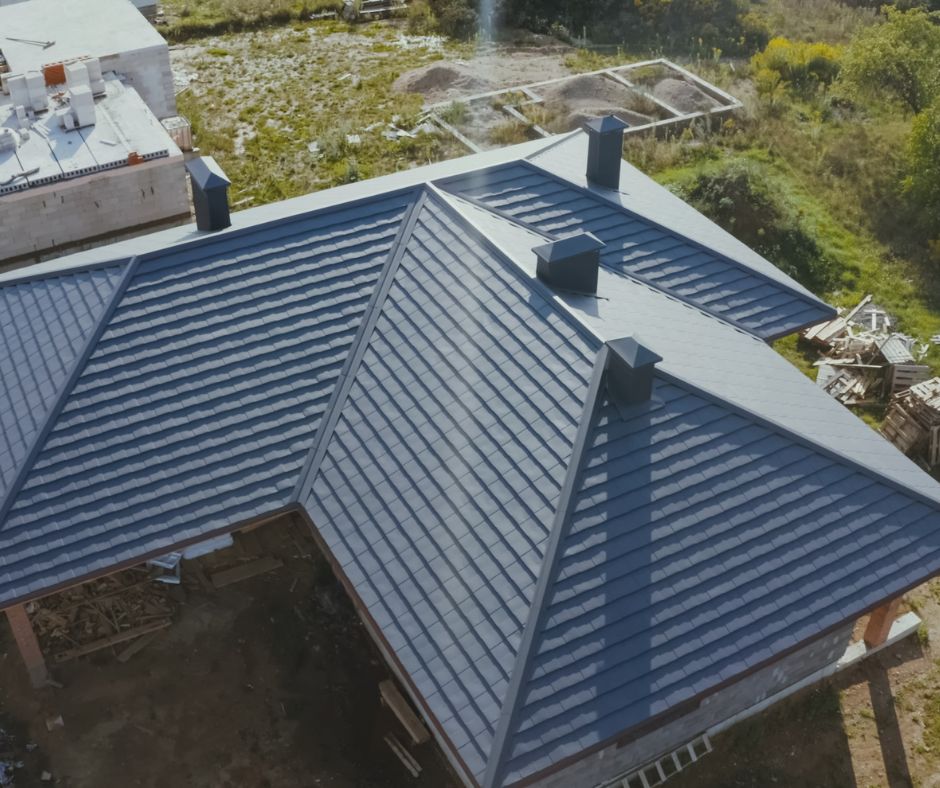
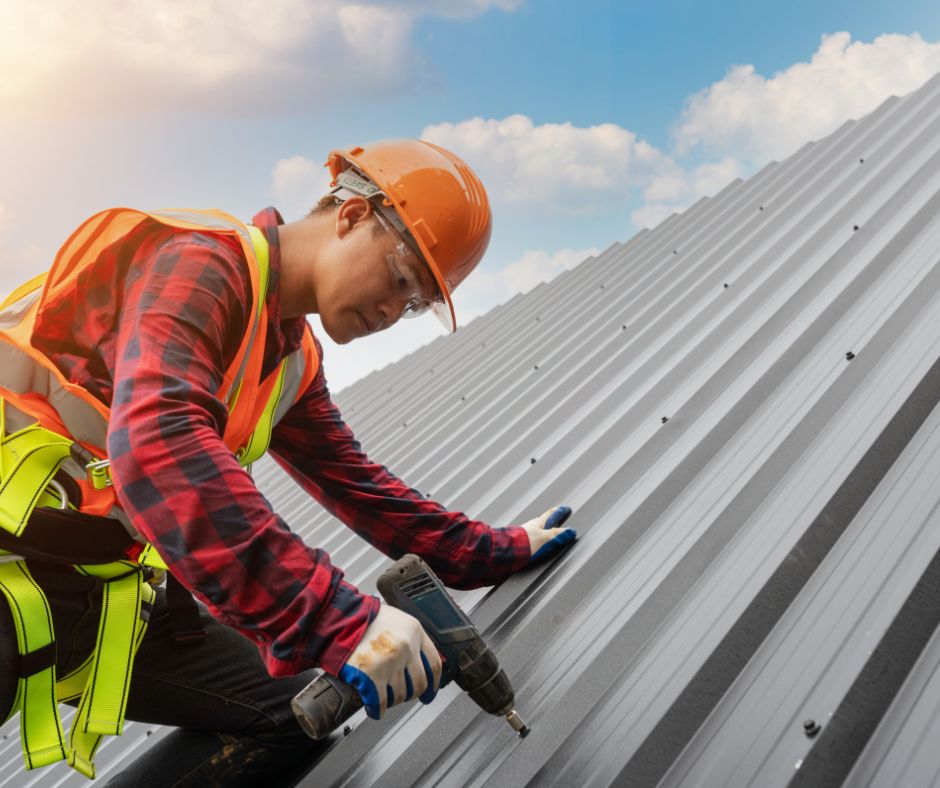
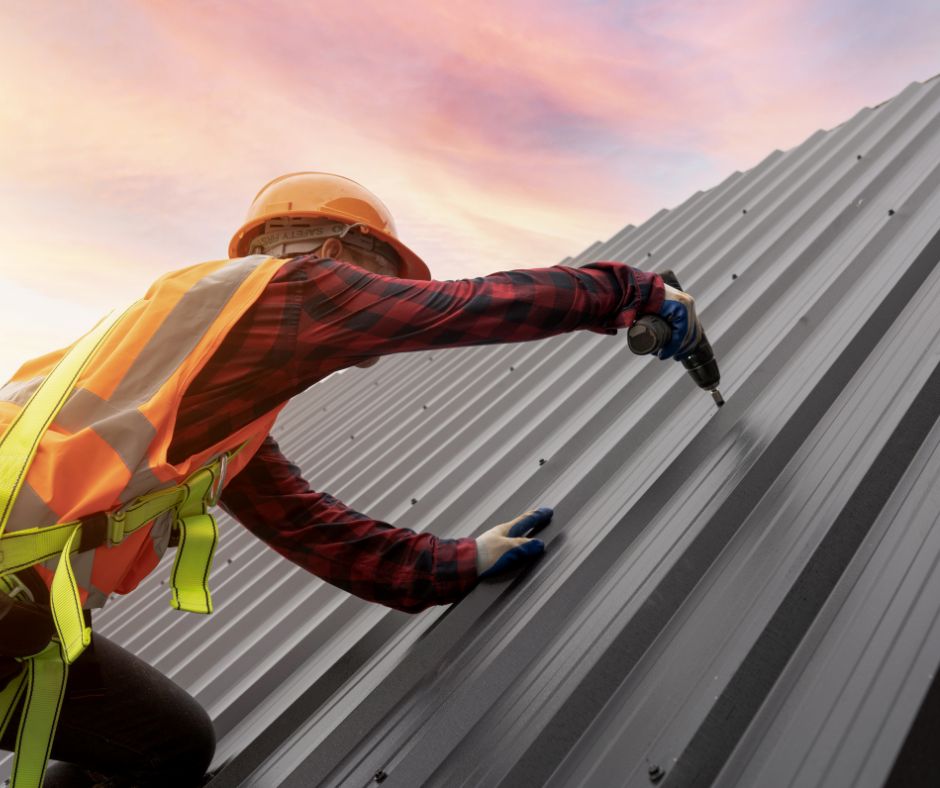
Metal roofing in this part of town usually comes down to two choices: standing seam panels with a hidden fastener system, or exposed-fastener panel profiles like 5V or corrugated. Standing seam costs more up front but the fastener is under the panel, not through it, which matters when you’ve got a roof that’s going to sit under pine drop and afternoon storm runoff for decades. Exposed-fastener panels are a lower-cost option and still hold up well, but the screws need to be checked and re-torqued or replaced on a schedule since that’s the point where a metal roof is most likely to develop a slow leak.
Panel gauge, seam height, and finish coating all factor into how the roof performs against Gulf humidity and wind-driven rain, which is part of daily life this close to the coast even though we’re inland. We install to the wind rating required for the panel and fastening pattern specified by the manufacturer for this region, and the work goes through Leon County permitting and inspection like any other roof replacement. We don’t quote a wind uplift number as a selling point on this page, because the number that matters is the one tied to your actual panel, deck, and fastening schedule, not a generic figure.
Metal roofing also plays out differently on a hip roof versus a gable, and it changes how flashing details get handled at chimneys, dormers, and valleys. Whatever the roof shape, the flashing and underlayment choices under the metal do as much work as the panel itself.
Metal Roof Repair and Maintenance
What Lake Jackson homes are dealing with
This is a mixed-era neighborhood on the west and northwest side of Lake Jackson, with older brick ranch homes from the 1950s through 1970s sitting alongside newer construction closer to the lake and along the connector roads. The older stock tends to run lower-pitch roofs, often 4/12 or shallower, originally built for asphalt shingle or built-up roofing, and that low pitch is one of the first things we check before recommending a panel profile, since standing seam performs best above a minimum slope and a roof pitched too flat needs a different detailing approach at the seams.
The tree canopy here is heavy, mostly pine mixed with hardwoods, and it drops needles and limb debris into valleys and against any dormer or chimney flashing year-round, not just in fall. On a metal roof that debris doesn’t sit and hold moisture against the deck the way it can on shingle, but it still needs to be cleared out of valleys so it isn’t channeling water sideways under a panel edge. Drainage and grade vary house to house since a lot of these lots slope toward the lake or toward drainage easements at the back of the property, so we look at how the roof sheds into the gutter system and where that water goes once it leaves the downspout. Some sections of Lake Jackson fall under HOA or deed restriction guidelines on exterior materials and roof color, and if that applies to your address we ask you to check your governing documents before we finalize a panel color or profile, since we don’t have visibility into every association’s current rules.
What Metal Roofing Costs in Lake Jackson
How the job runs
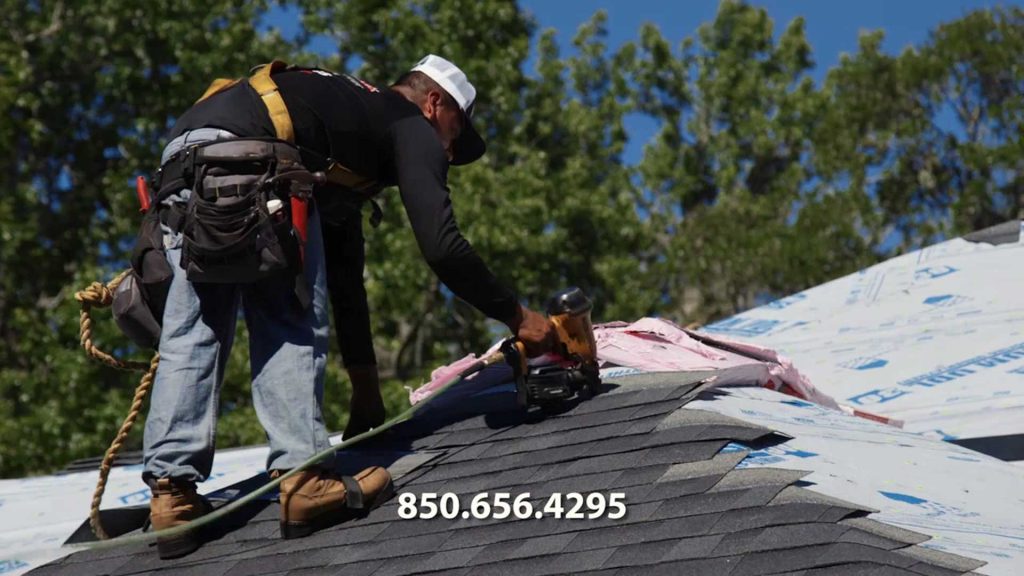
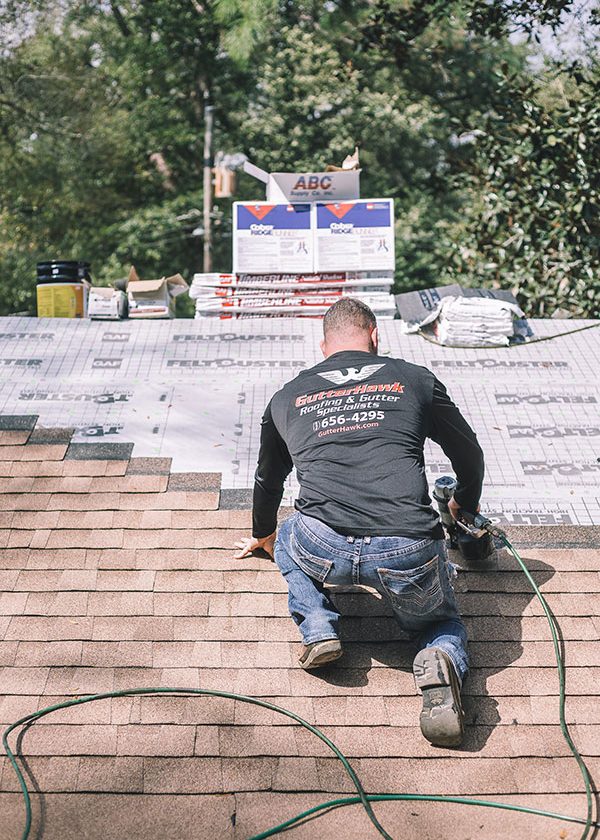
Day one starts with a full tear-off if you’re going from shingle to metal, or a deck inspection if metal is going back on over an existing metal roof (which isn’t always possible depending on the condition of the old panels). We check the decking for rot or soft spots, especially around old flashing points and skylights, before anything new goes down. Underlayment goes on next, matched to the panel type and local humidity conditions, followed by flashing at every penetration, valley, and edge.
Panels go up in sequence, working from one edge of the roof to the other, with seams and fasteners set according to the manufacturer’s pattern for the wind exposure of this specific roof. We haul debris and old shingle material off site as we go rather than letting it pile up in the yard. On the homeowner’s end, the main things we ask for are clear driveway access for material delivery and a heads up on pets or gate codes if the crew needs yard access for ladder placement. Afternoon storms in the summer months can push a start date or pause a day mid-project, so we build some flexibility into the schedule rather than promising a fixed number of days up front.
Metal, Shingle, or Something Else?
What it costs
Metal roof pricing in Lake Jackson runs from about {PRICE_LOW} to {PRICE_HIGH} for a typical single-family home, and where you land in that range depends on panel type, roof size and pitch, how much of the old roof structure needs repair, and how complicated the roofline is. A simple gable roof with exposed-fastener panels costs less than a hip roof with multiple valleys and dormers finished in standing seam. Deck repair, if we find rotted plywood once tear-off starts, is priced separately once we can see the extent of it. We’ll walk the roof, give you a written scope, and go over what’s driving the number before any work starts.
Why Homeowners Choose GutterHawk
Common questions
Serving Lake Jackson From Two Locations
GutterHawk works out of two Lake Jackson locations, Shamrock and North Monroe, which keeps scheduling short across the city and out into Leon County. Both teams handle metal roofing in Lake Jackson FL to the same standard. We cover Killearn, Killearn Lakes, Betton Hills, Midtown, Downtown, Myers Park, Maclay, Bobbin Brook, Live Oak Plantation, Timberlane, Woodgate, Foxcroft, Bull Run, Apalachee Ridge, Ox Bottom, Golden Eagle, Southwood, Buck Lake, and Havana.
Get a Metal Roof Quote
If you are weighing metal against another shingle roof, get real numbers for both before deciding. Call GutterHawk at 850-779-1081 for metal roofing in Lake Jackson FL and we will measure the roof, explain which system fits it, and price it properly.
Frequently Asked Questions
Q.1 How long does a metal roof last here?
Forty years and up for a well-installed system, against fifteen to twenty for asphalt shingles in this humidity.
Q.2 Is a metal roof loud in the rain?
Much less than people expect. Decking and underlayment absorb most of it. Open-framed structures are a different story.
Q.3 Can metal go over my existing shingles?
Sometimes, where code and decking condition allow. We check rather than assume, since it affects both price and warranty.
Q.4 Will a metal roof lower my insurance?
It can, depending on your carrier and the wind rating. Ask your insurer directly, and we will supply the documentation.
Q.5 Does a metal roof attract lightning?
No. Metal does not attract strikes, and it is non-combustible, which is a point in its favour rather than against.
Q.6 Do you repair metal roofs you did not install?
Yes. Fastener replacement, panel work, and seam or flashing repairs on existing metal roofs.
Q.7 How much does metal roofing in Lake Jackson FL cost?
Two to three times an architectural shingle roof, depending on system and complexity. We quote in writing after measuring.
Working With Us Is Easy
01.
Request Your Quote
Getting the process started is easy! Simply fill out our quick form or call us at 850-656-4295. One of our friendly staff members will get in touch to finalize the details.
02.
We Work On Your Estimate
One of our expert estimators will get to to work analyzing your job and crafting a proposal. Of course, we’re here to answer any questions you may have.
03.
GutterHawk Gets To Work!
Contact Us
Have questions about your roof? Do you need information on gutter maintenance plans? No matter the question, GutterHawk is here to help!