GutterHawk Roofing & Gutter Specialists


- About
- Roofing
- Gutters
- Areas Served
Killearn Estates
Killearn Acres
Bradfordville
Betton Hills
Lafayette Park
Southwood
Killearn Lakes Plantation
OX Bottom Manor
Summerbrooke
Golden Eagle
Foxcroft
Bull Run
Waverly Hills
Buck Lake Mahan
Piney-Z
Apalachee Ridge Estates
Myers Park
Maclay
Bobbin Brook
Live Oak Plantation
Timberlane
Woodgate
Lake Jackson
Meridian Hills
Midtown
Downtown Tallahassee
Havana
- Financing
- Testimonials
- Recent Projects
- About
- Roofing
- Gutters
- Areas Served
Killearn Estates
Killearn Acres
Bradfordville
Betton Hills
Lafayette Park
Southwood
Killearn Lakes Plantation
OX Bottom Manor
Summerbrooke
Golden Eagle
Foxcroft
Bull Run
Waverly Hills
Buck Lake Mahan
Piney-Z
Apalachee Ridge Estates
Myers Park
Maclay
Bobbin Brook
Live Oak Plantation
Timberlane
Woodgate
Lake Jackson
Meridian Hills
Midtown
Downtown Tallahassee
Havana
- Financing
- Testimonials
- Recent Projects
Roof Leak Repair in Midtown, FL
A stain on the ceiling above a Midtown living room almost never sits under the actual hole. Water runs along rafters and roof decking before it drops, so the wet spot you see inside can be four or five feet from where it’s getting in up top. If you’ve already patched drywall twice and the mark keeps coming back, the roof itself hasn’t been diagnosed yet, only the symptom has.
Where Roof Leaks Actually Start
- Pipe boots — the rubber collar around plumbing vents dries out and splits, usually between year eight and year twelve here. This is the single most common leak we find in Midtown.
- Flashing — chimneys, skylights, dormers, and any point where the roof meets a wall. Sealant fails, metal lifts, and water walks straight in behind it.
- Valleys — where two roof planes meet, debris collects, and water is moving fastest. Pine straw sitting in a valley will find a way underneath.
- Nail pops — fasteners backing out under heat cycling, each one leaving a small hole directly through the decking.
- Lifted or missing shingles — wind gets under an edge, breaks the seal, and the next rain goes underneath rather than over the top.
- Backed-up gutters — when water cannot leave, it backs up under the drip edge and rots the roof from the outside in.
- Skylights and solar penetrations — anything cut through the roof is a leak waiting to happen if the seal around it is not maintained.

Same-Day and Emergency Response
Roof Leak Repair in Midtown
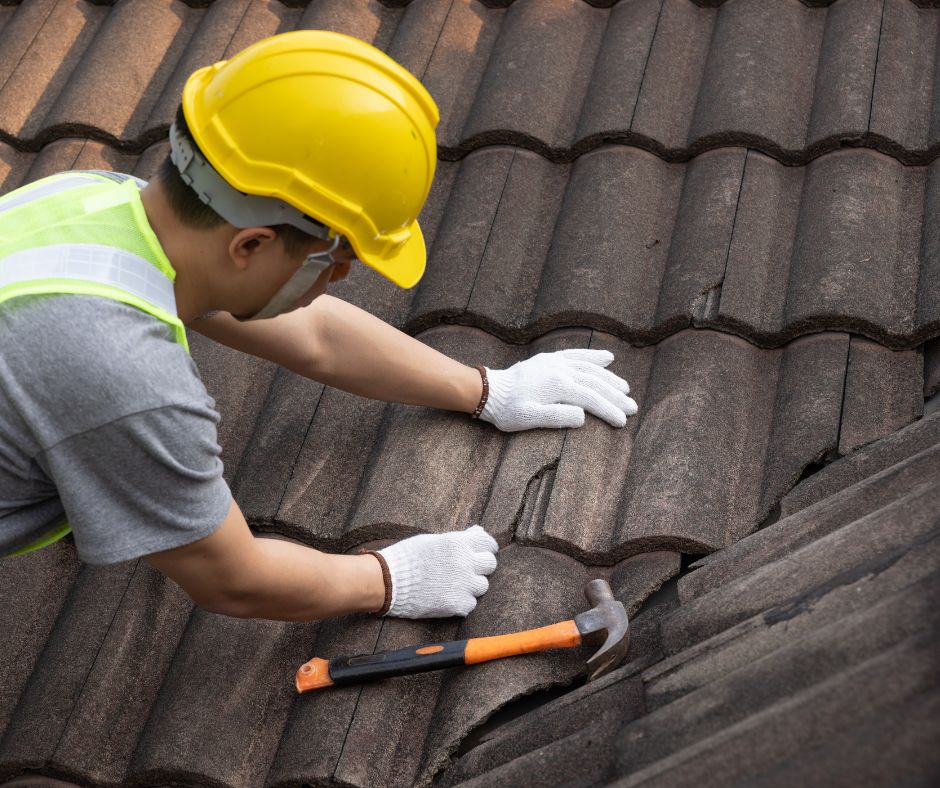
This page is about finding where water is entering, not about re-roofing or full repair of a damaged roof section. If your roof is actively letting water into the attic or the living space, our job on the first visit is to trace that path from the interior stain or attic moisture back to the exact point of entry on the roof deck, flashing, or penetration.
Common entry points we check on Midtown roofs include boot flashing around plumbing vents, step flashing where a roof meets a wall or chimney, valley metal where two roof planes intersect, and nail penetrations that have backed out or lost their seal over years of thermal movement. We also check ridge caps and any low-slope sections tied into a porch roof or addition, since those transitions are where a lot of Midtown leaks start.
If you’re filing or considering an insurance claim, this is also the stage where documentation matters. We photograph the leak point, the interior damage path, and the surrounding roof condition before any repair work begins, so you have a record independent of any adjuster’s own inspection.

The Roof Leak Repair in Midtown FL Process
What Midtown homes are dealing with
Midtown sits close in on the Monroe corridor, and the housing stock reflects it. A lot of the roofs are on older brick homes with moderate to steep pitches, asphalt shingle or in some cases older built-up or modified bitumen sections over additions and porches. Those lower-slope tie-ins are frequent leak sources because they rely on flashing detail and membrane condition rather than steep pitch to shed water, and both degrade with age and UV exposure differently than the main shingle field does.
The tree canopy in this part of town is mature, and that means shade most of the day, which keeps roof surfaces damp longer after a storm and encourages algae streaking on north-facing slopes. It also means pine needles, oak leaves, and small limbs collecting in valleys and around chimney flashing, holding moisture against the roof surface exactly where a leak is most likely to start. Grade and drainage around these lots vary house to house since many were built well before modern stormwater standards, so we look at how water moves off the roof and away from the foundation as part of the same inspection, not as a separate issue. Some Midtown streets carry deed restrictions or neighborhood association input on exterior work; if yours does, tell us before we schedule so we can plan the visit around any approval you need.
Why a Small Leak Is Worth Fixing Now
How the job runs
On day one we walk the roof and the attic, not just the roof. Attic access lets us see the actual water trail on the underside of the decking, which is often the fastest way to confirm or rule out a suspected entry point. We photograph everything as we go.
Once we’ve located the source, we explain what we found in plain terms: is it a failed pipe boot, cracked flashing, a nail pop, a worn valley, or something tied to the gutter and drainage rather than the roof itself. Some leaks turn out to be gutter overflow driving water up under the drip edge rather than a roof deck failure at all, which changes the fix entirely.
What we need from you is access, decent light if the attic entry is tight, and honest answers about how long the stain has been there and whether it grows after rain. If the leak is tied to a claim, keep any correspondence from your insurer and let us know the adjuster’s timeline so we can coordinate the inspection visit.

Leak Repair, General Repair, or Inspection?
What it costs
A straightforward leak diagnosis and point repair, like resealing a pipe boot or replacing a short run of step flashing, typically runs in the range of {PRICE_LOW} to {PRICE_HIGH}. What moves that number is roof pitch and access, how many suspect areas need to be checked before the source is confirmed, whether decking underneath is soft or sound once we open the area up, and whether the fix is a single point repair or spans a valley or a full flashing run. We give you the number after the diagnosis, not before, because guessing a price before finding the leak is how homeowners end up paying twice.
Why Homeowners Choose GutterHawk
Common questions
Call GutterHawk at {PHONE_B} to get a leak traced and documented before it does more damage to Midtown’s older roof decking and interior finishes.
[EXTERNAL LINK: Leon County Growth and Environmental Management permitting page, for homeowners who need to check permit requirements before roof repair work]

Serving Midtown From Two Locations
GutterHawk works out of two Midtown locations, Shamrock and North Monroe, which keeps response times short across the city and out into Leon County. Both teams handle roof leak repair in Midtown FL the same way, tracing the source before touching anything. We cover Killearn, Killearn Lakes, Betton Hills, Midtown, Downtown, Myers Park, Maclay, Bobbin Brook, Live Oak Plantation, Timberlane, Woodgate, Foxcroft, Bull Run, Apalachee Ridge, Ox Bottom, Golden Eagle, Southwood, Buck Lake, and Havana.
Stop the Leak
Leaks do not fix themselves and they do not stay small. Call GutterHawk at 850-779-1081 for roof leak repair in Midtown FL, and we will find where the water is getting in, tell you what it costs, and stop it properly.
Frequently Asked Questions
Q.1 How fast can you get to an active leak?
Active leaks go to the front of the schedule. Most get a same-day response, depending on weather and current call volume.
Q.2 Why is the stain on my ceiling nowhere near the damage?
Water travels along rafters and decking seams before it drops. The entry point is often several feet away.
Q.3 Can you repair a leak while it is still raining?
We can tarp it to stop further water getting in. The permanent repair waits until the roof is dry and safe.
Q.4 Will one leak mean I need a whole new roof?
Usually not. A single failed boot or flashing detail is a repair. Widespread failure is a different conversation.
Q.5 Do you fix the ceiling damage as well?
We handle the roof. We will tell you what interior drying or repair work is still needed once the leak is stopped.
Q.6 How much does roof leak repair in Midtown FL cost?
Most run a few hundred to a couple of thousand dollars. We price it in writing after finding the source.
Q.7 Is leak repair covered by insurance?
Storm damage often is. Wear and age generally are not. We document what we find either way.
Working With Us Is Easy
01.
Request Your Quote
Getting the process started is easy! Simply fill out our quick form or call us at 850-656-4295. One of our friendly staff members will get in touch to finalize the details.
02.
We Work On Your Estimate
One of our expert estimators will get to to work analyzing your job and crafting a proposal. Of course, we’re here to answer any questions you may have.
03.
GutterHawk Gets To Work!
Contact Us
Have questions about your roof? Do you need information on gutter maintenance plans? No matter the question, GutterHawk is here to help!